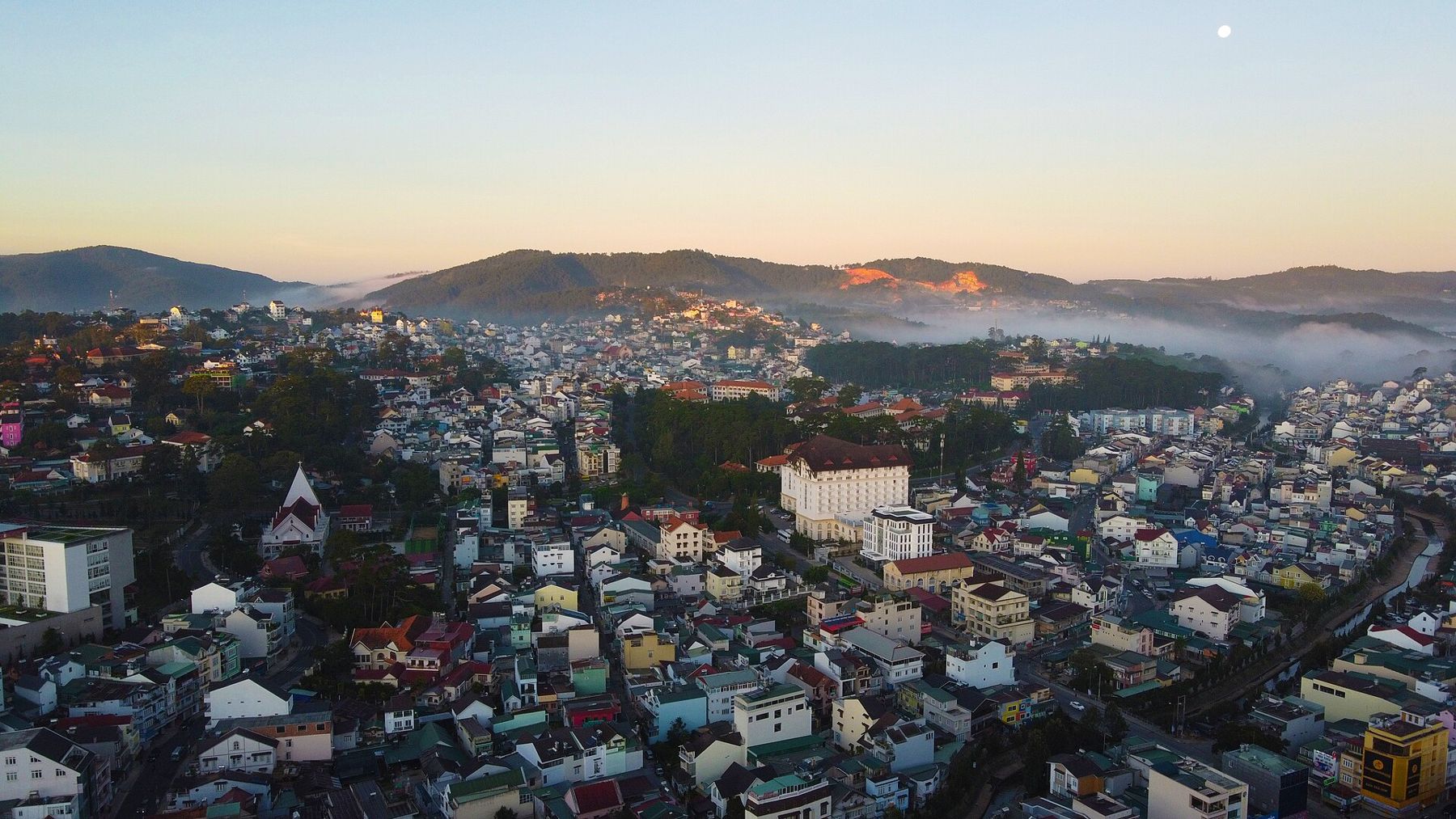
Most of southern Vietnam is hot all year. Đà Lạt (Da Lat) is the exception. The city sits at around 1,500 metres on the Lâm Viên plateau in the central highlands, surrounded by hills of pine, and its days are mild and its nights cool, even in the dry season. Vietnamese couples come here for honeymoons, families come to escape the lowland heat, and the city's markets are full of vegetables, fruit and flowers that will not grow on the coast. For visitors, it is a change of pace and climate in the middle of a trip south.
A hill station on the plateau
The plateau was explored in 1893 by the doctor and scientist Alexandre Yersin, who recommended it as a place for a sanatorium. In the early twentieth century the French colonial administration developed Đà Lạt as a hill resort, and the town grew with villas, schools, churches and a railway. Many of those buildings remain, scattered among the pines on the hillsides, which gives parts of the city an atmosphere unlike anywhere else in the country.
The last emperor, Bảo Đại, had a summer palace here in the 1930s, and it is now open to visitors, with much of its original furniture in place. The city has grown fast in recent decades, and greenhouses and new buildings now cover many of the old slopes, but the pine forests that ring the city are still within easy reach.
A walk through the older districts shows how distinct the town's architecture is. The cathedral, built in the 1930s and early 1940s, carries a weathercock on its spire, which is why locals often call it the chicken church. On another hill, a convent church with pink-washed walls and a steep roof looks as if it belongs in the French countryside. Many of the colonial villas along the winding roads south of the lake are now offices, schools or homes, so admire them from the street, and let the slopes and pine-shaded lanes set the pace.
©
CAMERA: P. Hughes // CC BY 4.0Xuân Hương Lake and the town centre
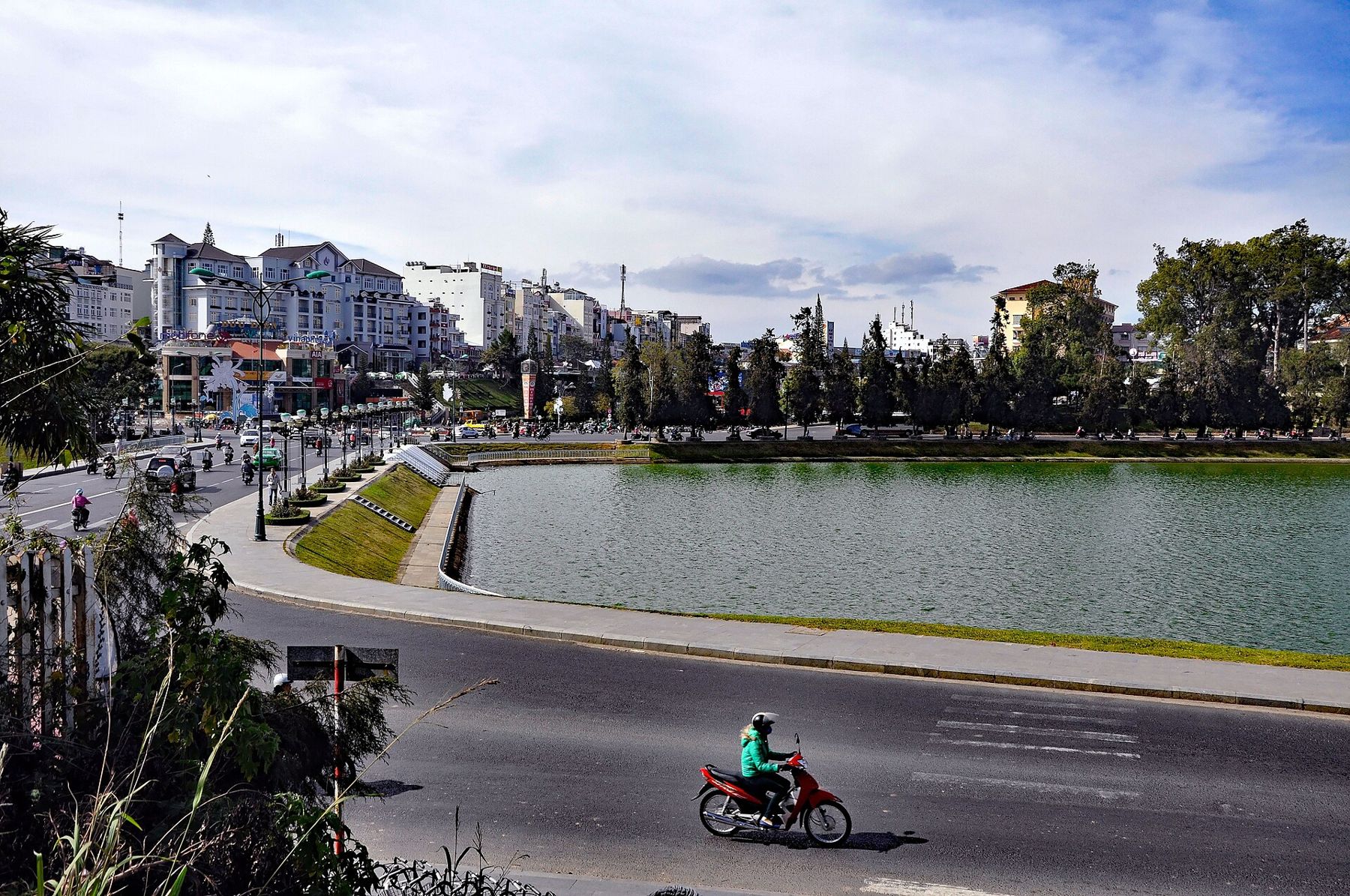
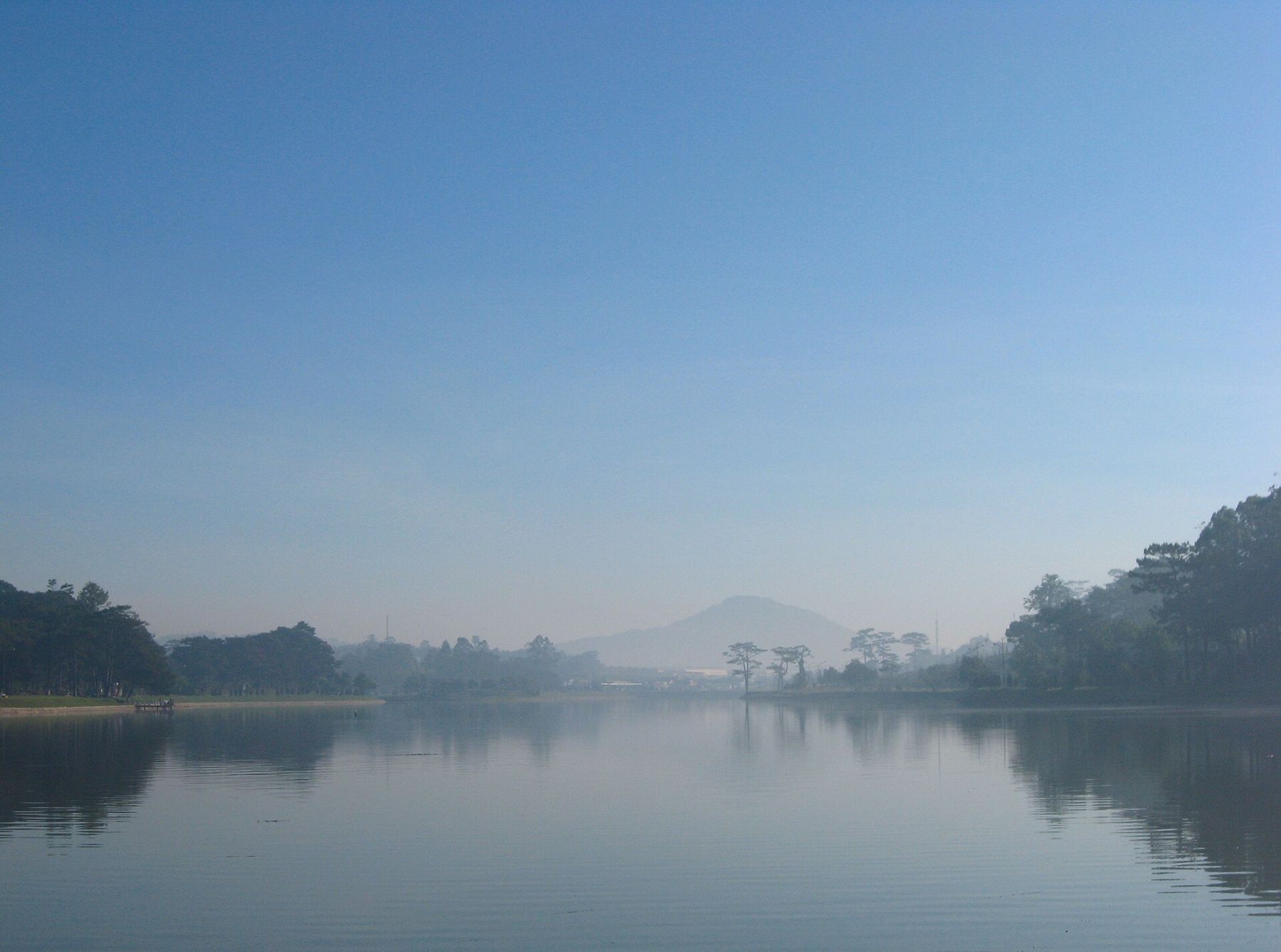
Xuân Hương Lake, in the middle of the city, was created in the early twentieth century by damming a stream. A road and footpath run all the way round it, a walk of an hour or so at an easy pace, and early morning is the time to go, when mist lies on the water and the joggers and tai chi groups are out. The lake's shores include a golf course, a flower garden and stretches of pine.
Above the lake, the central market and the streets around it are the busy heart of Đà Lạt. In the evening, a night market fills the steps and the street below the market building, with stalls selling knitted hats, dried fruit and warm snacks; grilled rice paper, a crisp snack topped with egg and spring onion, is a local favourite. Wrap up: once the sun goes down, the temperature drops quickly.
©
CAMERA: Diane Selwyn // Public domainThe old railway station
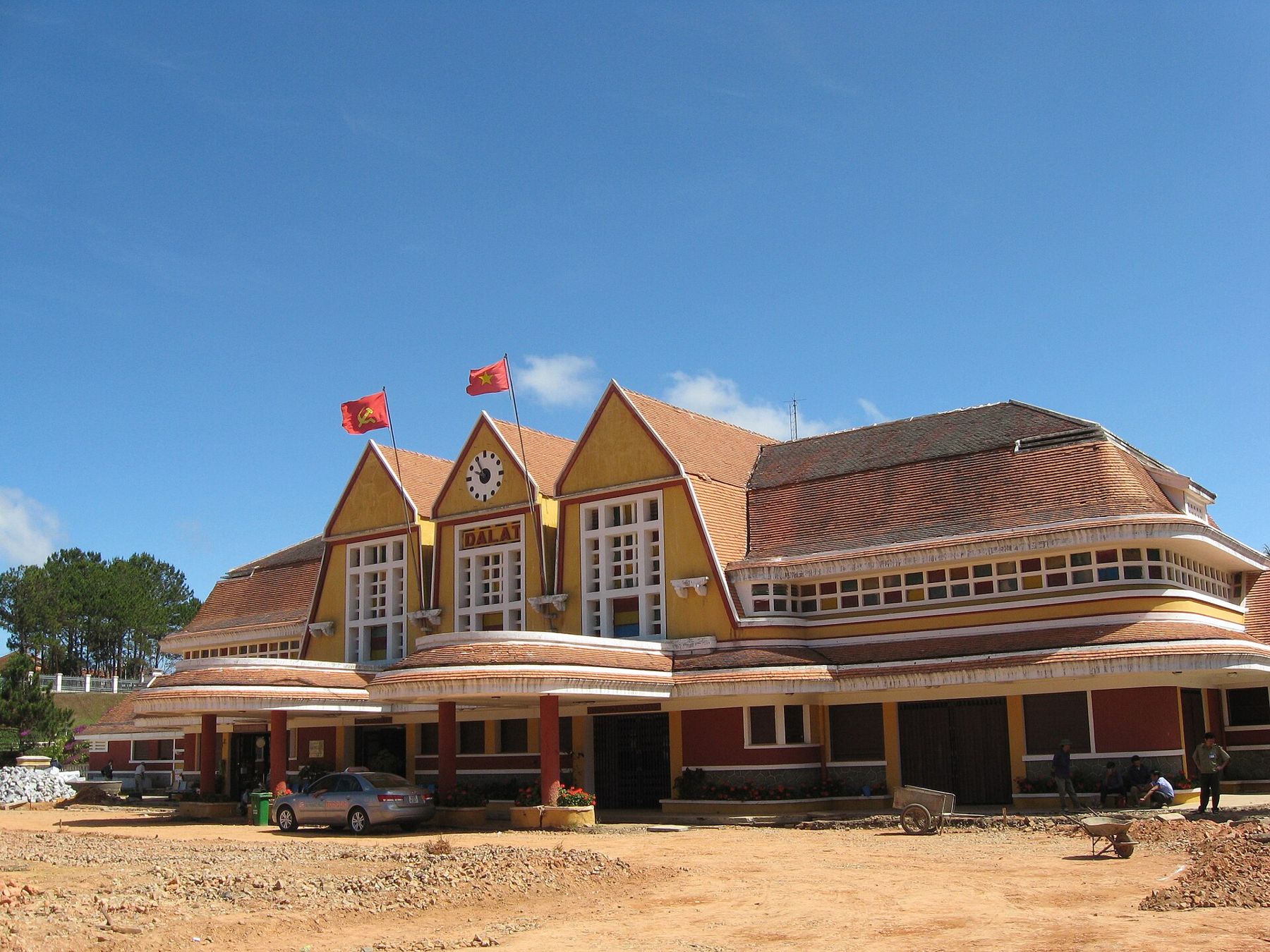
Đà Lạt railway station, finished in the 1930s, is one of the finest art deco buildings in Vietnam. Its three steep gables are often said to echo the peaks of the Langbiang mountain to the north, and the coloured glass windows and tiled roofs make it a favourite with photographers.
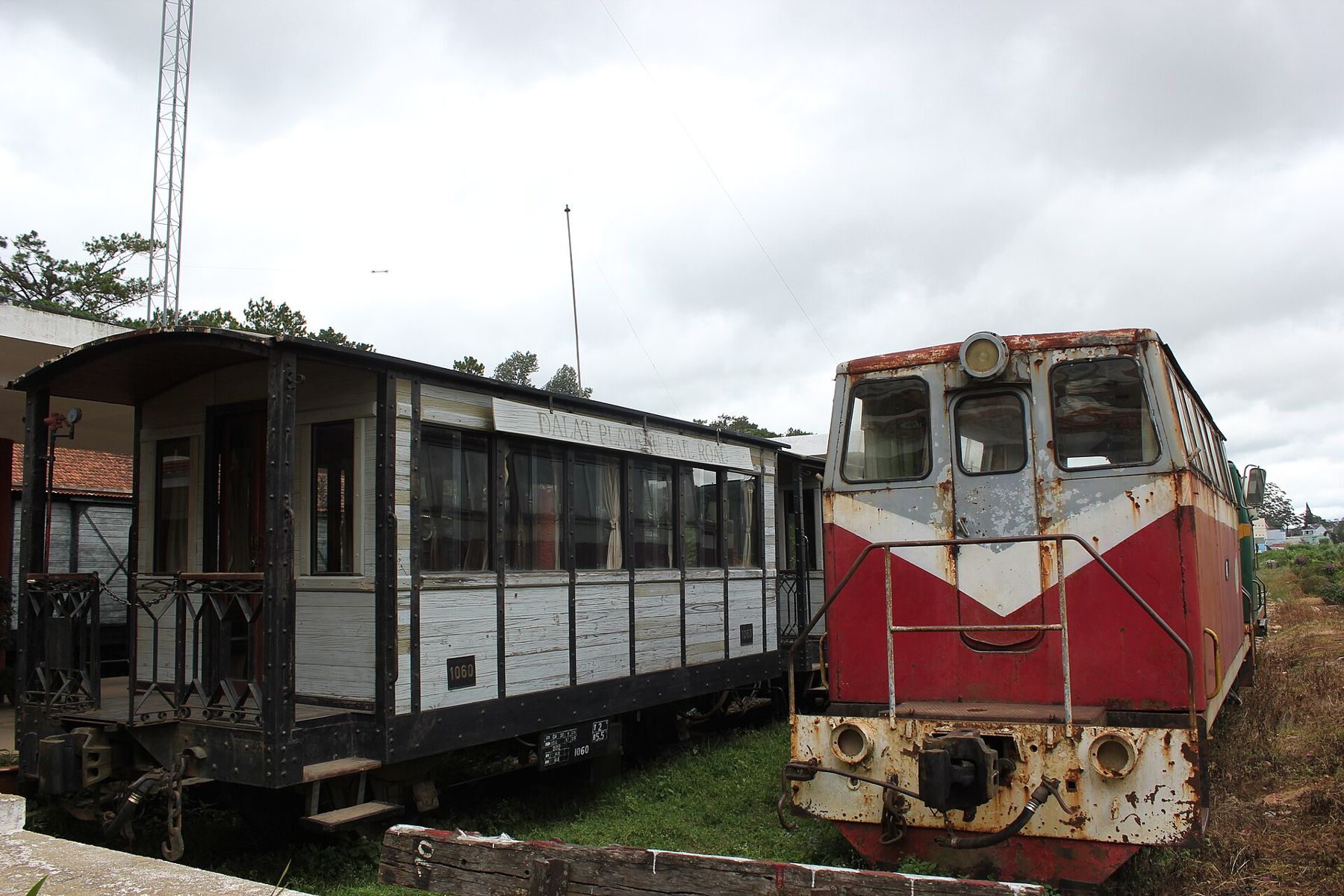
The station was once the end of a mountain railway that climbed from the coast near Phan Rang, using a rack section to tackle the steepest gradients. The line was damaged during the war and closed, and the tracks below the plateau have long gone. What survives is a short heritage service that runs a few kilometres from the station to Trại Mát, a suburb with a pagoda whose buildings and dragon statue are covered in mosaic made from broken pottery and glass. Old carriages and locomotives stand on display at the station. Timetables change, so check the current schedule on the day.
Its three steep gables are often said to echo the peaks of the Langbiang mountain to the north, and the coloured glass windows and tiled roofs make it a favourite with photographers.
©
CAMERA: Diane Selwyn // Public domain Coming up after thisThe Mekong by sampan
Flower farms, gardens and coffee
The cool climate makes the hills around Đà Lạt one of the country's main growing areas for flowers and temperate vegetables. Villages on the edge of the city specialise in roses, chrysanthemums, lilies and hydrangeas, and you will see greenhouses covering whole valleys. Some farms welcome visitors, and the flower villages are pleasant places to walk or cycle, though remember that these are working farms: ask before walking into the fields.
The area is also known for strawberries, artichokes, which are dried and made into tea, and coffee. Arabica grows on the higher slopes around the city, while robusta dominates the lower highlands further north. Our story on Vietnamese coffee culture explains how the beans end up in a phin filter. The city stages a flower festival in some years, usually around December, when the streets and parks fill with displays.
©
CAMERA: Lars Curfs ( Grashoofd ) // CC BY-SA 3.0 nlLangbiang and the pine hills
About a dozen kilometres north of the city, Langbiang mountain rises to over 2,100 metres, the highest point on the plateau. Its name comes from a local legend of two lovers, Lang and Biang, from different peoples, whose families would not let them marry. The lower slopes have a road that jeeps use to carry visitors up to a viewpoint, while the summit is reached by a walking trail through pine and broadleaf forest that takes several hours up and back. Go early for the clearest views, take water and a layer, and walk the summit trail with a guide if you are not experienced in mountain walking.
Closer to town, Tuyền Lâm Lake, to the south, is surrounded by pine forest and makes a good place for a quiet walk, while several waterfalls lie within a short drive. Many sites around the city have been developed with rides and attractions, so expect crowds at weekends and on Vietnamese holidays.
Getting there and when to go
Đà Lạt has an airport, Liên Khương, about half an hour south of the city, with flights from Hanoi, Ho Chi Minh City and other cities. Buses from Ho Chi Minh City take several hours, climbing the final stretch on winding mountain roads; others come up from the coast at Nha Trang. If you rent a motorbike for the hills, read our guide to licences, helmets and riding first, as mountain roads here can be steep and slick.
The dry season runs from around December to April, with sunny days and chilly nights. From roughly May to October, afternoons often bring heavy rain, though mornings can be clear. Đà Lạt makes a natural break between the beaches and the cities of the south: many travellers come up from Saigon and continue on to the coast or down to the Mekong.