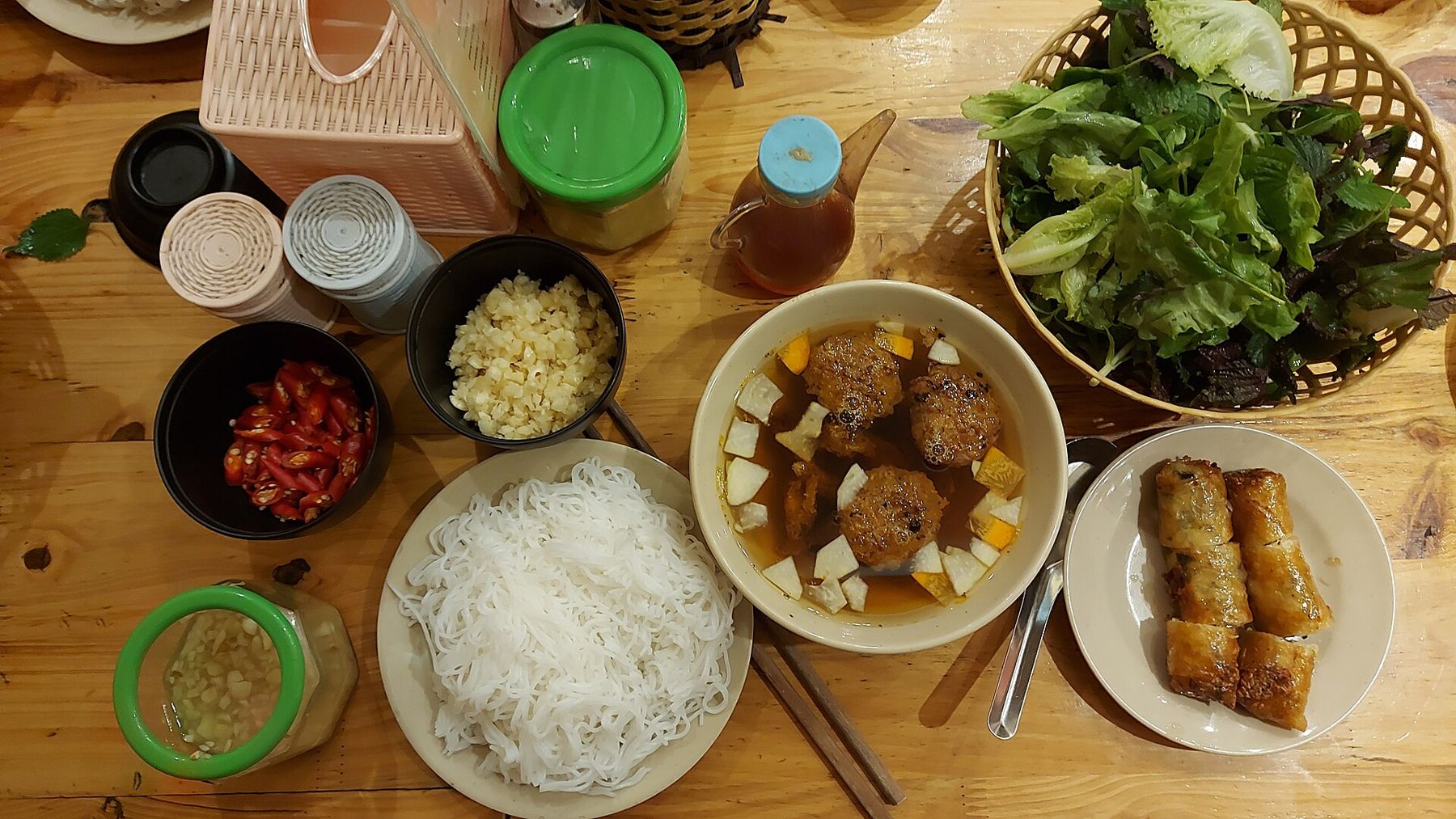
In Hanoi, the day runs on noodles. Before work, people perch on low stools over steaming bowls of phở. By late morning, the smell of pork grilling over charcoal drifts along the pavements, and the lunch crowd sits down to bún chả. Learn these two dishes and you have learned the rhythm of a Hanoi morning.
Phở, the northern way
Phở is a soup of flat rice noodles in a clear broth, usually made with beef (phở bò) or chicken (phở gà). It took shape in northern Vietnam in the early twentieth century, and the north still takes it very seriously. A good broth simmers for hours from bones, with charred onion and ginger, star anise, cinnamon and black cardamom, then is skimmed until it runs clean and fragrant.
Northern bowls are lean and direct. The noodles are soft and fresh, the broth is the star, and the herbs are mostly spring onion and coriander already in the bowl. For beef, the usual choices are tái, thin slices of raw beef that cook in the hot broth; chín, well-done brisket; or a mix of the two. Some stalls also serve tái lăn, beef quickly stir-fried with garlic before it goes in the bowl.
In the south, the same soup arrives with a heaped plate of herbs, bean sprouts and sauces to add yourself, a style you will meet in Saigon's night streets. In Hanoi, the additions are smaller and sharper.
Ordering and the table
Many phở stalls serve one thing, so ordering is simple: say or point to beef or chicken, then the cut. A bowl is a bát in the north. "Một bát phở bò tái" gets you one bowl of rare beef phở, and "cảm ơn" is thank you.
On the table you will usually find:
- Lime wedges and fresh chilli.
- A jar of vinegar with sliced garlic, a northern touch that brightens the broth.
- Chilli sauce, and sometimes fermented chilli paste.
- A basket of quẩy, fried dough sticks, to tear and dip.
Taste the broth first, then adjust. A squeeze of lime and a few drops of garlic vinegar are the classic Hanoi moves.
Hanoi also plays with the same ingredients in other forms. Phở cuốn wraps sheets of uncut phở noodle around stir-fried beef and herbs, to dip in a sweet-sour sauce. Phở trộn tosses the noodles with beef, herbs and peanuts and no broth at all. Phở xào fries them with beef and greens. They make a good second round once you know the soup.
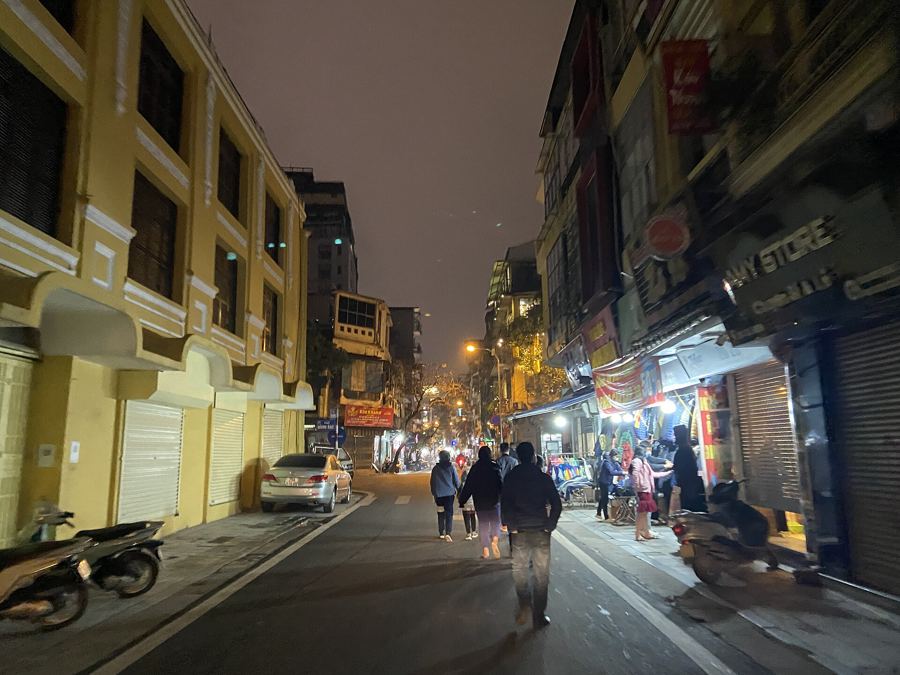 Coming up after thisHanoi's Old Quarter after dark
Bún chả, the lunchtime dish
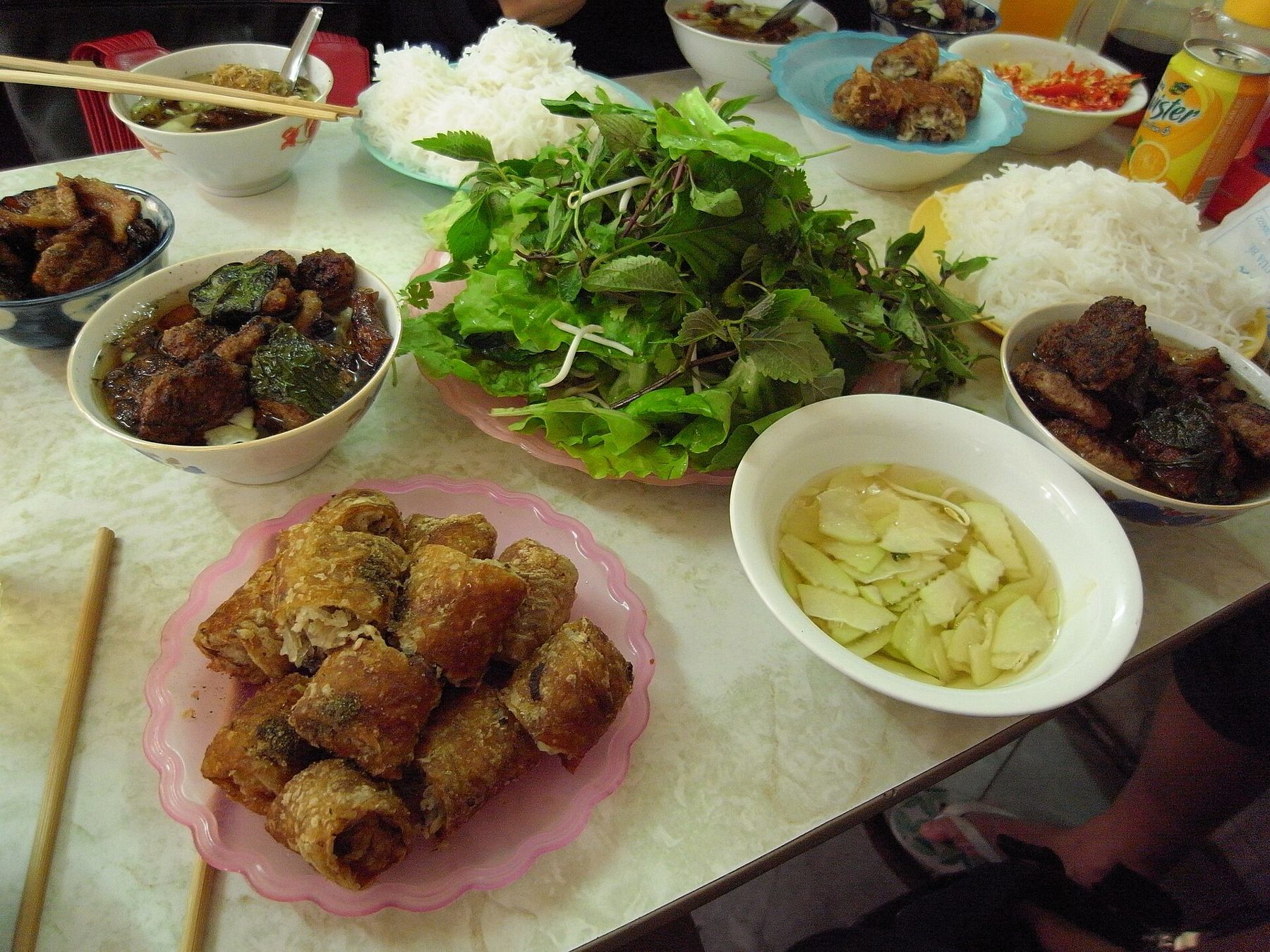
Bún chả is Hanoi's great lunch. Pork is grilled over charcoal on hinged wire racks, usually on the pavement outside the stall, so you can follow the smoke to find it. Two kinds of pork go into the bowl: small patties of seasoned minced pork, and slices of marinated pork belly or shoulder, both charred at the edges.
The grilled pork arrives floating in a bowl of warm dipping broth made from fish sauce, sugar, vinegar and water, with thin slices of green papaya or kohlrabi and carrot. Alongside come a plate of cold, soft rice vermicelli (bún) and a basket of fresh herbs and lettuce.
©
CAMERA: Larry // CC BY-SA 2.0To eat it, pick up some noodles with your chopsticks, dip them into the broth with a piece of pork and some herbs, and eat from the bowl. Add fresh garlic and chilli to the broth as you go. Most stalls also offer nem, crisp fried spring rolls, which are worth ordering for the table.
When to eat
Timing matters. Phở is mainly a breakfast dish in Hanoi, and many of the best stalls open at dawn and sell out by late morning, though some serve again in the evening. Bún chả runs from late morning through lunch, and many stalls close once the meat is gone, usually by early afternoon.
The rest of the morning has its own menu. Look for bánh cuốn, steamed rice rolls filled with pork and wood ear mushroom; bún riêu, a tomato and crab noodle soup; and xôi, sticky rice with toppings. Travelling south, every region has its own bowl, from the spicy beef noodles of Huế to the herb-heavy soups of the delta.
The cooler months, roughly October to April, are the most comfortable time for steaming soup on a pavement, but Hanoi eats phở all year.
Etiquette at the stall
- Sit where there is space. Tables are shared, and nobody minds.
- Hold chopsticks in one hand and the spoon in the other, and drink the broth from the spoon or lift the bowl.
- Do not leave chopsticks standing upright in a bowl, which recalls incense at a funeral.
- A quick wipe of chopsticks and spoon with a tissue is normal.
- Pay when you leave. Prices are usually fixed, and tipping is not expected at street stalls.
Prices and opening times change, and individual stalls come and go, so the best guide is the crowd. A full stall at breakfast is a good stall.
Making a morning of it
For a Hanoi food morning, start early with phở near where you are staying, walk off breakfast around the lake and through the Old Quarter, stop for coffee, then follow the charcoal smoke to bún chả at lunch. If you are heading on by rail, the Reunification Express carries you south through a whole menu of regional noodles. Begin with the two that Hanoi does best, and eat them at the hour the city does.