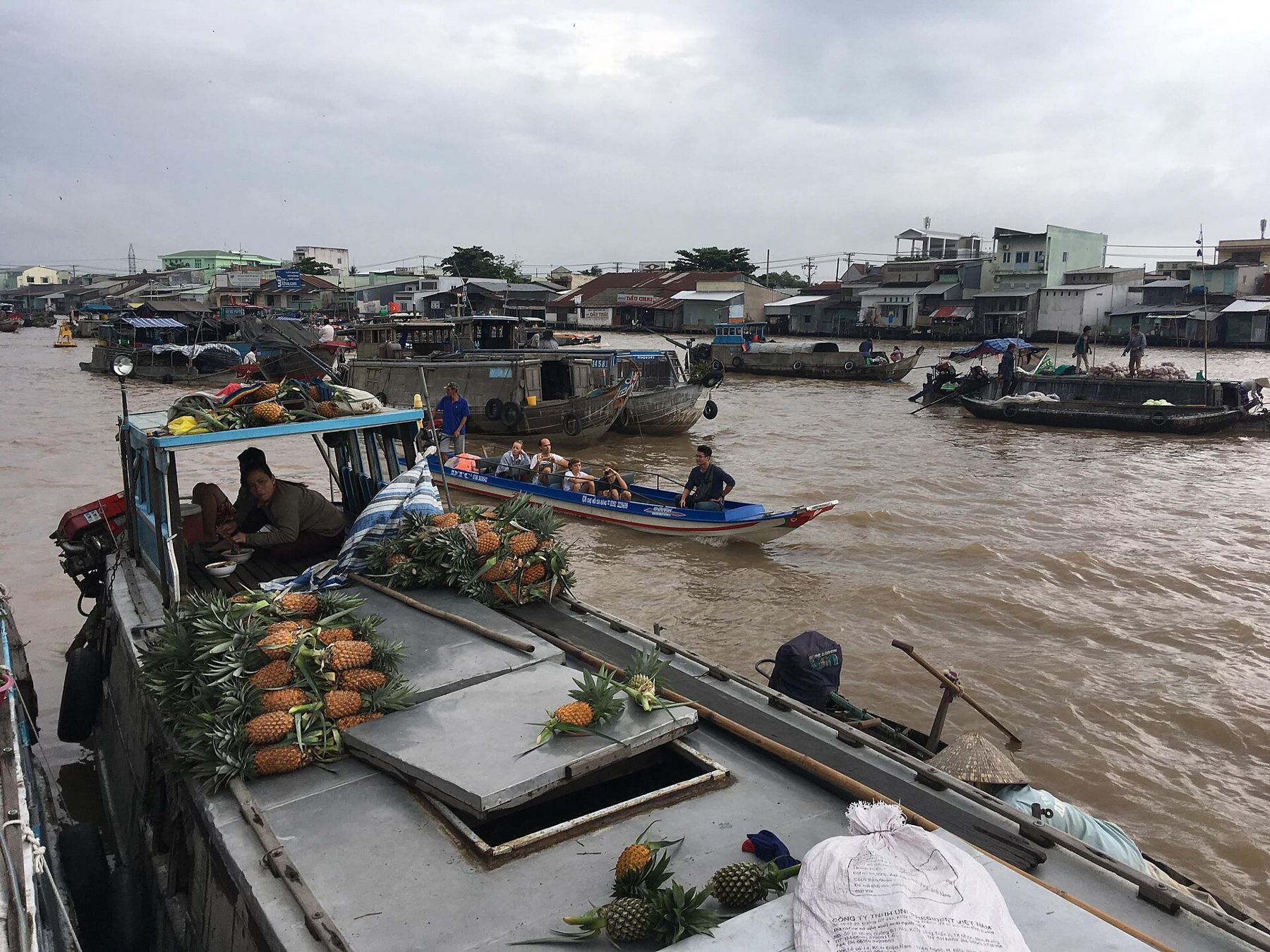
The Mekong Delta runs on water. Rivers split into canals, canals split into creeks, and the creeks reach the back doors of houses, orchards and rice fields. The best way to see it is low and slow, from a small wooden boat, early enough that the light is still soft and the river is busy with trade. This episode starts in Cần Thơ (Can Tho), the delta's largest city, and heads out before dawn.
Why Cần Thơ makes the best base
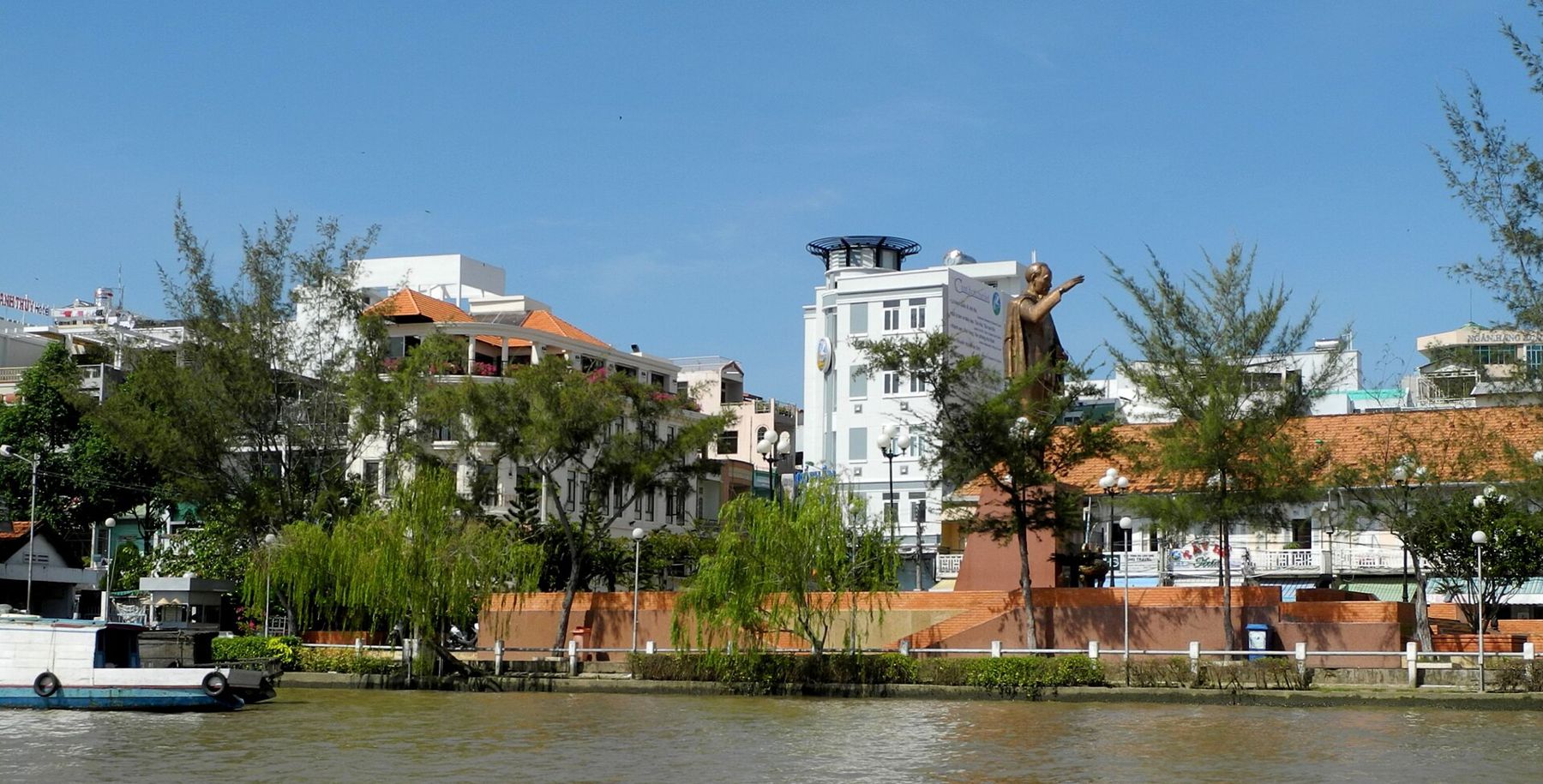
Cần Thơ sits on the Hậu River, the southern branch of the Mekong, a few hours by road south-west of Ho Chi Minh City. It has a riverside promenade at Ninh Kiều, a wharf where boats gather each morning, and enough places to sleep and eat that you can arrive in the afternoon and be on the water before sunrise the next day. Buses run from Saigon through the day, and the city has its own airport with domestic flights. Road journey times swing with traffic, so leave a buffer before any onward connection.
Two nights is a comfortable minimum. The first evening goes on the riverfront, the first morning on the floating market, and the second day on the smaller canals and orchards, with a long rest through the heat of the afternoon in between.
©
CAMERA: Franzfoto // CC BY-SA 3.0Cái Răng floating market at first light
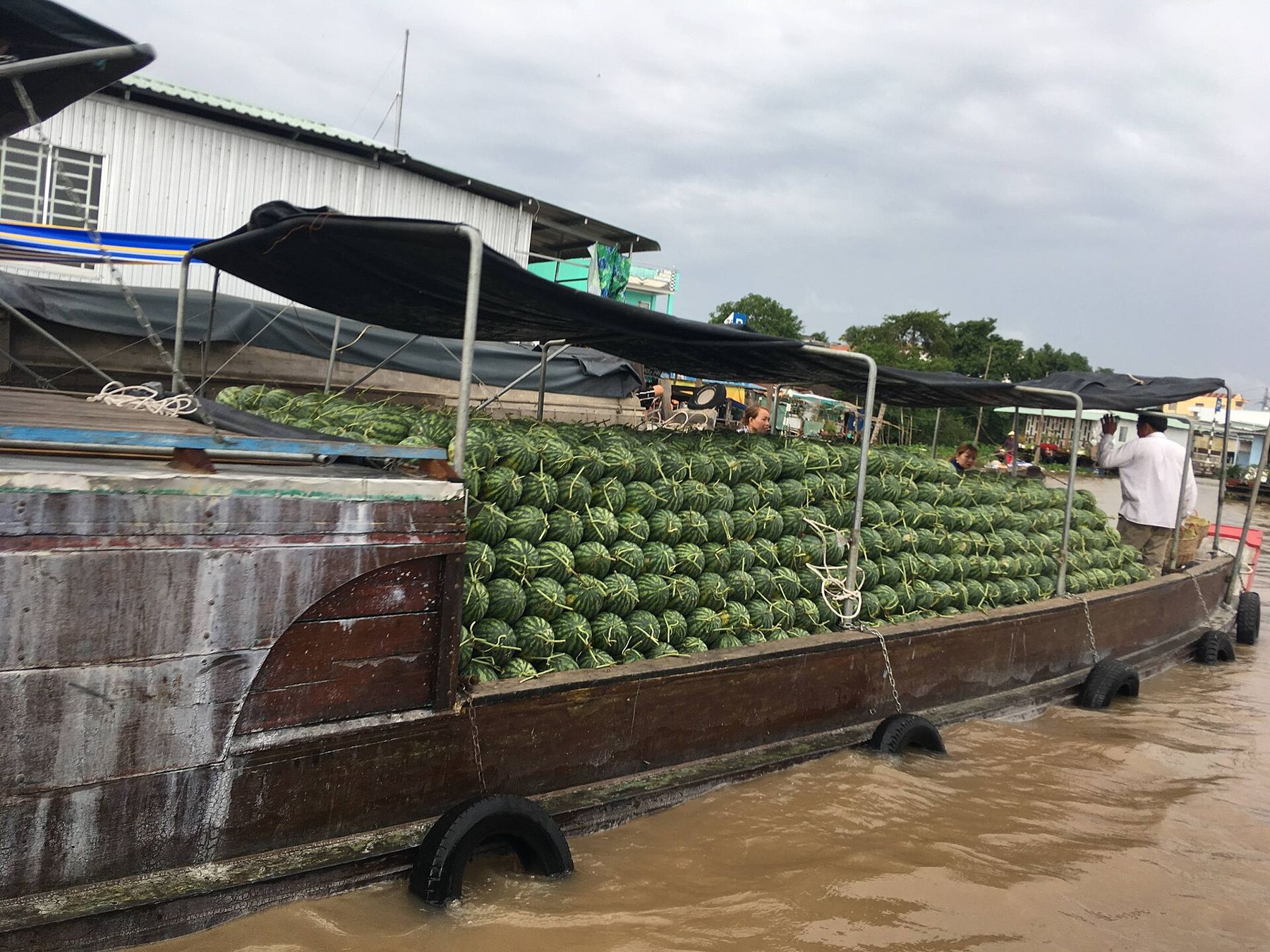
Cái Răng (Cai Rang) is the floating market most visitors come for, a short boat ride downstream from central Cần Thơ. It is a wholesale market first. Big wooden boats loaded with pineapples, watermelons, pumpkins and cabbages anchor in midstream, and smaller boats come alongside to buy by the sack and the crate. Traders hang a sample of what they sell from a tall pole at the bow, so buyers can read the market from a distance; the pole is called the cây bẹo.
©
CAMERA: Christophe95 // CC BY-SA 4.0The market starts early and thins as the morning goes on, so aim to be on the water around sunrise. Vendors paddle between the visitor boats selling coffee, cut fruit and noodle soup from their sampans, and breakfast on the water is part of the ritual. Keep small notes handy and agree the price before the bowl is passed across.
The market has shrunk over the years as roads and bridges have improved and more produce moves by truck. Some mornings it feels like a gathering of visitors as much as of wholesalers. Go with that in mind and the real trade still shows: the heavy hulls riding low, the shouted prices, the fruit passed hand to hand over the gunwales. Watch how deals are struck boat to boat and you will see a market that has run this way for generations.
Into the canals by sampan
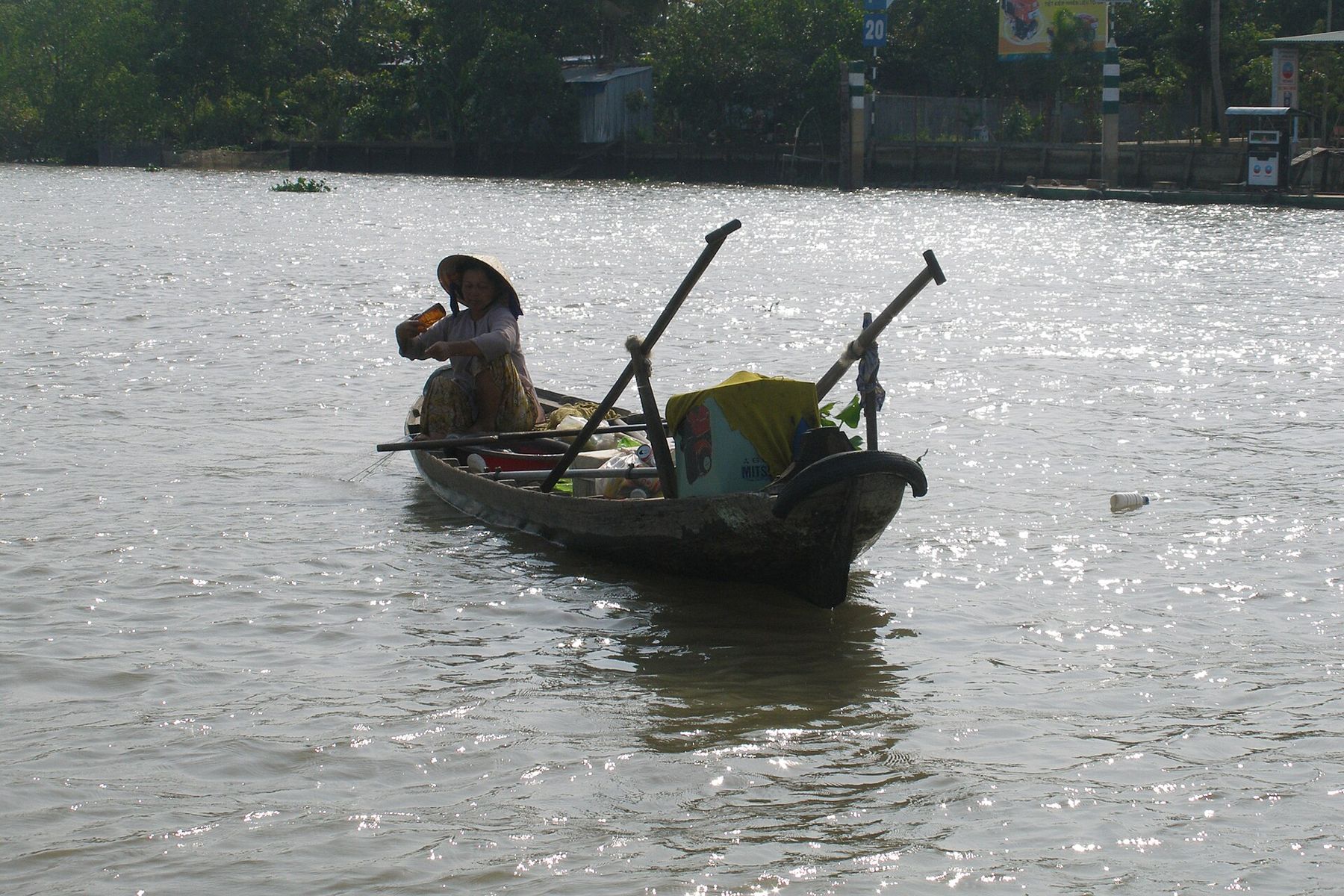
After the big river, switch to a sampan, the narrow wooden boat the delta has relied on for generations. Some are rowed standing up, the boatman facing forward and pushing on crossed oars; others carry a small engine on a long shaft. Either way, they slip into channels too narrow for anything larger, where water palm leans over the banks and houses face the water with a landing at the front step.
©
CAMERA: Vyacheslav Argenberg // CC BY 4.0Phong Điền (Phong Dien), a rural district upstream of central Cần Thơ, has a smaller floating market and a web of quieter canals that suit this kind of trip. Farther afield, Bến Tre, Vĩnh Long and the river islands near Mỹ Tho each have their own waterways, coconut groves and family workshops turning out rice paper, puffed rice and coconut candy.
 Coming up after thisCôn Đảo's quiet islands
Wear the life jacket you are given, keep your hands inside the hull when another boat comes alongside, and carry phones and cameras in a dry bag. Sampans sit low in the water, and the wake from a passing cargo boat can slop over the side without warning.
Orchards and the fruit calendar
The delta grows a large share of Vietnam's fruit, and many canals are lined with gardens of rambutan, mangosteen, longan, jackfruit, pomelo, mango and durian. Some families open their orchards to visitors: you walk the raised paths between the trees, eat whatever is ripe, and sit in the shade with tea while the boat waits at the landing. Many fruits peak in the hot months around the start of the rains, roughly May to August, although something is in season all year.
Rice is the other great crop. Out beyond the orchards the land opens into flat green paddies, cut by irrigation ditches and dotted with family graves standing in the fields. A morning on the water followed by an afternoon walk or bicycle ride along the dykes gives you both sides of delta life.
Food follows the water too. Look for grilled river fish, hot pots soured with tamarind or local leaves, and a lot of fresh herbs. Noodle soup is breakfast here as it is in the north, though the southern bowls come with a plate of greens to add yourself; the northern versions get their own episode on pho and bun cha.
Seasons, water and timing
The delta has two broad seasons. The dry months, roughly December to April, bring clear mornings, lower water and the most comfortable travelling. The rainy season, roughly May to November, brings heavy afternoon downpours that usually pass within an hour or two. Late in the rains, the river rises and spreads across low fields in the upper delta, an annual flood that farmers have long worked with rather than against. The full picture sits in the rainy season guide.
Mornings matter more than months.
Mornings matter more than months. Whatever the season, the river is at its liveliest and the air at its coolest in the first hours after sunrise, and by late morning the heat is heavy. Start early, rest at midday, and go back out for the soft light of late afternoon.
Around Tết, the lunar new year, the markets swell with flowers and festival food in the days before the holiday, then go quiet for several days afterwards while families stay home. Transport is booked out across that week.
Making the early start work
- Arrange your boat the evening before, through your accommodation or at the wharf. Agree the route, the length of the trip and the price in advance.
- Check the boat carries a life jacket for everyone aboard, and wear yours.
- Bring a hat, sunscreen and a light rain jacket, even in the dry season.
- Carry cash in small denominations for breakfast, fruit and drinks on the water.
- Ask before photographing traders up close. Buying something is a friendly way to say thank you.
Prices, boat routes and market hours change with the seasons and over the years, so check locally before you set out. The river itself keeps its own timetable: be on it before the sun is high.