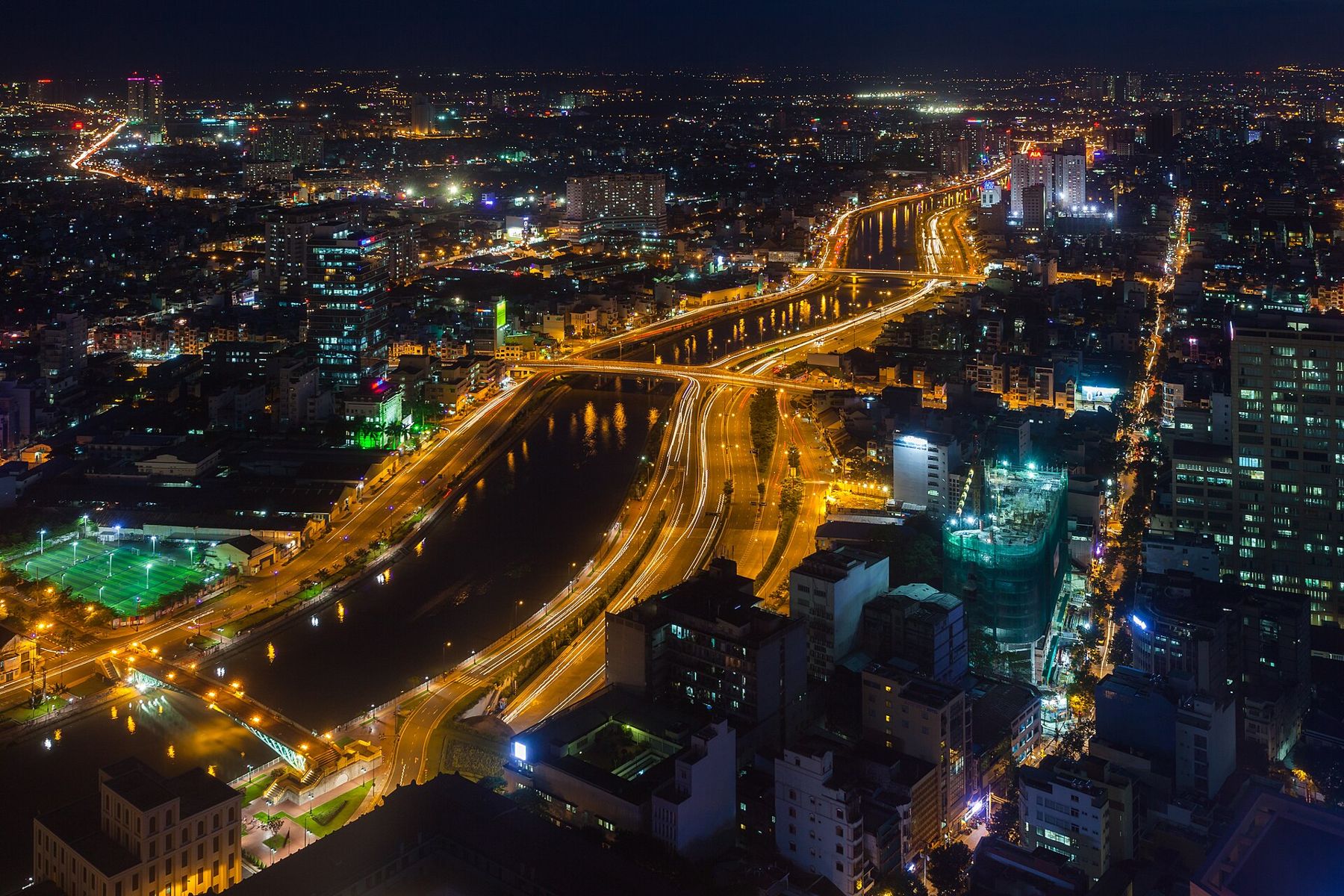
Ho Chi Minh City, still called Saigon by most people who live there, is at its best in the evening. The sun drops, the air softens, and the streets fill with families on motorbikes, couples on low plastic stools and food carts lit by a single bulb. This episode is a route through the old centre after dark, with a few daytime stops worth fitting in first. If you have just stepped off the long train from Hanoi, it is the ideal first night: easy walking, plenty to eat, and no early start the next day.
The old centre's landmarks
The centre of the city is the area everyone still calls District 1, on the west bank of the Saigon River. Its landmarks sit within easy walking distance of each other. Start at the red-brick Notre-Dame Cathedral, built under French rule in the late nineteenth century. It has been under a long restoration, so expect scaffolding and check whether the interior is open. Across the square is the Central Post Office, a working post office in a grand colonial hall with painted maps on its walls.
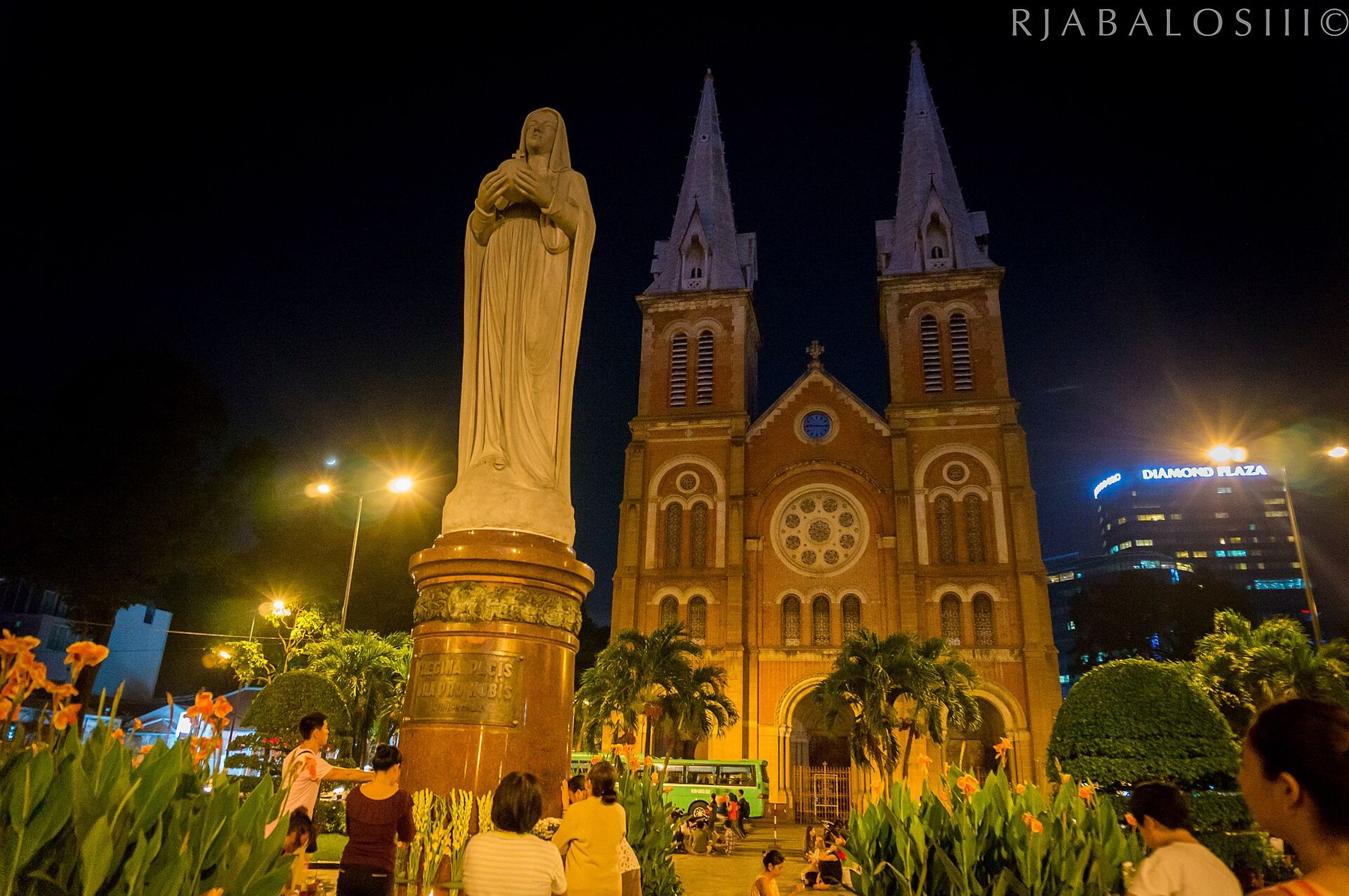
©
CAMERA: rjabalosIII // CC BY 2.0From there, walk down to Nguyễn Huệ, a broad pedestrian boulevard that runs from the river to the ornate City Hall, with a statue of Ho Chi Minh in front. Like the lakeside streets of Hanoi's Old Quarter at weekends, the boulevard is the city's living room in the evening: children on scooters, street performers, teenagers taking photos, and older couples walking slowly in the breeze off the river. The Opera House stands a block away on Đồng Khởi, the old Rue Catinat, lit up at night.
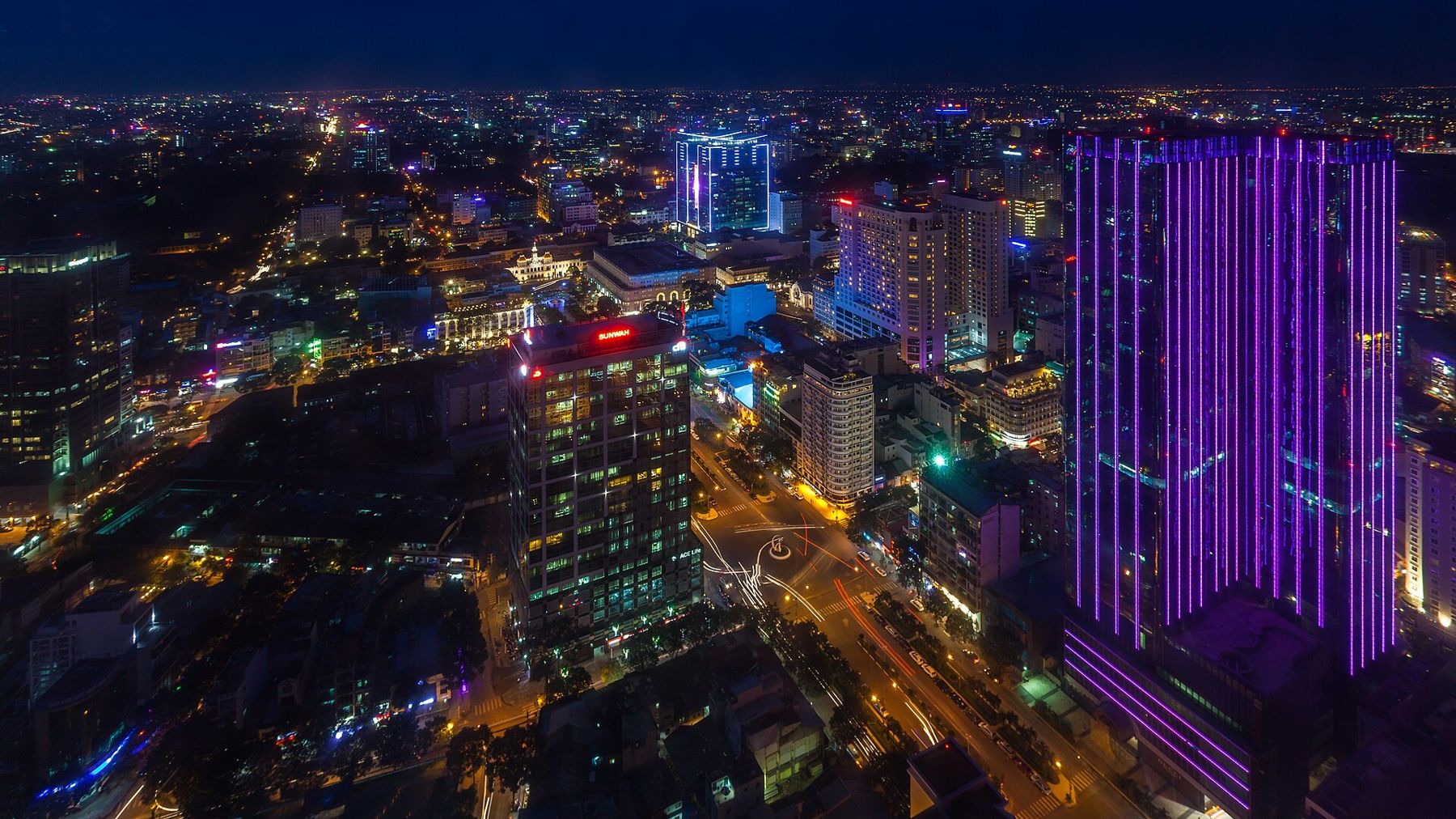
©
CAMERA: Diego Delso // CC BY-SA 3.0Ben Thanh by day and by night
Ben Thanh Market, under its clock tower, is the city's best-known market. By day the hall is packed with stalls selling coffee, dried fruit, fabric, kitchenware and souvenirs, with a food section in the middle. Prices for visitors start high, so bargain politely or simply browse.
When the hall closes in the evening, the streets around it take over, with stalls and grills setting up along the sides. It is lively and easy, though aimed at visitors. For something more local, ask where people eat in the residential lanes a few streets back, or take a short ride into neighbourhoods such as the old District 3 or District 4, where evening food streets serve snails, grilled meats, broken rice and sweet soups to crowds of regulars.
Two smaller notes. The city's first metro line, which opened at the end of 2024, runs from near Ben Thanh out to the eastern suburbs, partly elevated and a useful way to see the city from above. And Bùi Viện, the backpacker street, is loud, crowded and runs very late; walk it once, then decide.
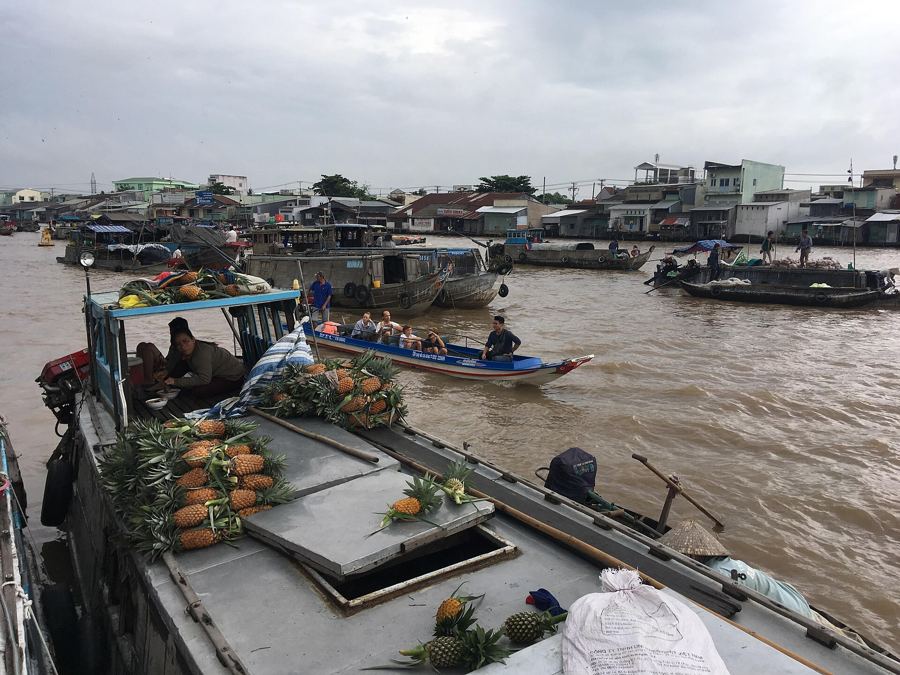 Coming up after thisThe Mekong by sampan
Alley cafes and late-night food
Saigon's real life happens in the hẻm, the narrow alleys that branch off the main roads. Some are barely wide enough for two motorbikes to pass, yet they hold houses, shrines, barbers, noodle carts and tiny cafes with a few stools facing the lane. Wander in, sit down, and order an iced coffee with condensed milk; a glass of iced tea usually arrives alongside at no extra charge.
Some old apartment blocks in the centre have been taken over floor by floor by small cafes and boutiques, and climbing their stairwells is part of the fun. Most are family-run, the menu is short, and nobody minds if you linger for an hour watching the lane. Rooftop spaces open across the centre at sunset, giving wide views over the river and the towers. For dinner, look for bánh xèo, crisp rice pancakes folded around shrimp and bean sprouts, broken rice with grilled pork, and bánh mì from a cart late at night. Southern noodle soups come with a heaped plate of herbs and bean sprouts to add yourself, a contrast with the leaner bowls described in pho and bun cha.
Stalls are mostly cash. Hygiene is generally fine at busy places with high turnover; the stall with the crowd is usually the safe bet.
Reading the motorbike streets
Saigon moves on two wheels.
Saigon moves on two wheels. In the evening, traffic swells as people head out to eat and meet, and the main roads become rivers of headlights. Crossing them looks impossible at first, yet it follows a simple rule: walk at a steady pace, keep looking at the oncoming traffic, and do not stop suddenly or run. Riders judge your path and flow around you.
Use pedestrian crossings and lights where they exist, even though they are not always respected. Watch for motorbikes on the pavement and riders going the wrong way along the edge of the road. Keep your phone in a front pocket or a zipped bag when standing at the kerb, since bag and phone snatching by passing riders does happen.
Getting around at night is easy with metered taxis or app-booked cars and motorbike taxis. Agree the price in advance if you flag down an unmetered ride.
History museums for the daytime
Some of the city's most important visits belong to the daytime, before the evening walk begins. The Independence Palace, also called the Reunification Palace, is a 1960s government building preserved much as it was in 1975, when the war ended there. Its meeting rooms, basement command rooms and rooftop are open to visitors.
The War Remnants Museum covers the war years through photographs, documents and military hardware. Some galleries are graphic and many visitors find it hard going; allow time and take a break when you need it. The Museum of Ho Chi Minh City, in a pale colonial mansion, tells the longer story of the city from its founding, and the Fine Arts Museum, in an older merchant's house, is a quieter stop.
Opening hours, closing days and entry fees change, so check before you go, and note that many museums close for a long lunch.
Planning your evening
- Start around five, when the heat eases, and walk the landmarks in the last of the light.
- Eat early around Ben Thanh or late in the residential lanes.
- Carry small notes, a light layer for air-conditioned rooms, and a charged phone.
- From May to November, expect a heavy downpour most afternoons; it usually passes within an hour.
©
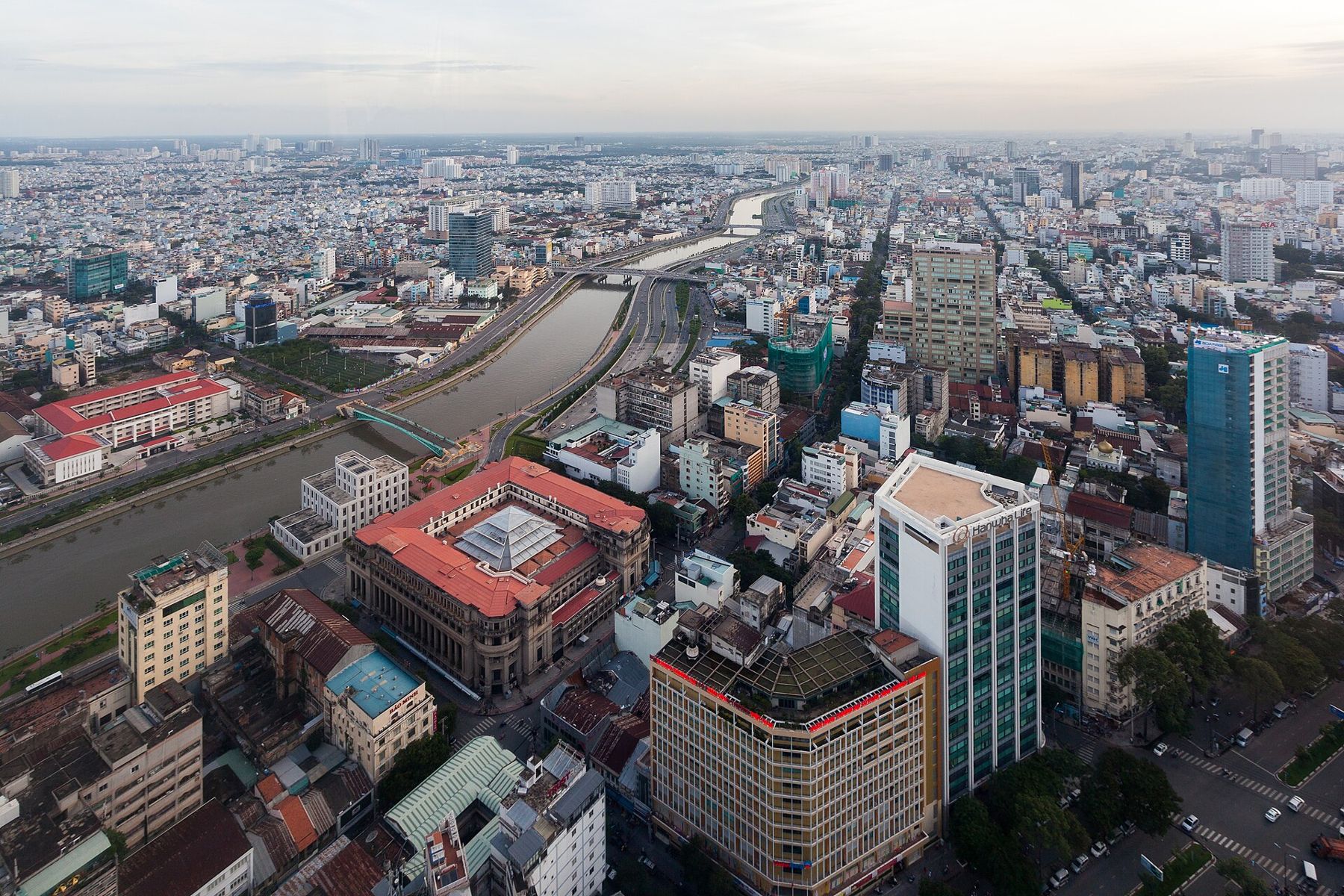
CAMERA: Diego Delso // CC BY-SA 3.0The city keeps going long after midnight, but the evening's best hours are the first few after dark, when everyone is out at once. The heat breaks, the lights come on, and the whole city seems to step outside.