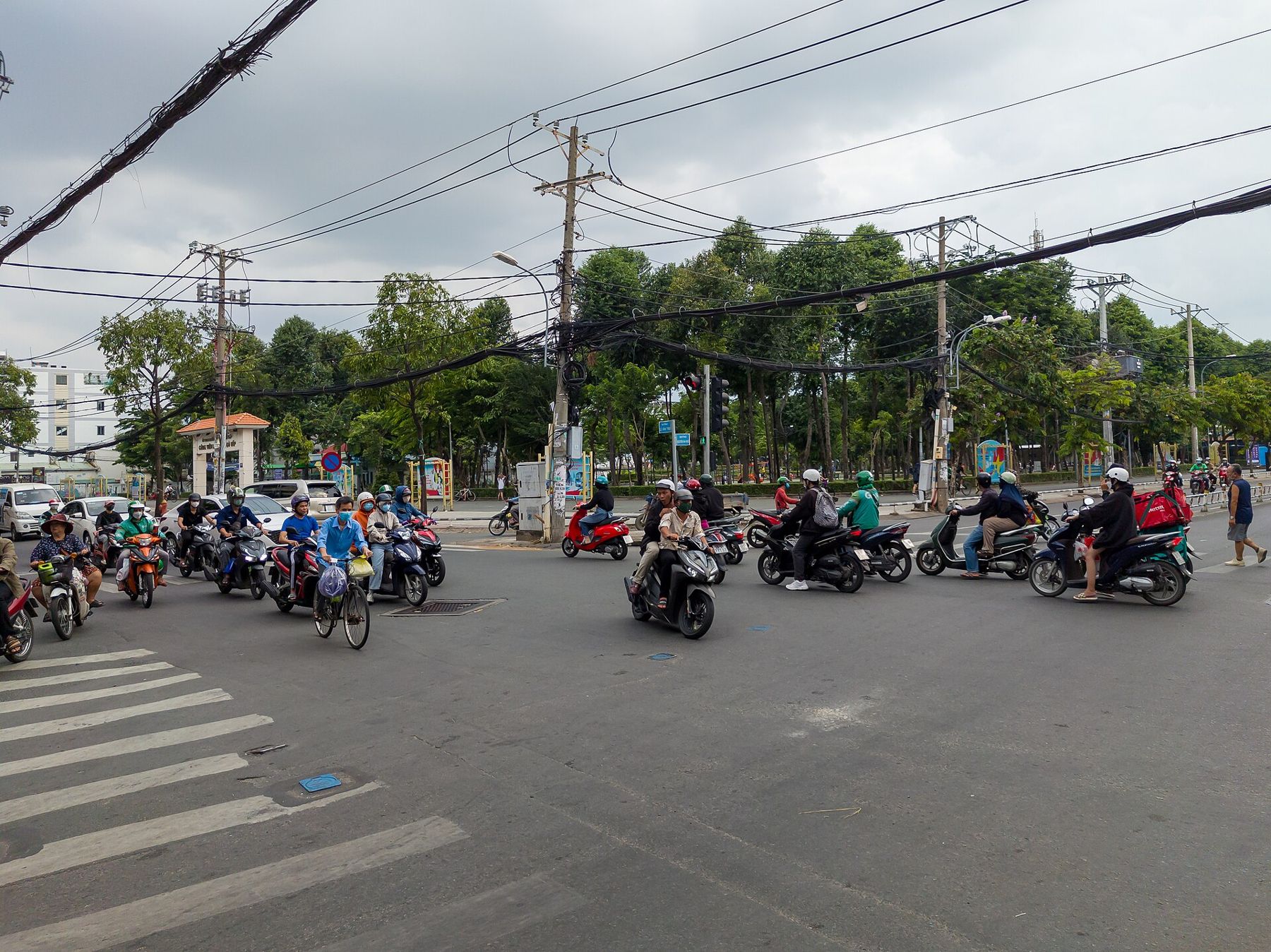
Motorbikes are the way Vietnam gets around. They carry families, shopping, goods and building materials, and they fill city streets from morning to night. Sooner or later you will cross in front of them, ride on the back of one, or think about renting one yourself. This episode covers all three, carefully.
Crossing the street
The first time you face a busy road in Hanoi or Saigon, it looks impossible. There may be no gap and no lights, just a steady stream of bikes. The technique is simple, and it works.
- Wait for a thinner patch of traffic rather than a full gap.
- Step out and walk at a slow, steady pace. Do not run, and do not stop suddenly or step back.
- Keep looking at the oncoming traffic, so riders can see you have seen them.
- Riders will judge your speed and flow around you. Cars, buses and trucks will not, so wait for them to pass.
Use crossings and lights where they exist, even though not everyone stops. Look both ways on one-way streets, since some riders go against the flow, and watch for motorbikes using the pavement. Crossing beside a local is a good way to learn the rhythm.
©
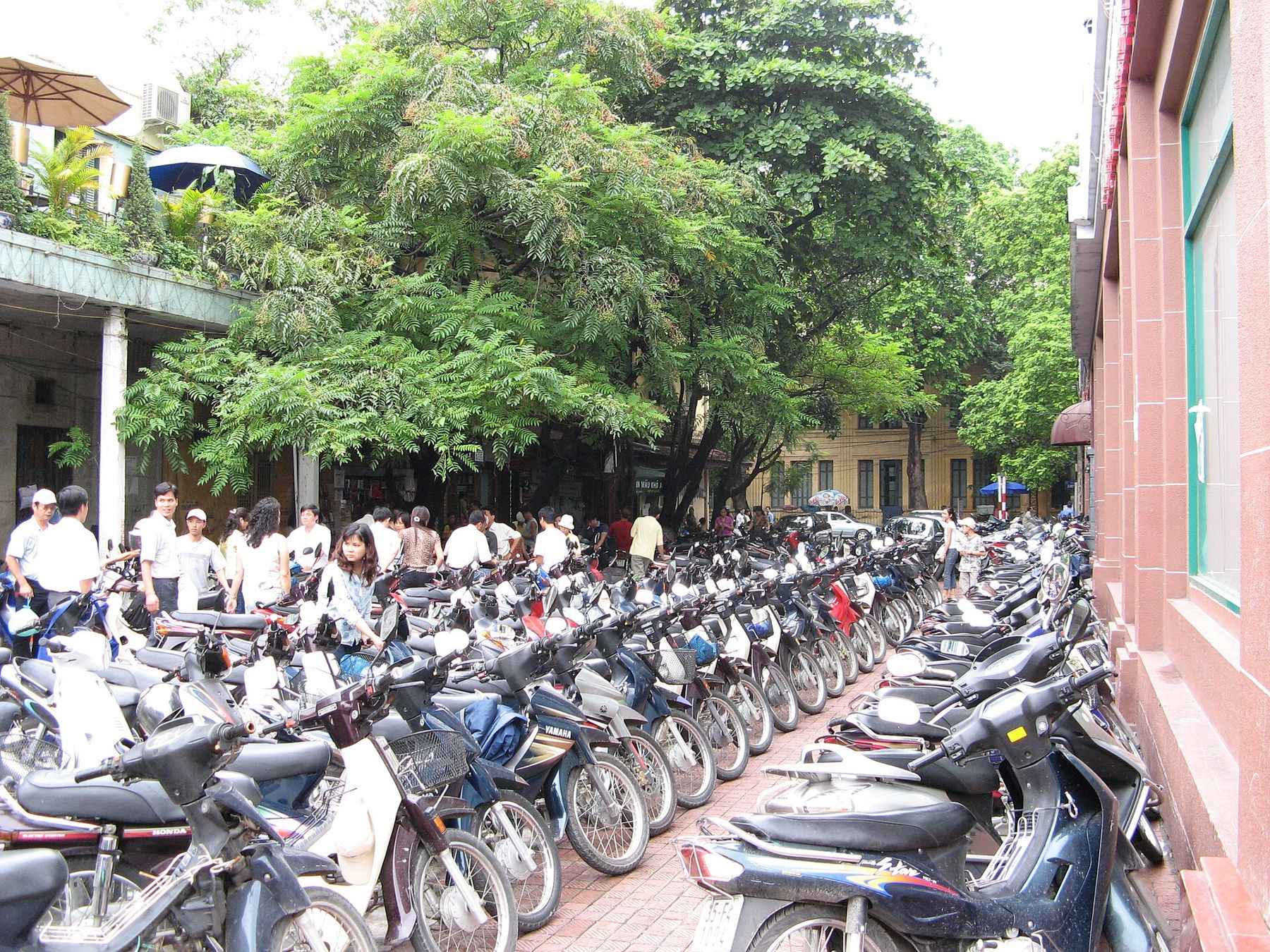
CAMERA: William Whyte // CC BY-SA 2.0Helmets and the law
Helmets are compulsory for everyone on a motorbike, riders and passengers alike, and the rule is widely enforced. Wear one every time, and fasten the strap. A helmet that sits loose on your head will not help you in a crash.
To ride a motorbike legally, you need a driving licence that is valid in Vietnam for the class of bike you are riding. That usually means a Vietnamese licence, or an international driving permit of the type Vietnam recognises, alongside your home licence. Many international permits are not of that type, and a home licence on its own is generally not enough. Rules on licence classes and permits change, so check the current position for your nationality before you travel.
Drinking and riding is off limits: the legal alcohol limit for motorbike riders is zero. Penalties for traffic offences were raised sharply in recent years, and police checkpoints are common.
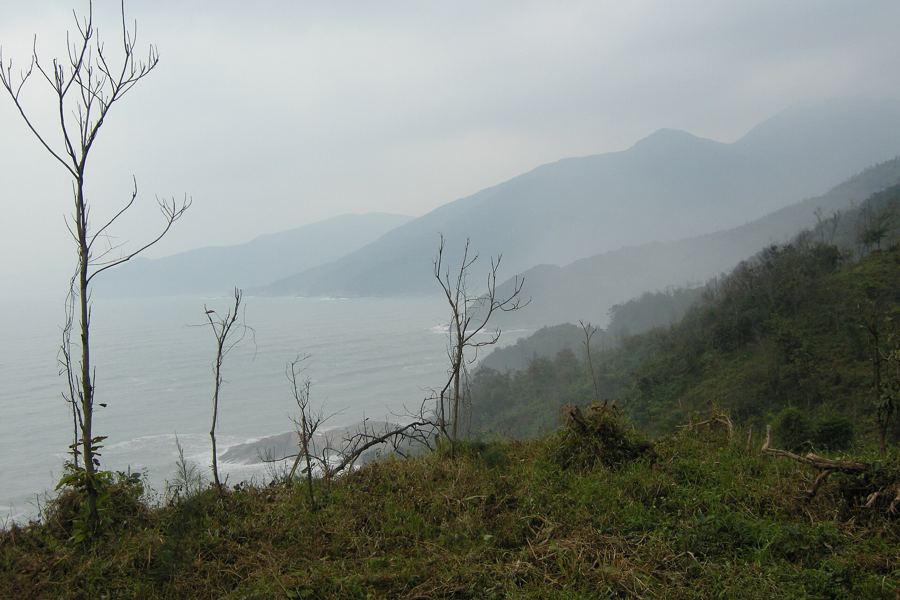 Coming up after thisOver the Hải Vân Pass, the ridge that splits the weather
Insurance
This is where many travellers get caught out. Most travel insurance policies will not pay for injuries or damage from riding a motorbike if you did not hold a valid licence for it, were not wearing a helmet, or had been drinking. Some exclude motorbikes entirely or only cover certain engine sizes. Medical bills after a crash can be very large.
Read your policy before you ride, and check whether it covers you as a rider, as a passenger, or both. Ask what cover the rental bike carries, and get it in writing.
Riding as a passenger
For most visitors, the safest way to enjoy a motorbike is from the back. Motorbike taxis, booked by app or flagged down on the street, are cheap and quick in the cities, and on mountain routes such as the Hà Giang loop many travellers ride pillion behind an experienced local driver.
- Put on the helmet you are given and fasten it, or bring your own.
- Climb on from the left side. The exhaust pipe is usually on the right and gets very hot; burns on the inside of the calf are common.
- Keep your feet on the footrests the whole time, and away from the exhaust.
- Hold the grab rail behind you or the rider's waist.
- Lean with the rider through bends rather than against them, and keep still.
- Keep bags in front of you or on your back, and phones zipped away.
Agree the fare before you set off if the ride is not booked by app, and say so if you would like the driver to slow down.
Renting and riding yourself
If you are licensed, insured and experienced, riding can open up Vietnam's back roads. If you have never ridden a motorbike before, Vietnam's roads are not the place to learn.
Before renting, check the brakes, lights, horn and tyres, and take photos of any existing damage. Avoid leaving your passport as a deposit if you can. Traffic drives on the right, the horn is a short signal that you are there rather than a sign of anger, and in practice bigger vehicles take priority. Ride defensively, slowly and predictably.
Weather matters. Rain makes roads slippery and cuts visibility, mountain passes can disappear into cloud, and loose gravel lies on bends. Avoid riding at night outside the cities, when unlit vehicles, livestock and potholes are hard to see.
Plan for things going wrong. Save the emergency numbers in your phone: 113 for police, 114 for fire and rescue, and 115 for an ambulance. Keep a copy of your passport, licence and insurance details somewhere other than the bike, and know the name of the nearest large hospital on your route. In the cities, private clinics with English-speaking staff can help with minor injuries and scrapes, which should be cleaned and dressed quickly in the heat and humidity.
On long routes, build in short days. Fatigue causes as many problems as traffic, and a tired rider on a hot afternoon is a riskier rider. Stop often, drink water, and finish before dark.
The calm approach
The streets of Saigon and Hanoi look chaotic, but they run on a shared, unspoken logic: steady movement, constant awareness, no sudden changes. Learn it on foot first, ride as a passenger next, and only take the handlebars yourself when your licence, insurance and skills are all in order.