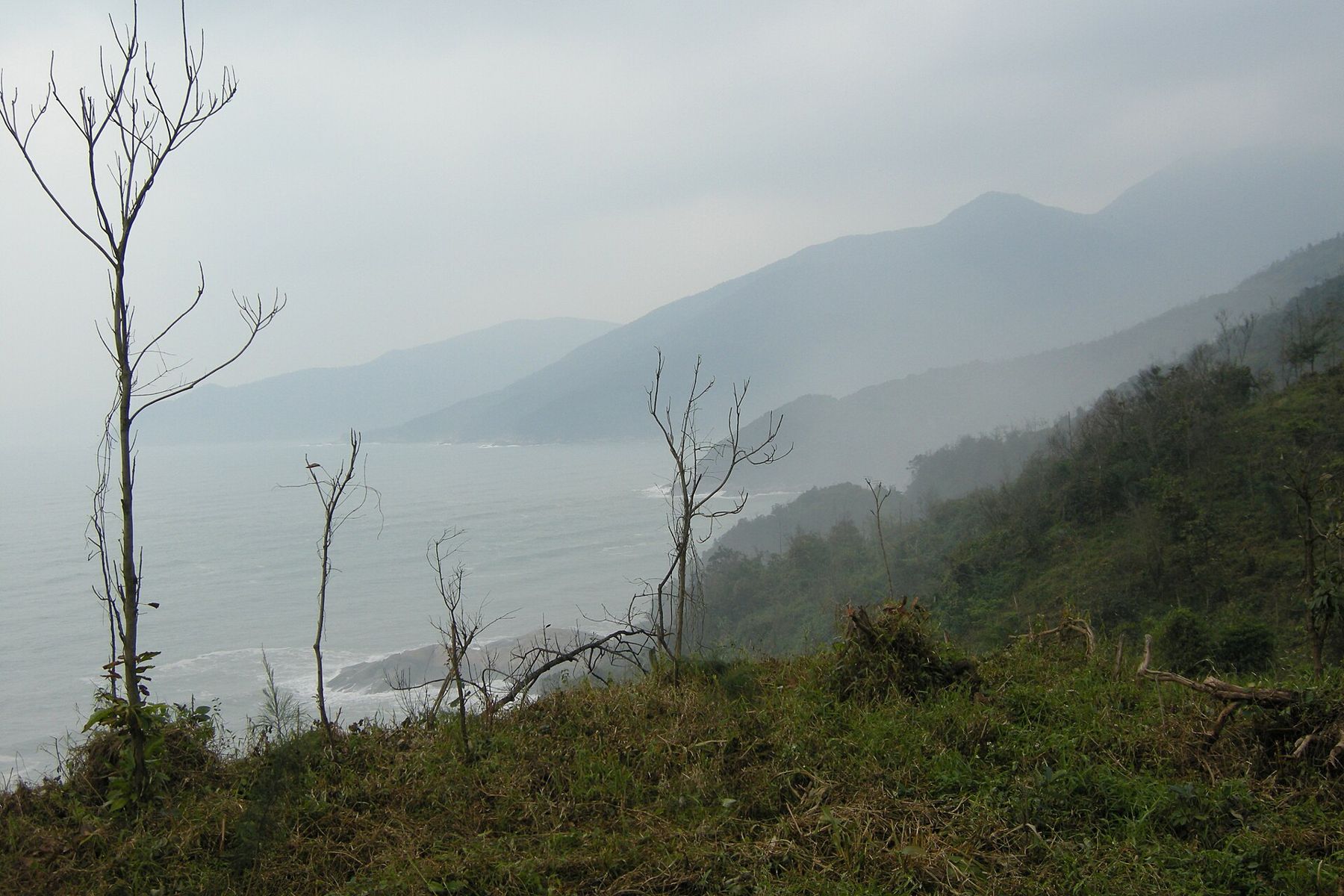
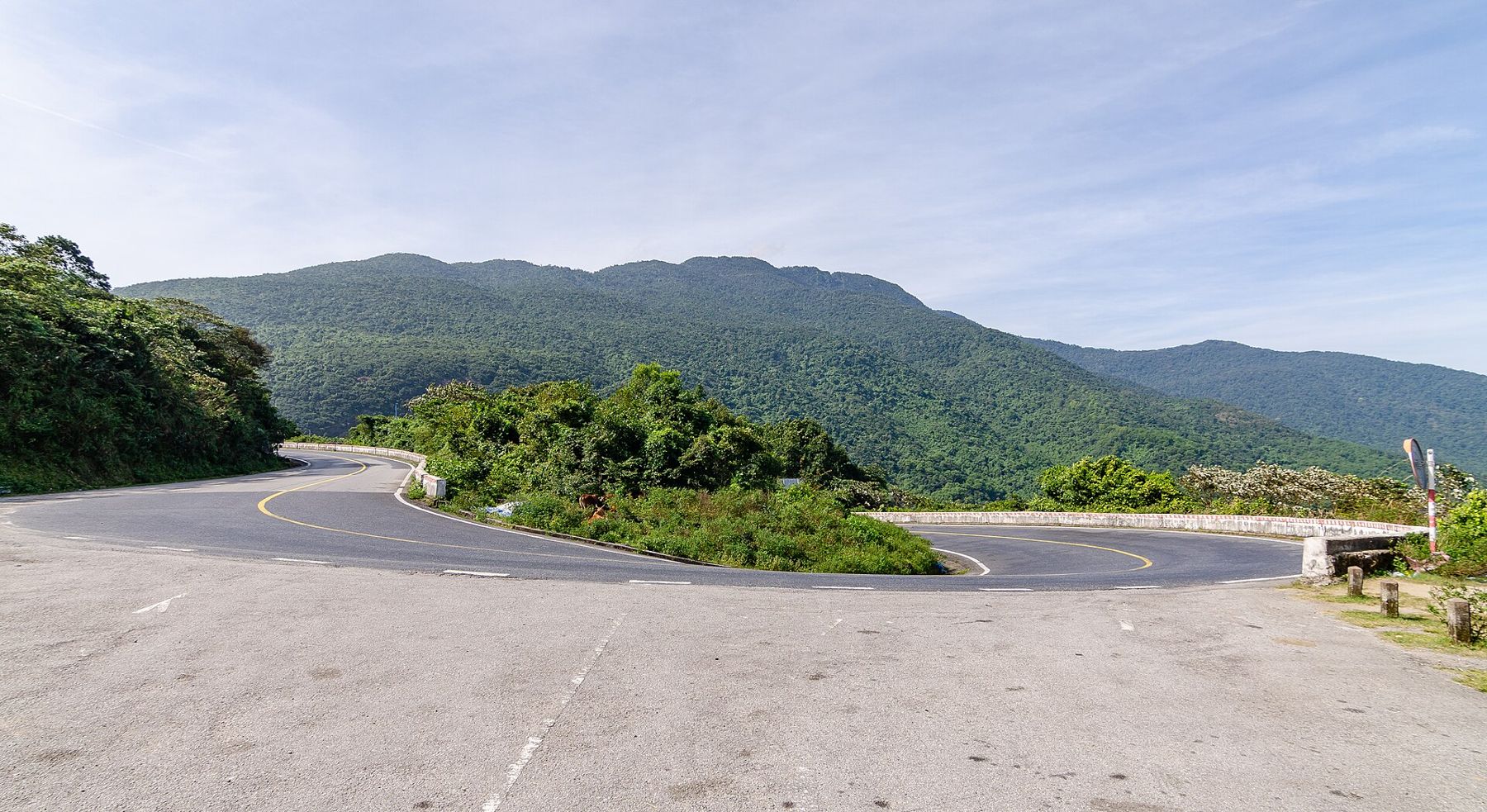
Travel south along Vietnam's coast and, just north of Đà Nẵng (Da Nang), the mountains of the interior push a long, steep ridge all the way to the sea. The old national highway does not go around it; it climbs over the top in a string of hairpin bends, with jungle on one side and long drops to the water on the other. The Hải Vân Pass (Hai Van Pass), whose name is usually translated as ocean cloud pass, is one of the great short drives in the country, and with a tunnel now carrying most through traffic underneath, it is quieter than it used to be.
The road from Lăng Cô to Đà Nẵng
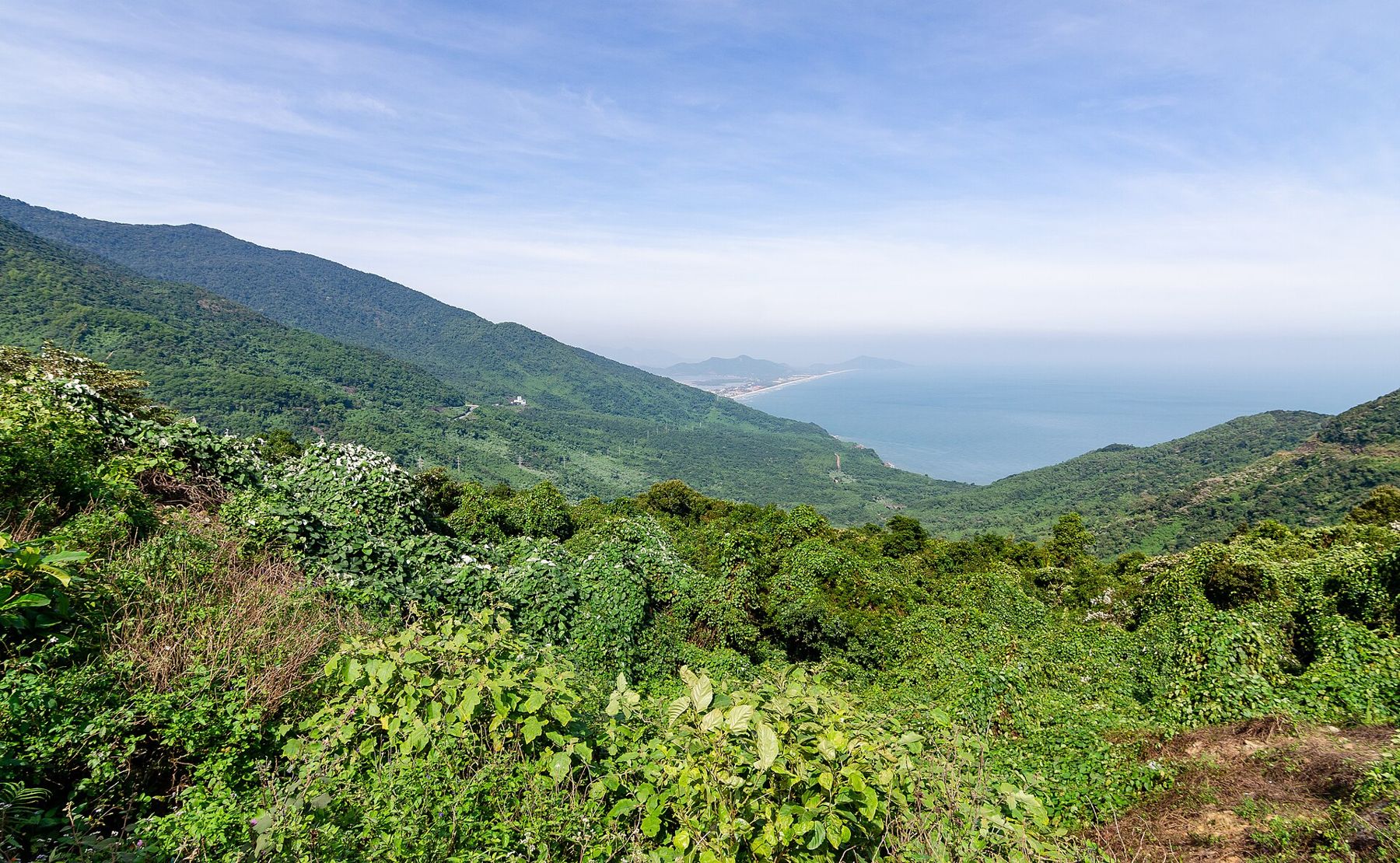
Coming from Huế, the road reaches the coast at Lăng Cô, a fishing town and beach on a narrow strip of sand between the sea and a wide lagoon. From there it begins to climb. The pass itself is roughly twenty kilometres from foot to foot, and the summit sits at close to 500 metres above the sea.
On the way up, the views open back north over Lăng Cô, its curving bay and the lagoon behind it. Over the top, the road drops in long loops towards Đà Nẵng, with the city's bay spread out below and, on clear days, the Sơn Trà peninsula on the far side. In between, the slopes are covered in dense green forest, and in places the road clings to the hillside with nothing between you and the sea but a low wall.
©
CAMERA: Steffen Schmitz // CC BY-SA 4.0The summit gate and the bunkers
At the top of the pass stands a fortified stone gate, Hải Vân Quan, built in the early nineteenth century under the Nguyễn dynasty to guard the road between the capital at Huế and the south. The ridge had long been a frontier: for centuries the area around it marked the edge between Vietnamese and Cham territory, and armies and travellers have always had to cross it.
Around the gate are concrete bunkers and gun positions from the French colonial period and the later war, when the ridge's views over the coast made it valuable to whoever held it. Today they are weathered shells, and visitors climb onto them for the view. Watch your footing: the concrete is broken in places, edges are unguarded, and the drops are real.
The summit has a car park and a few stalls selling drinks and snacks, and it is usually busy in the middle of the day. Early morning and late afternoon bring softer light and fewer people.
Why the weather changes at the top
The ridge is more than a scenic obstacle. It acts as a climate wall between the north and the south of the country. In the cooler months the north-east monsoon pushes cloud and drizzle against the northern face, so the Huế side can be grey, wet and chilly while Đà Nẵng, sheltered behind the mountains, is noticeably drier and warmer. The name ocean cloud describes it well: cloud often sits on the summit and pours over the ridge, and you can drive out of sunshine into thick fog within minutes.
That fog is the main hazard on the road. Visibility can drop to a few metres, and the surface is slick after rain. The central coast gets its heaviest rain and storms from around September to December, when landslides and road closures are possible. Our guide to Vietnam's weather region by region explains the pattern in detail. If the summit is hidden in cloud, it may be worth waiting an hour or crossing another day.
©
CAMERA: Steffen Schmitz // CC BY-SA 4.0 Coming up after thisHuế, the imperial city and the emperors' tombs
Pass or tunnel
Since the mid-2000s, the Hải Vân road tunnel has carried most traffic between Huế and Đà Nẵng straight through the mountain, saving time and avoiding the bends. A second tube was added later. For cars and buses, the tunnel is the quick and dull option; the pass is the slow and beautiful one.
The choice is not open to everyone, though. Motorbikes and bicycles are not allowed in the tunnel, so anyone on two wheels must take the pass. Vehicles carrying certain dangerous goods are also routed over the top. If you are travelling by car or minibus and want the views, ask your driver to take the pass before you set off, as many will default to the tunnel.
Riding it safely
Many people cross on a motorbike, either riding themselves or as a passenger behind an experienced driver, often as part of a day trip between Huế and Đà Nẵng or Hội An. The road is paved and wider than many mountain roads, and traffic is lighter now that most trucks use the tunnel, but it still deserves respect.
- You need a licence valid in Vietnam to ride a motorbike, and travel insurance may not cover you without one. Our guide to licences, helmets and being a passenger covers the general rules; check the current requirements for your nationality.
- Wear a proper helmet, fastened, every time.
- Keep well to the right on bends, and expect tour buses and cars to cut corners.
- Slow right down in fog and rain, and use lights.
- Only stop where there is space to pull fully off the road.
Seeing it from the train
There is a third way across. The north-south railway follows the coast around the seaward end of the ridge, running along ledges and through short tunnels with the sea directly below. It is one of the most scenic stretches of the whole line, and trains between Huế and Đà Nẵng give you the view without any of the driving. Sit on the seaward side, which is on the left heading south. Our story on the Reunification Express covers the full journey, and the stops worth breaking it at.