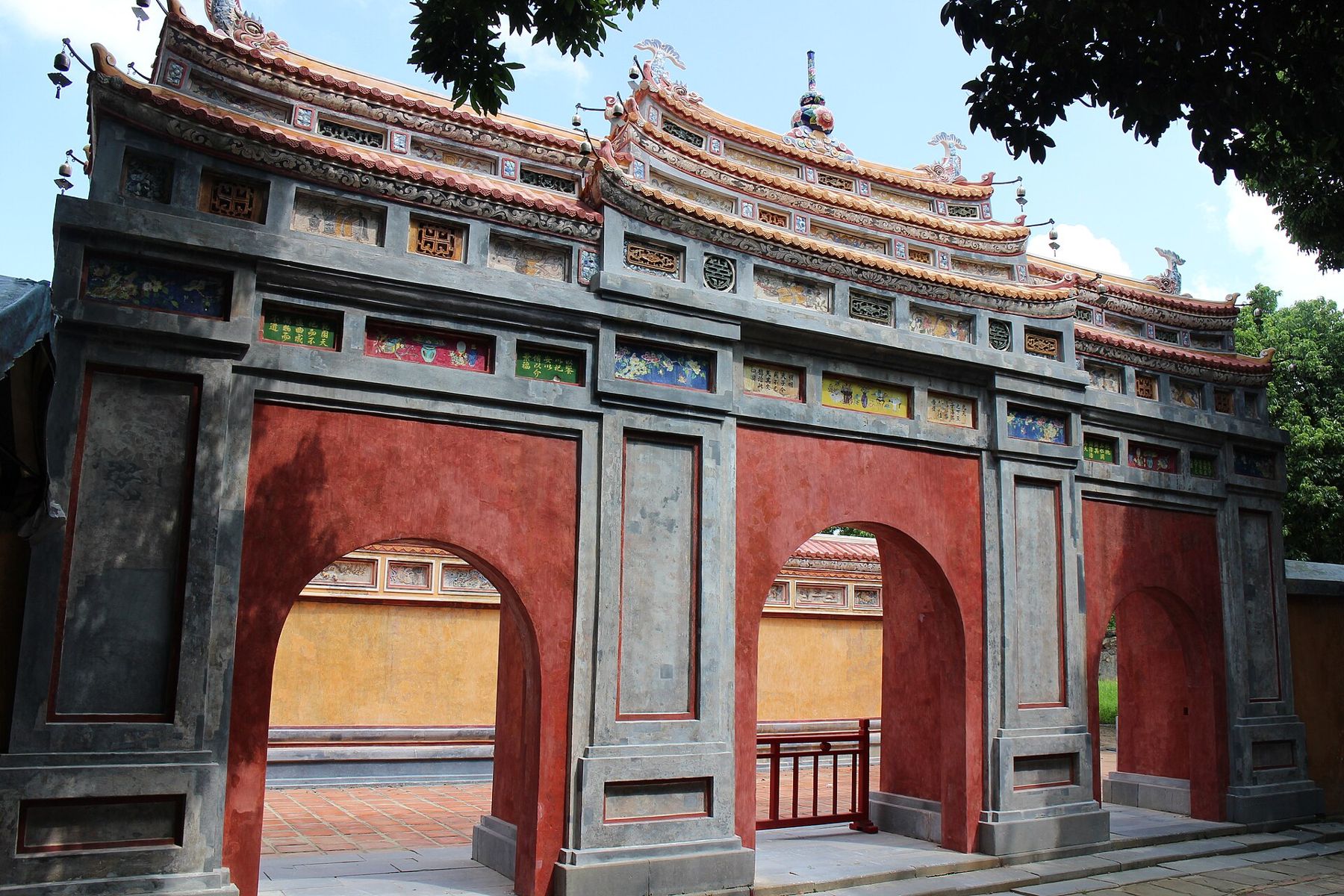
Huế (Hue) was the capital of Vietnam under the Nguyễn dynasty, from 1802 until the last emperor, Bảo Đại, abdicated in 1945. In that time the emperors built a fortified city on the north bank of the Perfume River, filled it with palaces, temples and gardens, and laid out their own tombs among the pine-covered hills upstream. UNESCO listed the Complex of Huế Monuments as a World Heritage site in 1993. Much was damaged by war and weather in the twentieth century, and restoration is still going on, but the city remains the best place in the country to understand its imperial past.
The citadel and the Imperial City
Work on the citadel began in 1804 under the first Nguyễn emperor, Gia Long. Its walls run for roughly ten kilometres, surrounded by a moat, and enclose a whole district of ordinary streets, houses and gardens as well as the royal enclosure. The tall flag tower on the southern wall faces the river and is one of the city's landmarks.
Inside the citadel lies the Imperial City, entered through Ngọ Môn, the Noon Gate, a massive stone gateway topped by a two-storey wooden pavilion. Beyond it, across ponds and a bridge, stands Thái Hòa Palace, the throne hall where the emperors held court ceremonies. Further in was the Forbidden Purple City, the private residence of the emperor and his household. Much of it was destroyed in heavy fighting in 1968, and parts of the enclosure are still open ground or under reconstruction.
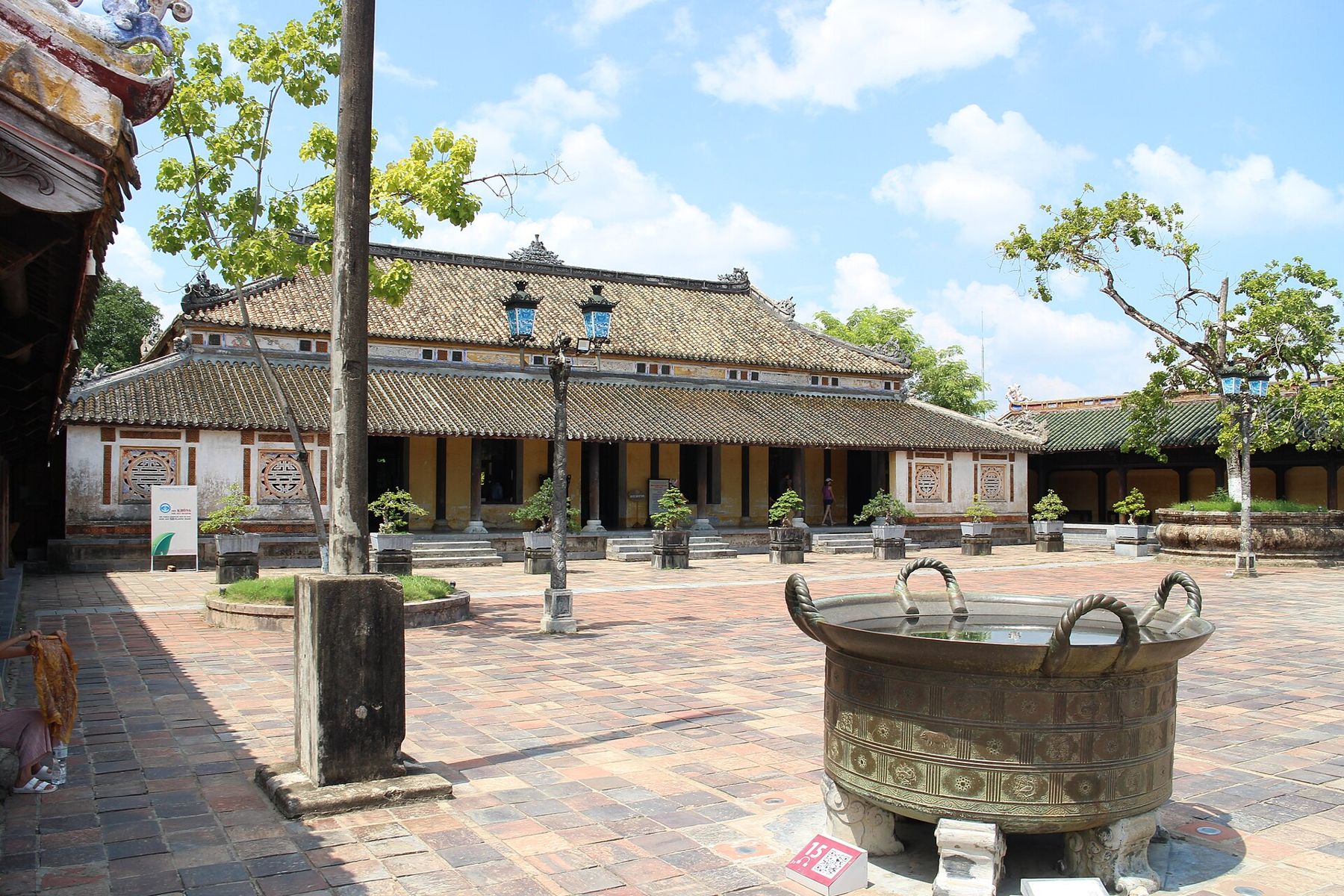
Do not rush. Some of the most rewarding corners are away from the central axis: the temple to the dynasty's emperors, with the nine great bronze dynastic urns standing in its courtyard, the long covered galleries, and the quiet gardens near the back walls. A thorough visit takes at least half a day. Mornings are cooler and calmer.
Listen out for music, too. Nhã nhạc, the formal court music of the Nguyễn dynasty, was recognised by UNESCO as part of the world's intangible heritage in 2003, and short performances are staged in the restored royal theatre inside the enclosure at set times. Outside the Imperial City walls, the rest of the citadel is a living neighbourhood of quiet lanes, lotus ponds, garden houses and small temples. Exploring it by bicycle in the late afternoon, when the light softens and families come out onto their doorsteps, shows a side of Huế that most visitors miss entirely.
©
CAMERA: Suicasmo // CC BY-SA 4.0Thiên Mụ Pagoda and the Perfume River
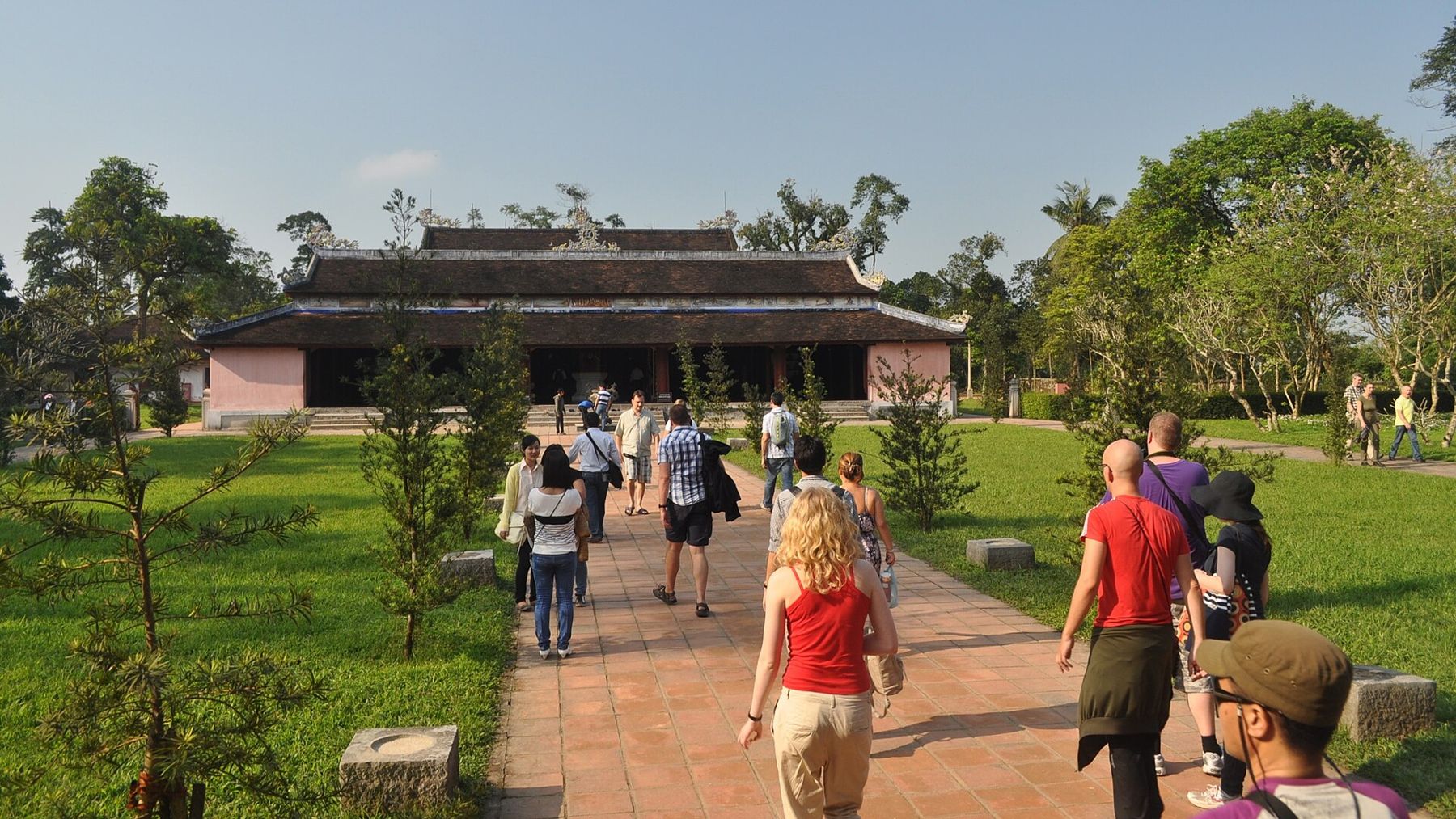
A few kilometres upstream, on a low hill above the north bank, Thiên Mụ Pagoda is one of the oldest and best-known religious sites in the city. It was founded in 1601, and its seven-storey octagonal tower, added in the nineteenth century, has become a symbol of Huế. The complex behind it is still an active Buddhist monastery, with monks living and studying there, so visit quietly and dress with shoulders and knees covered.
The Perfume River (Sông Hương) ties the sights together. Slow boats run upstream from the city centre to the pagoda and on towards some of the tombs, and a river trip is a pleasant way to arrive, though the road is quicker. In the evening, the riverbanks in the city fill with people walking and sitting by the water, and the bridges are lit up after dark.
©
CAMERA: David McKelvey from Brisbane, Australia // CC BY 2.0 Coming up after thisĐà Lạt, the cool town in the pine hills
The tomb of Tự Đức
Each Nguyễn emperor chose the site for his tomb during his lifetime, and many of them built the complex while still on the throne. The tombs lie spread through the hills south and west of the city, and they are very different from one another.
Tự Đức reigned longer than any other Nguyễn emperor, from 1847 to 1883, and his tomb, built in the 1860s, was also a retreat. He came here to write poetry, fish and read, in pavilions set around a lotus lake shaded by frangipani and pine. The emperor composed his own long epitaph, carved on a huge stone stele in a pavilion near the tomb. Visitors often say this is the most peaceful of all the tombs, and many leave it to the end of the day for the softer light.
He came here to write poetry, fish and read, in pavilions set around a lotus lake shaded by frangipani and pine.
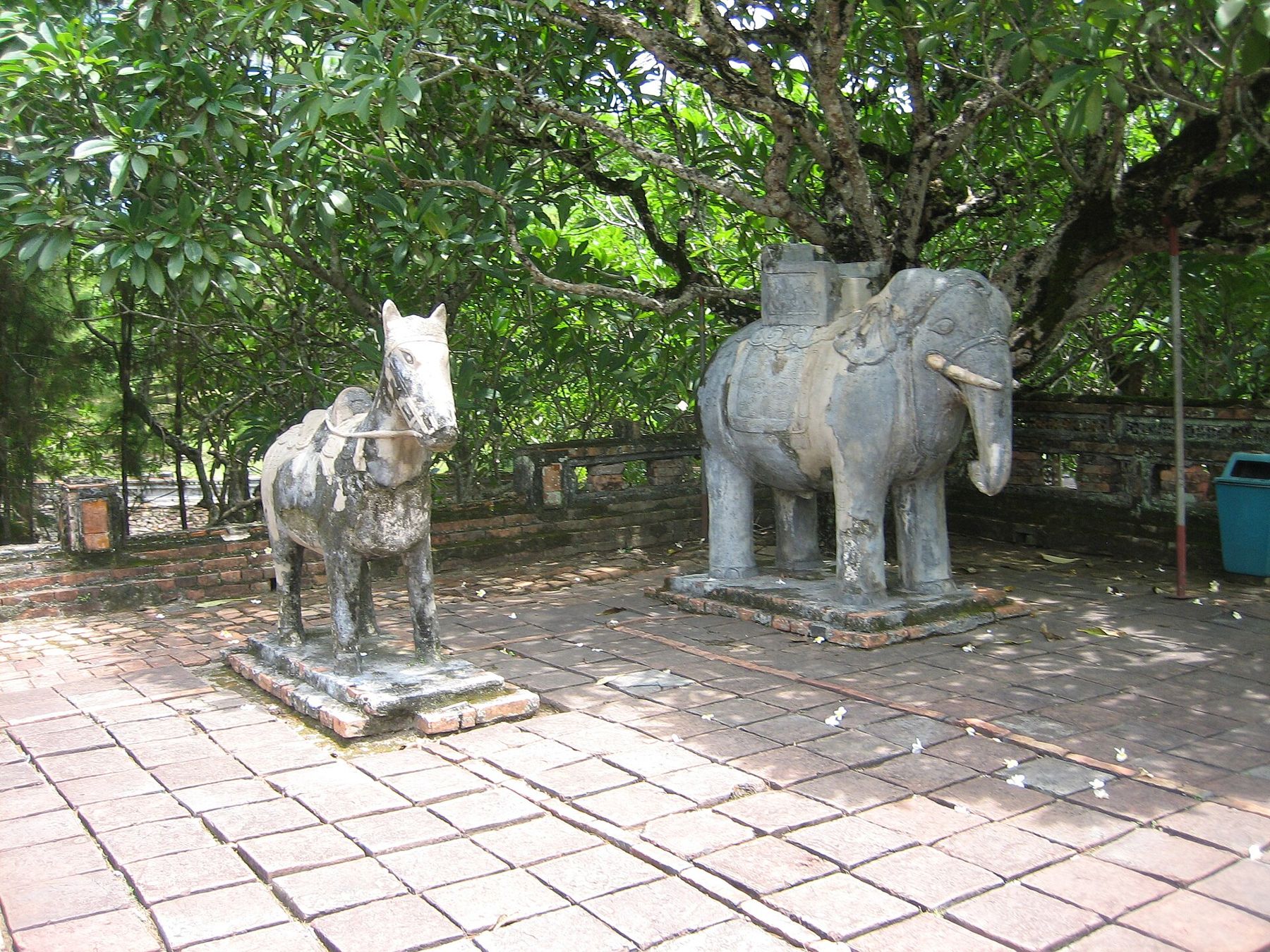
The honour courtyard, lined with stone mandarins, horses and elephants, stands near the burial area. It is widely said that the emperor's actual resting place is somewhere else, kept secret to protect it from robbers, and the location is still unknown.
©
CAMERA: thalling55 // CC BY 2.0The tomb of Khải Định
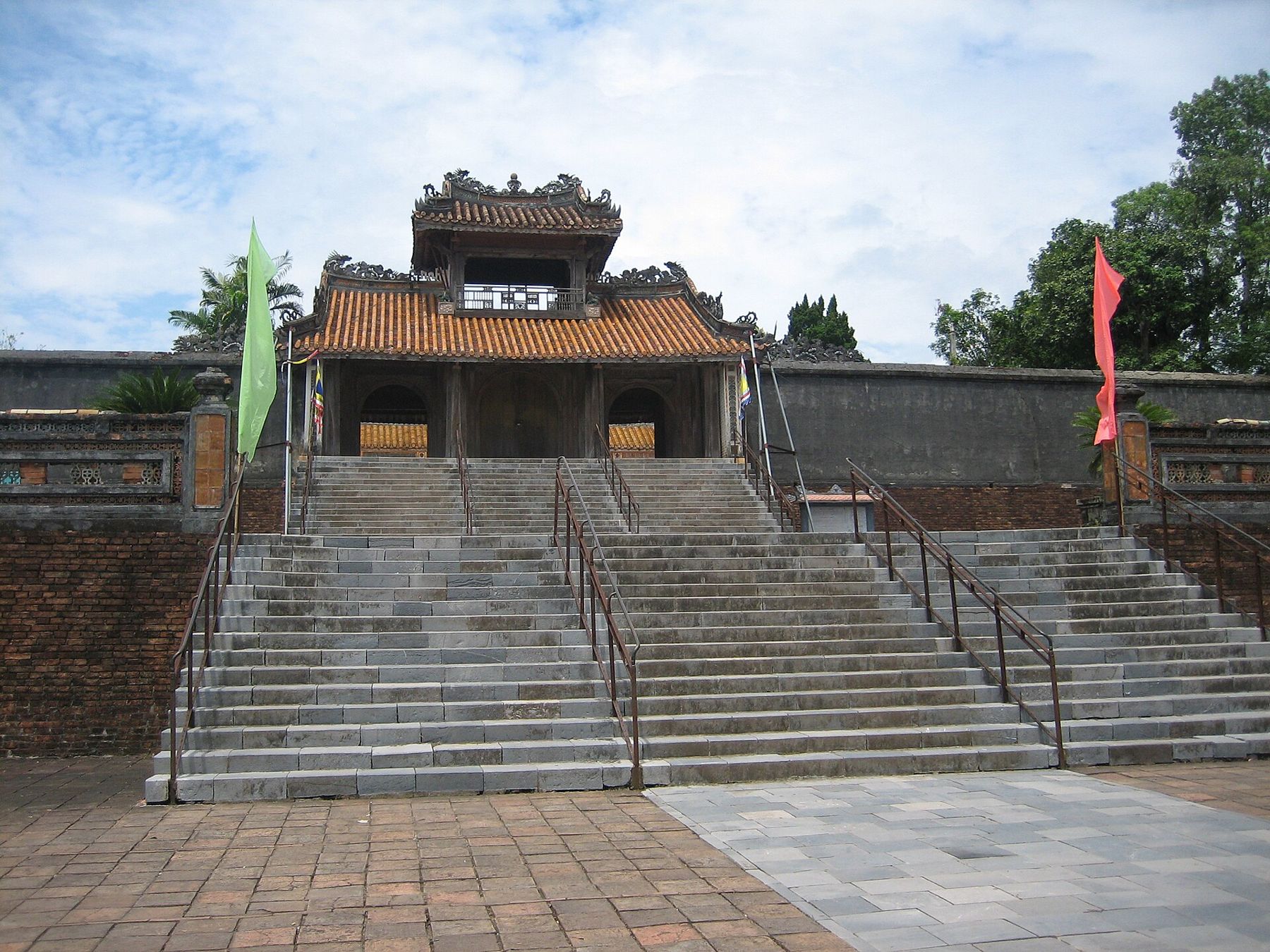
Khải Định's tomb, built over the 1920s, could hardly be more different. It climbs a steep hillside in a series of terraces and staircases, built from concrete and darkened by the weather, and its style mixes Vietnamese, Chinese and European elements in a way that was new at the time. After the long climb, the main hall comes as a surprise: the interior walls and ceilings are covered with intricate mosaics made from broken porcelain and coloured glass, in patterns of dragons, flowers and landscapes, around a gilded statue of the emperor.
The steps are steep and exposed, so bring water and take your time. If you have more time, Minh Mạng's tomb, laid out symmetrically along a long axis with lakes and pavilions, makes a good third choice and shows the more classical style of the early dynasty.
©
CAMERA: thalling55 // CC BY 2.0Practical notes and when to go
The main sites sell entry tickets individually or as combinations, and prices and opening hours change, so check the current options when you arrive. The tombs are spread out, so most people hire a car or go by motorbike or bicycle; read our guide to riding and road safety before renting a bike.
The weather shapes any visit. The central coast has its own rhythm, with the heaviest rains from around September to December and the greatest risk of floods and storms in October and November. Summer is hot and humid. The months from around February to April are usually the most comfortable. See our guide to Vietnam's weather region by region for the full picture.
Huế has a station on the north-south railway and is a natural stop on the Reunification Express. The city also has an airport, and road links south over or under the Hải Vân Pass to Đà Nẵng. Save at least one meal for bún bò Huế, the city's spicy beef noodle soup, and if you have time to head north, the caves of Phong Nha lie a few hours up the coast.