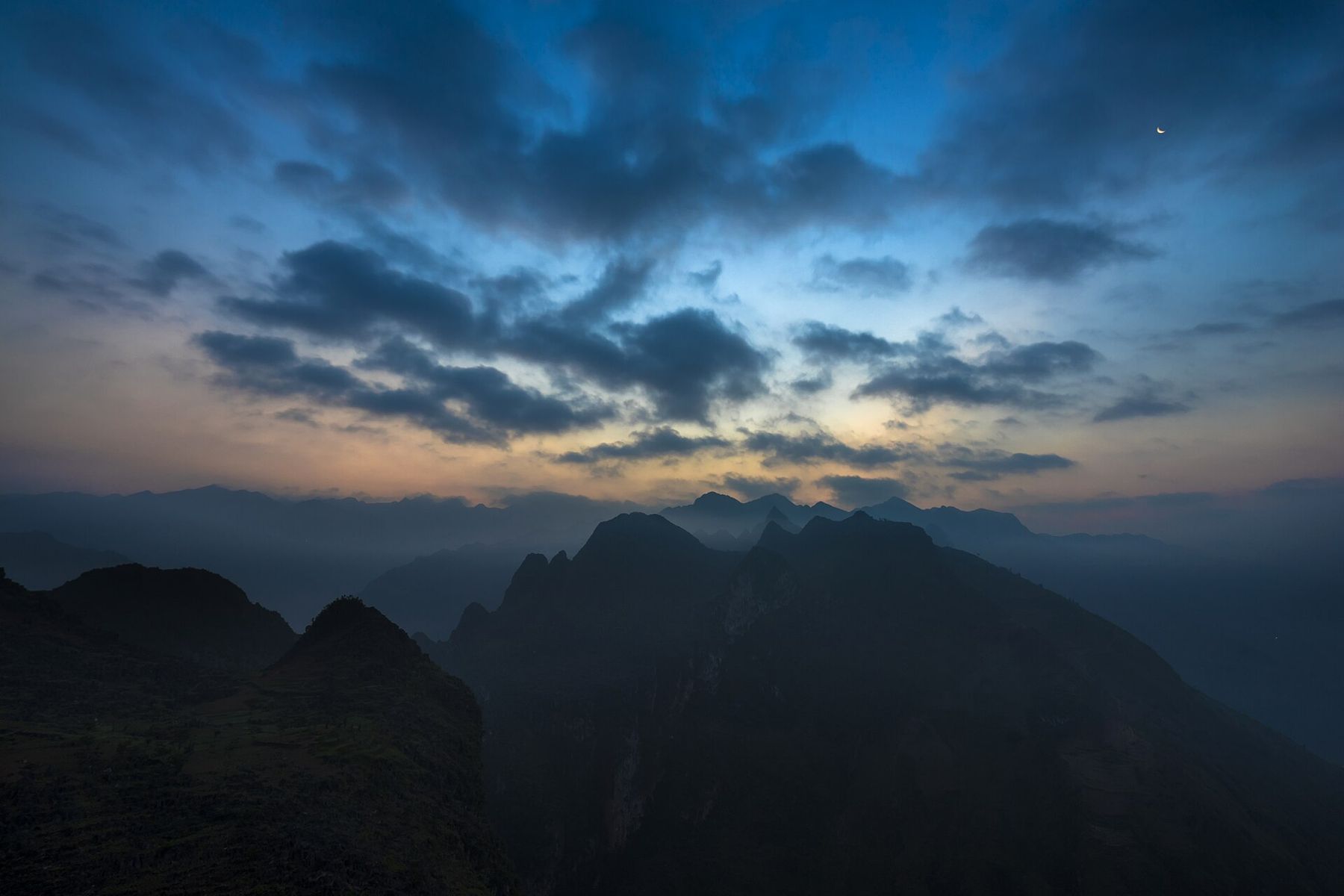
The road north out of Hà Giang (Ha Giang) climbs almost at once, and for the next few days it hardly stops. This is the far tip of Vietnam, a frontier of grey limestone, maize planted on slopes that look too steep to stand on, and villages where the Hmong, Lô Lô, Dao and Tày communities still run the weekly rhythm of market and field. The loop is a circuit of roughly three to four days that most people start and finish in Hà Giang city, and it has become one of the best-loved journeys in the country.
How the loop is put together
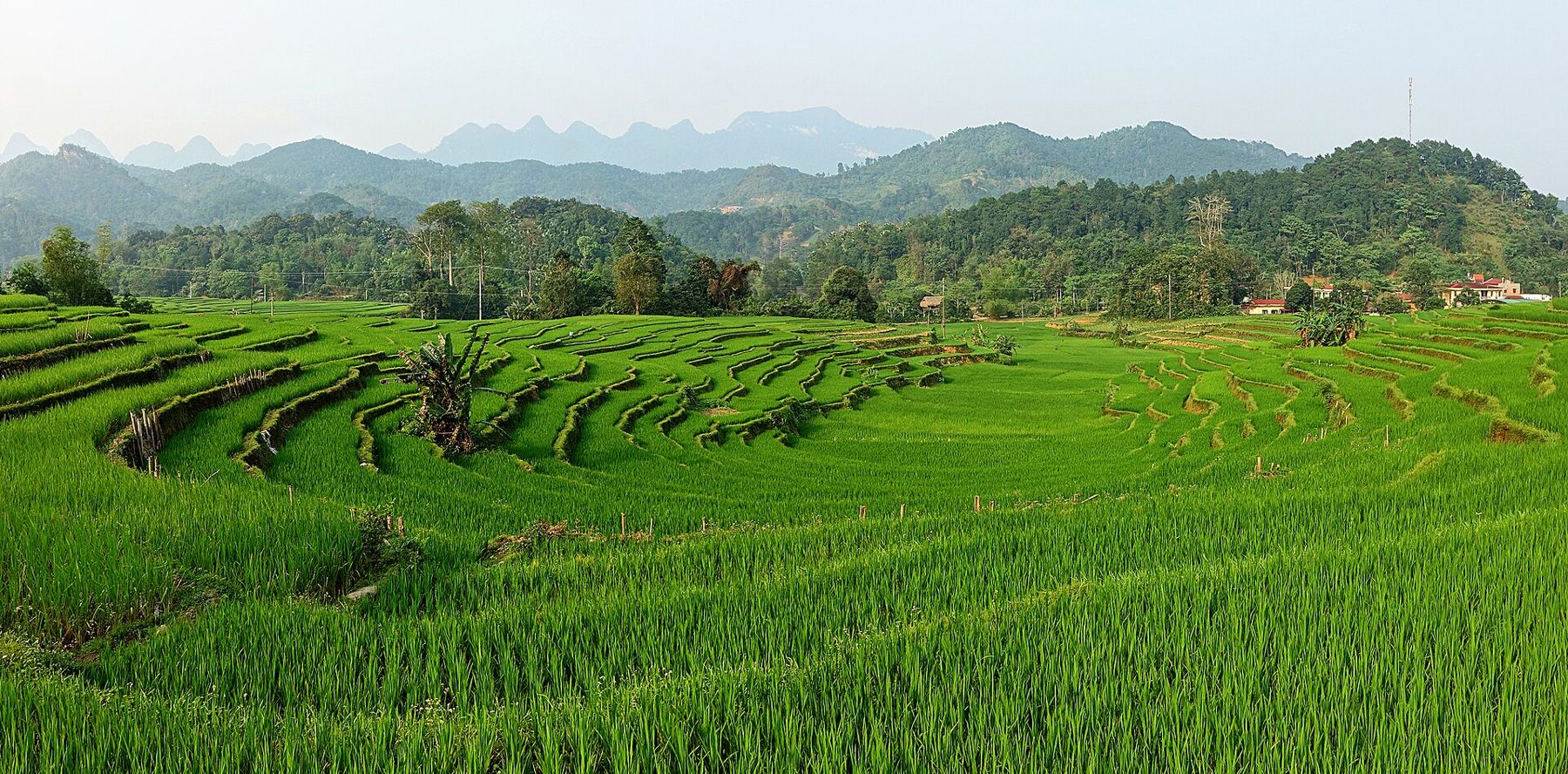
There is no single official route, but the classic version runs in four stages. Day one takes you from Hà Giang city up to the Quản Bạ pass, often called Heaven's Gate, where the view opens over a valley with two rounded hills locals compare to a fairy's breasts. From there the road drops and climbs again to Yên Minh, a market town in a pine-lined valley.
Day two runs to Đồng Văn through some of the most dramatic karst in Asia. Many riders take the side road to Lũng Cú, where a flag tower stands close to the country's northernmost point, before arriving in Đồng Văn for the night. Day three is the short, spectacular run over the Mã Pí Lèng pass to Mèo Vạc. Day four returns south, either back through Yên Minh or by the quieter road through Du Già, a green valley with terraced fields and waterfalls.
Three days is possible, but it means long hours in the saddle and little time to stop. Four days lets you arrive before dark each evening, which on these roads matters.
©
CAMERA: Velvet // CC BY-SA 4.0Đồng Văn and the karst plateau
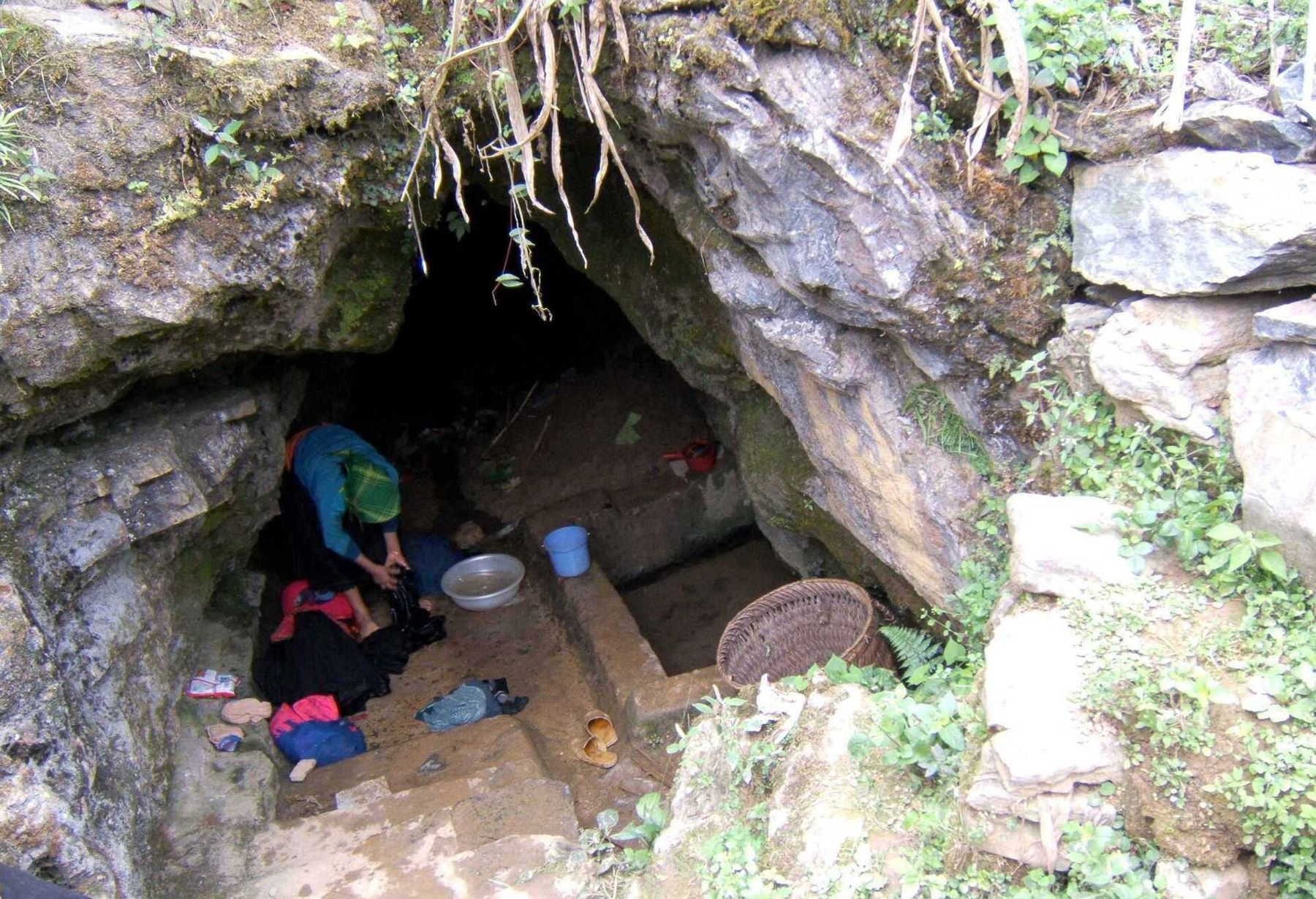
The whole northern section sits on the Đồng Văn Karst Plateau, which UNESCO recognised as a Global Geopark in 2010. The rock here is a limestone that has been folded, lifted and eroded into cones and sinkholes, with very little surface water. In the dry months, families carry water from small springs in the rock, and you will see stone walls built from cleared boulders around every patch of maize.
Đồng Văn town has a small old quarter of tile-roofed houses around a market hall, and it is the natural base for a night or two. The Hmong king's palace at Sà Phìn, a fortified family residence from the early twentieth century, is a short ride west of town and worth the stop for its carved stone and wooden courtyards.
©
CAMERA: BacLuong at Vietnamese Wikipedia // Public domainMarket days
Sunday is the big day. Đồng Văn and Mèo Vạc both hold large weekly markets, and smaller towns and villages run their own on rotating days, so a loop that passes through on a Sunday morning is worth planning around. People walk in from the surrounding hills before dawn to trade livestock, cloth, tools, herbs and corn wine. The colours are the reason many visitors come, but this is a working market, not a show.
- Arrive early: the busiest trading is in the first hours after sunrise.
- Ask before photographing anyone, and accept a no without fuss.
- Buy something if you linger: a snack, a scarf, a cup of tea.
- Keep bikes and cars out of the market lanes.
Market schedules can shift around holidays and festivals, so check the current days locally before you plan the route around one.
The Mã Pí Lèng pass
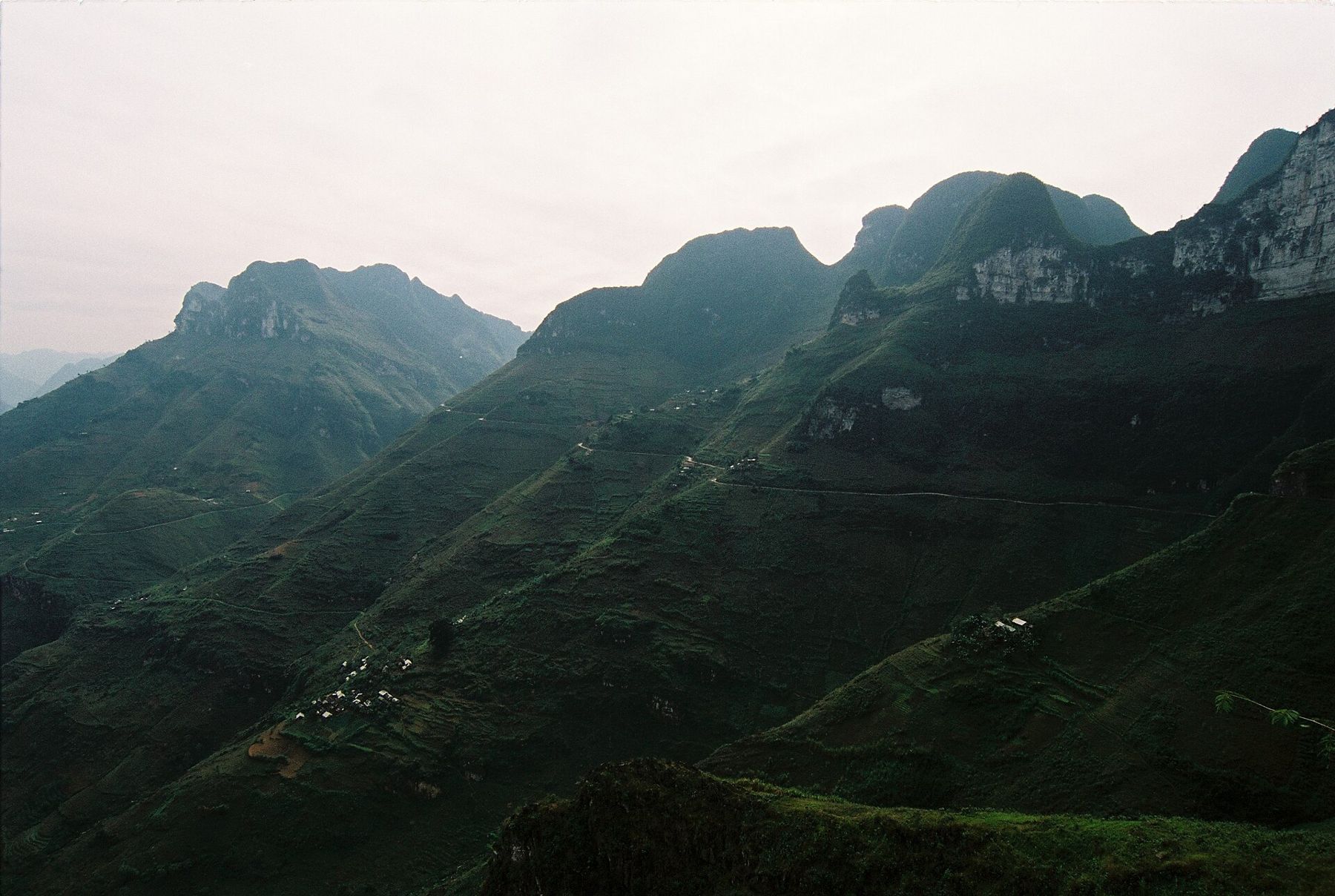
Between Đồng Văn and Mèo Vạc, the road is cut into a cliff high above the Nho Quế river, which winds through a narrow gorge far below in a shade of green that looks unreal on a clear day. The pass is only around twenty kilometres long, but most people take half a day over it because every bend is a viewpoint.
The pass is only around twenty kilometres long, but most people take half a day over it because every bend is a viewpoint.
Pull fully off the road before you stop, and never park on the inside of a blind curve. The trucks and buses that use this road need all of it. Paths lead down towards the river from the pass, and boat trips run on the Nho Quế at times, but conditions and access change with the water level and local rules, so ask in Mèo Vạc or Đồng Văn before you set off.
©
CAMERA: Khánh Hmoong // CC BY 2.0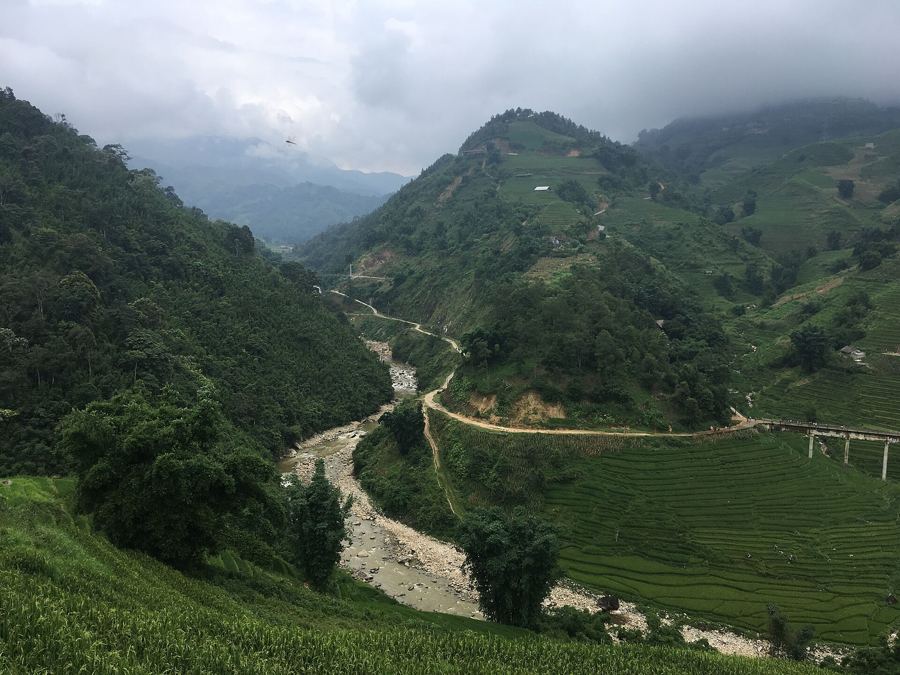 Coming up after thisSa Pa's terraces, and walking them with the people who built them
Riding yourself or being driven
This is the decision that shapes the trip. The roads are paved, but they are narrow, steep and full of hairpins, with loose gravel after rain, landslides in the wet season, livestock, children on bicycles and heavy vehicles that take the middle of the road on bends. They are not the place to learn to ride a motorbike.
The legal picture matters too. To ride a motorbike in Vietnam you need a licence that is valid there, which in general means a Vietnamese licence or, for some nationalities, an International Driving Permit issued under the 1968 convention together with your home licence. Many travel insurance policies will not pay out if you crash while riding without the correct licence, and some exclude motorbikes entirely. Read your policy before you go and check the current rules for your nationality; our guide to motorbikes, licences and riding covers the basics in more depth.
The common alternative is to ride pillion behind an experienced local driver who knows the road. You still get the open air and the stops, without handling the road yourself. Whatever you choose, wear a proper helmet fastened every time, ride in daylight only, and keep your speed well below what the road seems to allow.
©
CAMERA: trungydang // CC BY 3.0When to go and what to pack
The far north has real seasons. From roughly September to November the skies are often clear and the terraces around Hoàng Su Phì and Du Già turn gold before the harvest; late October and November bring the pink buckwheat flowers that many riders time their trip around. Winter, from December to February, can be bitterly cold on the passes, with fog that cuts visibility to a few metres. Spring brings plum and peach blossom. The summer months are hot and wet, with the highest risk of landslides. See our guide to the weather region by region for how the north differs from the rest of the country.
Pack warm layers even in the dry season, waterproofs, cash for small towns, and copies of your passport, licence and insurance. Most people reach Hà Giang city on an overnight sleeper bus from Hanoi, which makes it easy to fold the loop into a wider trip through the north alongside a few evenings in Hanoi.