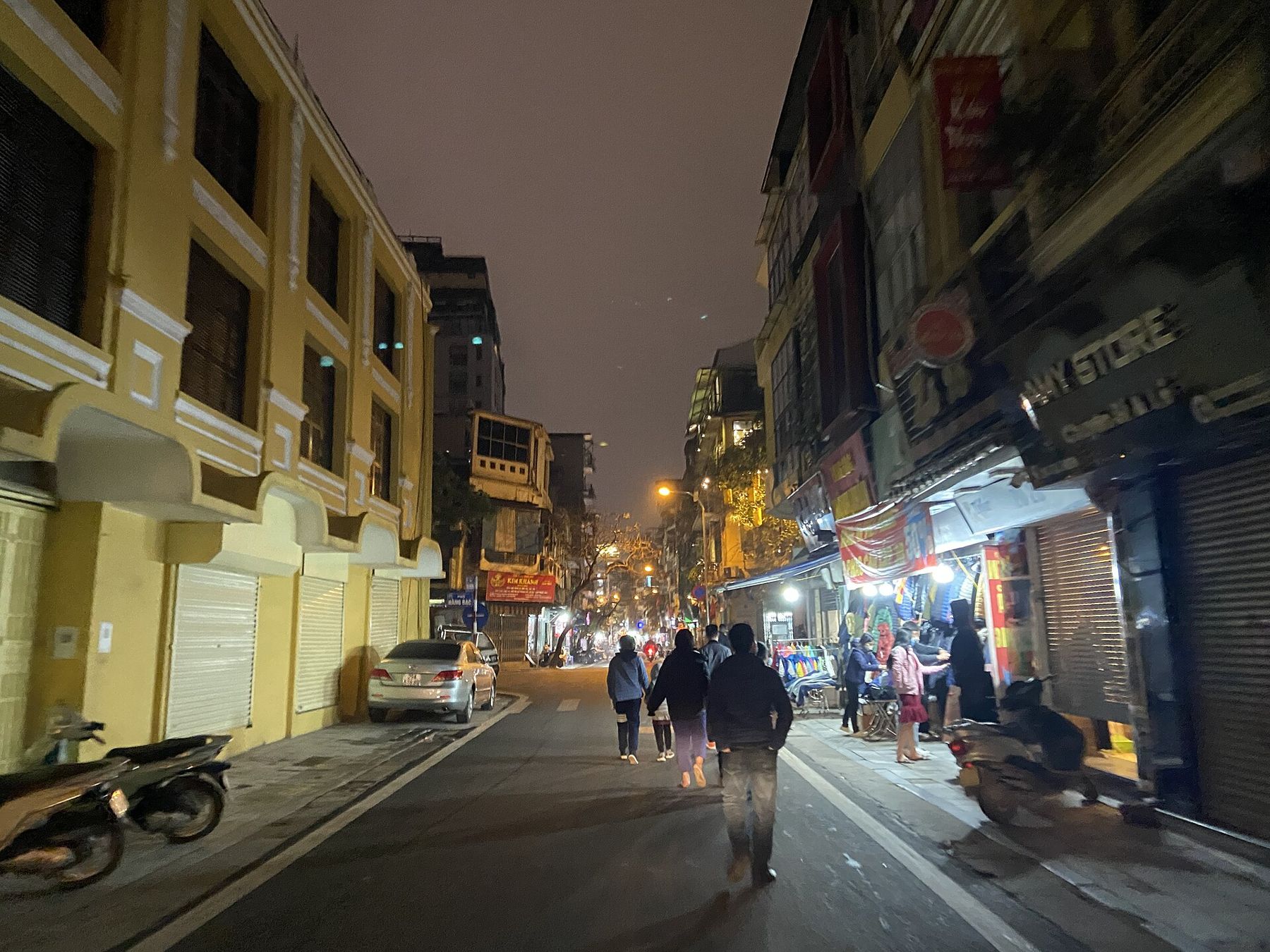
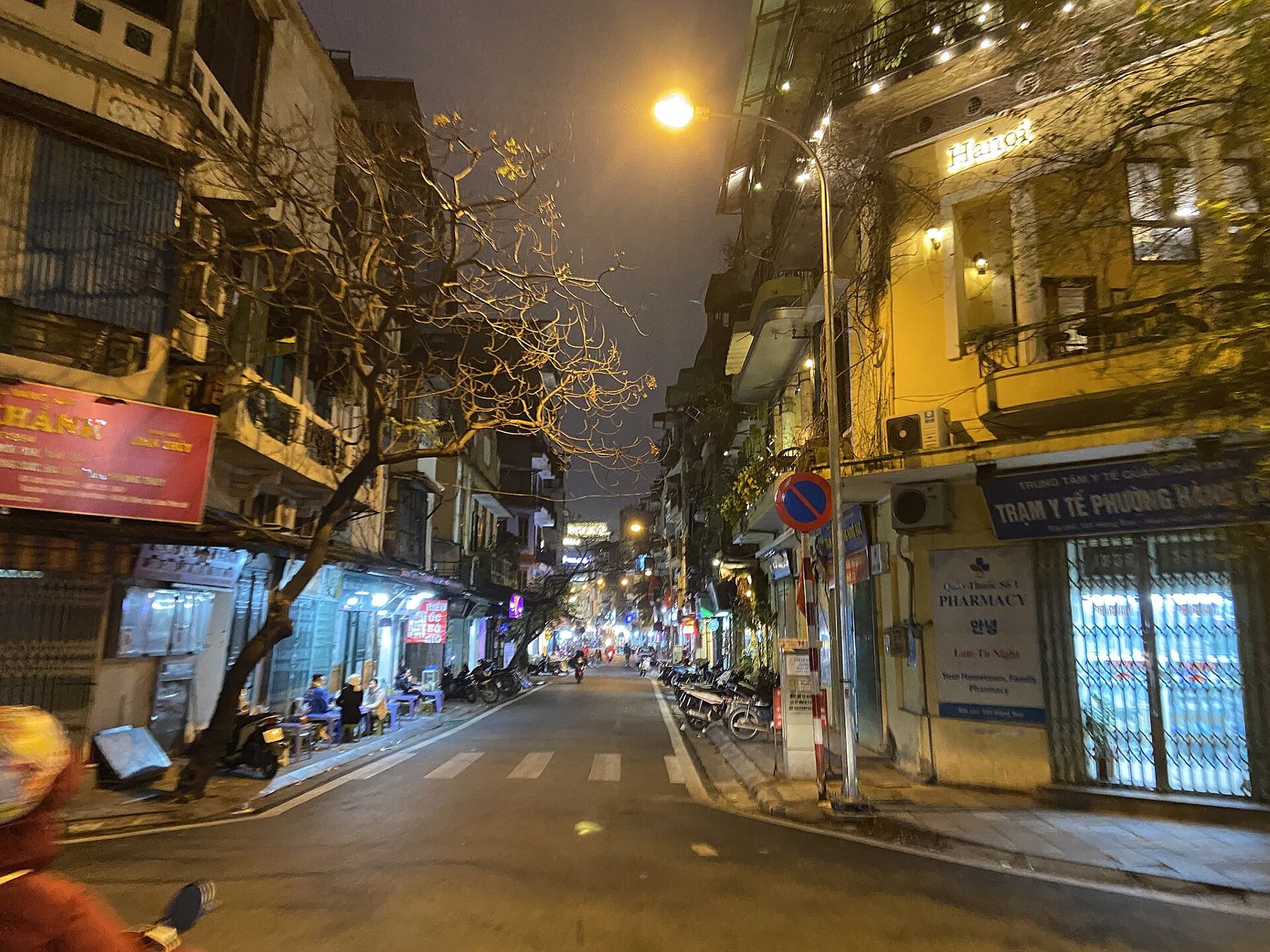
Hanoi changes character when the light goes. The day's traffic thins a little, the heat eases, and the Old Quarter, a dense grid of narrow streets just north of Hoàn Kiếm Lake, turns into one long outdoor living room. Families eat on the pavement, teenagers gather by the water, and the lanterns and shopfronts of the old trade streets light up one after another. You need no plan beyond a loose route and an appetite, but knowing how the area fits together makes the evening richer.
Start at the lake
Hoàn Kiếm Lake, the Lake of the Restored Sword, is the city's emotional centre. Its name comes from a legend in which the fifteenth-century leader Lê Lợi, after driving out an invading army, returned a magic sword to a golden turtle that rose from the water. A small tower on an islet in the middle, known as the Turtle Tower, commemorates the story and is lit up after dark.
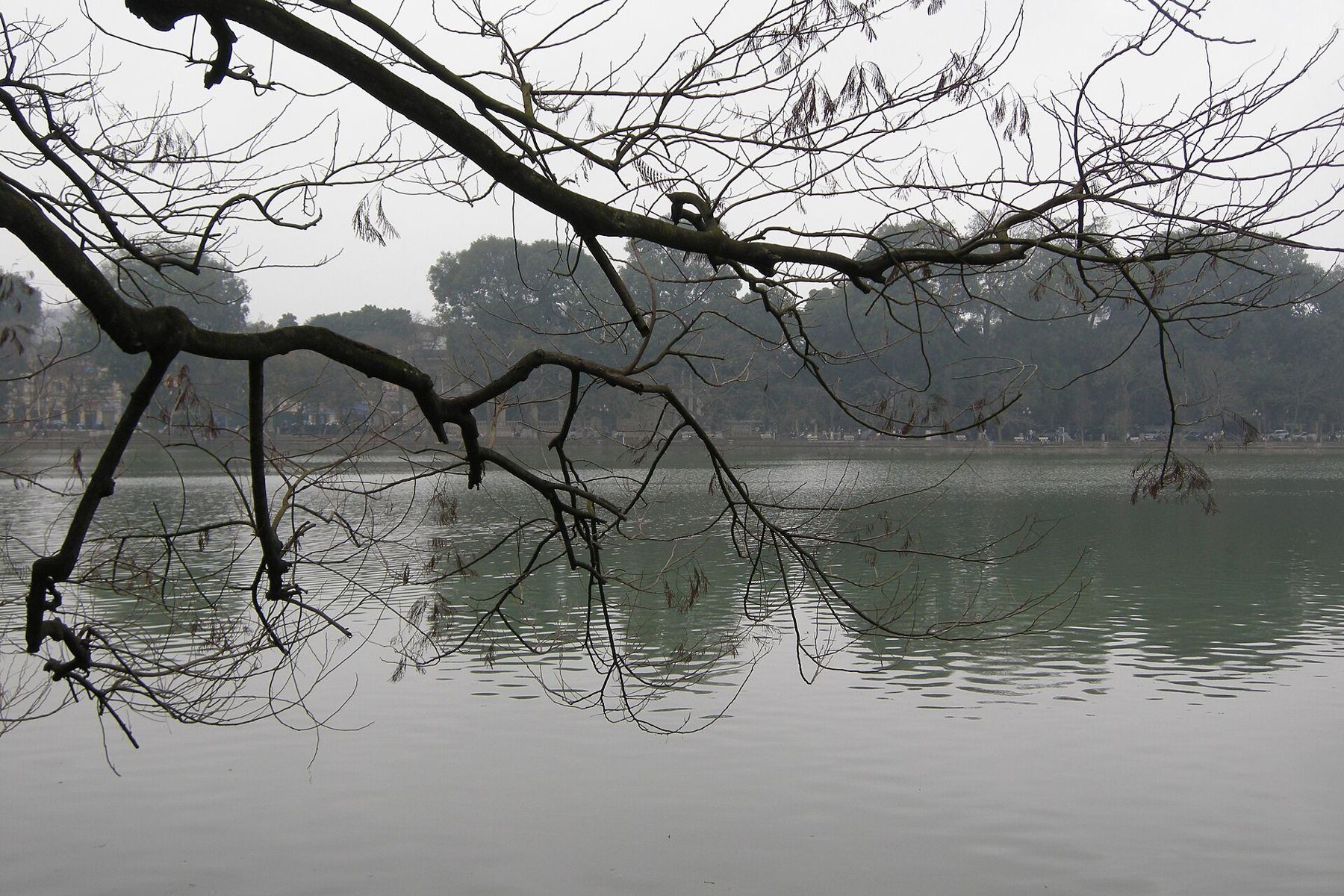
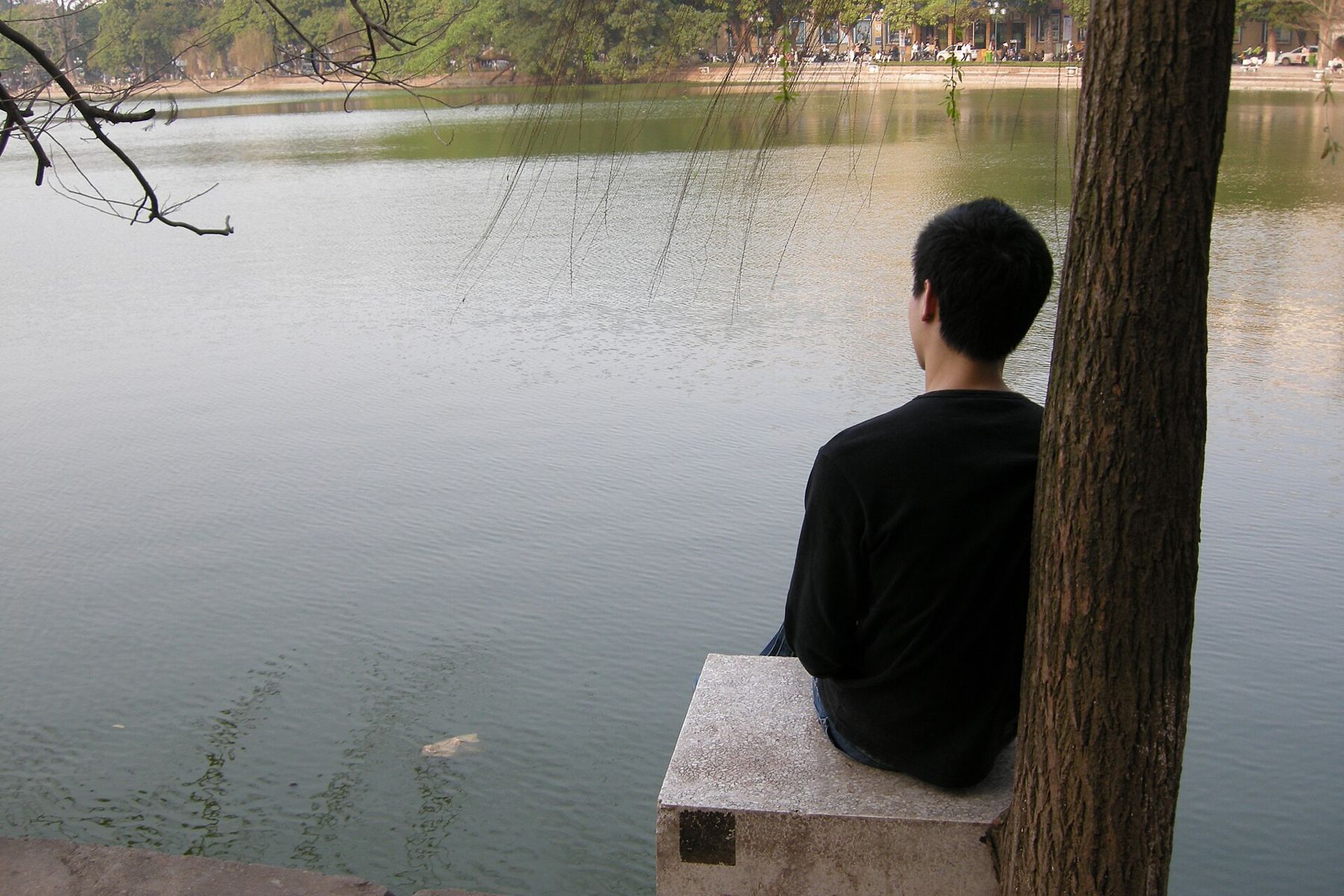
At the northern end, the red, arched Thê Húc bridge leads to Ngọc Sơn Temple on its own little island. It is lovely at dusk, when the bridge glows against the dark water, though the temple keeps set opening hours, so check before you count on going inside. A full walk around the lake takes about half an hour at an easy pace, longer if you stop to watch the groups dancing, playing shuttlecock or simply sitting on the benches under the willows and old trees.
©
CAMERA: Vyacheslav Argenberg // CC BY 4.0The 36 streets
North of the lake lies the area Hanoians have long called the 36 streets. The number is traditional rather than exact, and there are more than 36 today, but the idea holds: this was a quarter of craft guilds, where each street specialised in a single trade. Many street names still start with Hàng, meaning goods or merchandise, followed by what was once sold there.
- Hàng Bạc, the silver street, still has jewellers and silversmiths.
- Hàng Mã sells paper votive offerings, and in the weeks before the Mid-Autumn Festival it fills with lanterns.
- Hàng Gai once traded hemp and rope, and is now known for silk and embroidery.
- Hàng Buồm was the street of sails.
Not every street still sells what its name says, but enough do to make an evening walk a kind of living map. Look up as you go: the narrow, deep tube houses, with shopfronts only a few metres wide, often have older facades, wooden shutters and balconies above the modern signs. At the eastern edge of the quarter, Ô Quan Chưởng is the last surviving gate of the old city walls.
Two short detours are worth adding. A few minutes west of the lake, St Joseph's Cathedral, a neo-Gothic church from the late nineteenth century, looks especially striking floodlit against the night sky, with lanes of tea stalls in its shadow. And beside the lake itself, water puppet shows run most evenings. The art grew up in the villages of the Red River delta, where puppeteers stood waist-deep in ponds behind a screen, and the performances still use a pool of water as the stage, with live music and singing.
©
CAMERA: Vyacheslav Argenberg // CC BY 4.0Weekends on foot
On weekend evenings, from Friday night through Sunday night, the roads around Hoàn Kiếm Lake and several streets nearby close to motor traffic and become a walking street. The change is striking. Without motorbikes, the roads fill with families, street performers, children's games, impromptu music and couples taking photos, and the lake feels twice as big.
At the same time a night market runs north from the lake along Hàng Đào towards Đồng Xuân market, with stalls selling clothes, souvenirs and snacks. It is crowded and cheerful rather than special for shopping, but it is the easiest way to see the Old Quarter at its busiest. The walking street has run for years, but the exact hours and streets covered can change, so check locally on the day.
 Coming up after thisNinh Bình at the speed of an oar
Tạ Hiện and the art of the low stool
A few streets east of Hàng Bạc, the short stretch of Tạ Hiện and its neighbours is the Old Quarter's loudest corner. Bars and street stalls set out rows of tiny plastic stools facing the road, and on a busy night the street becomes a single, slowly moving crowd. It is the most international scene in the quarter, and fun in small doses.
For something closer to everyday Hanoi, look for bia hơi, the light draught beer brewed fresh and served cheaply from kegs, often on a street corner with a handful of stools and a few plates of peanuts or grilled snacks. It is meant to be drunk the day it is made, and the corners that serve it fill up from late afternoon. Order by pointing if you need to; nobody minds.
It is meant to be drunk the day it is made, and the corners that serve it fill up from late afternoon.
Late-night noise and closing rules are enforced from time to time, so a street that is full at eleven one month may be quiet the next. Food is everywhere: grilled skewers, sticky rice, noodle soups. Our guide to pho and bun cha explains the morning and lunchtime classics, and our story on Vietnamese coffee culture covers egg coffee, a Hanoi creation that makes a good late-evening dessert.
©
CAMERA: Ltn12345 // CC BY-SA 4.0Train street and staying safe
West of the Old Quarter, a stretch of the railway runs between rows of houses so close that residents can touch the passing carriages. Photographs of cafes set out along the tracks made it famous, and crowds followed. Authorities have since closed the trackside area to visitors several times because of the obvious danger, and the rules have changed back and forth. Check the current situation before you go, follow any instruction from police or railway staff, and never stand, sit or take photos on the tracks. Trains here are part of the main north-south line, and they do not stop for selfies.
The rest of the evening asks for ordinary city sense:
- Cross roads at a steady walking pace and let the motorbikes flow around you; do not stop suddenly or run. Our guide to crossing streets and riding explains why this works.
- Watch for motorbikes on the pavement and reversing out of doorways.
- Keep phones and bags on the side away from the road; snatch thefts by passing riders happen.
- Agree a price before any ride on a cyclo or motorbike taxi.
Winter evenings, from around December to February, can be cool and damp, so bring a layer. In summer the heat lingers well after dark, and the lake shore is the best place to catch a breeze before heading back into the streets.