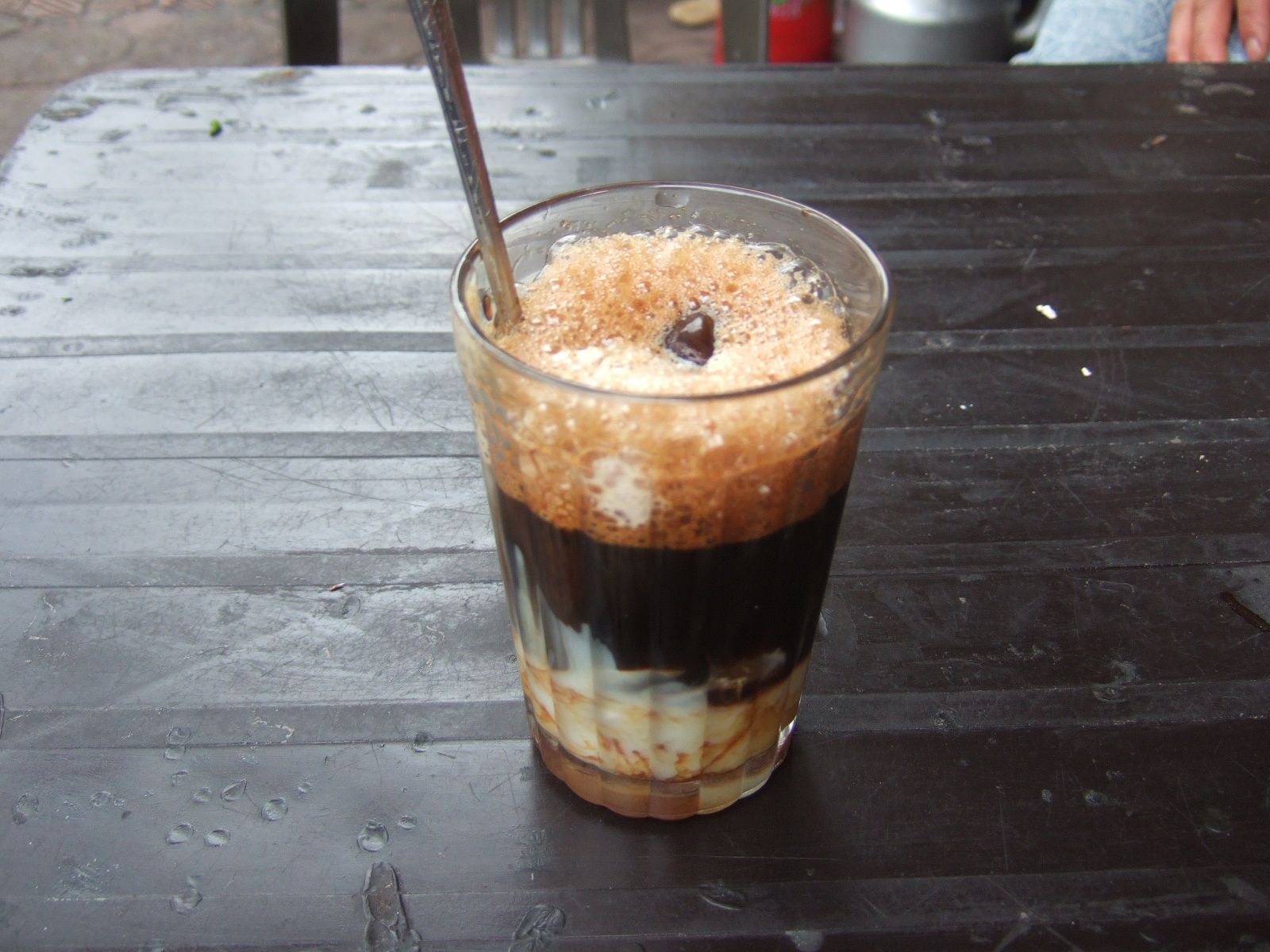
Coffee in Vietnam is everywhere: on low stools at street corners, in narrow alley houses, in old apartment blocks and on riverside terraces. It is strong, it is often sweet, and it is taken slowly. To understand the country's cafe culture, start with a small metal filter and a few minutes of patience.
The phin
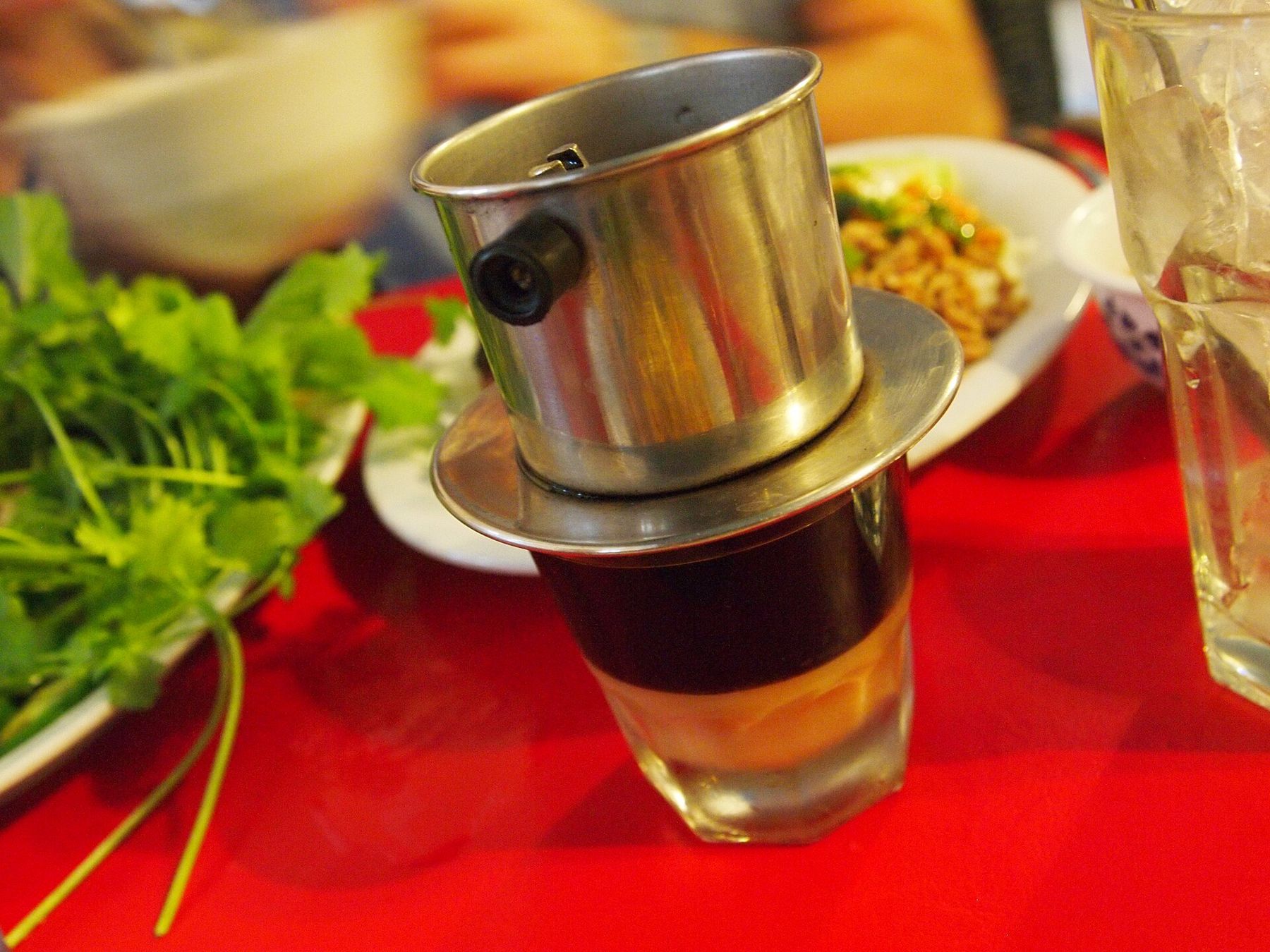
The phin is a small metal drip filter that sits on top of a cup or glass. Ground coffee goes in the chamber, a thin press plate sits on top, and hot water is poured over it. Then you wait while the coffee drips through, slowly, a few minutes at a time. The result is short, dark and intense.
©
CAMERA: Shreveport-Bossier Convention and Tourist Bureau // CC BY 2.0Many cafes bring the phin to your table still dripping, so the wait becomes part of the ritual. When the drip stops, lift the filter off, set it upside down on its lid, and stir. If you are drinking it iced, pour the coffee over the ice in the second glass.
Coffee arrived with the French in the nineteenth century, and fresh milk was long scarce and hard to keep in the heat. Sweetened condensed milk, which keeps without refrigeration, became the standard partner, and it still is.
The milk coffees
The classic is cà phê sữa đá: strong phin coffee poured over condensed milk and ice. Stir it well, since the milk settles at the bottom. In the north, milk coffee is often called cà phê nâu, "brown coffee". Without milk, ask for cà phê đen, black coffee, served hot or with ice (đá), usually with sugar unless you ask otherwise.
In the south, bạc xỉu reverses the proportions: mostly milk, with just a little coffee, a gentler drink for the afternoon. Many cafes also serve coconut coffee, blended with coconut milk and ice into a frozen drink, and yoghurt coffee, a sharp and sweet mix that is better than it sounds.
Sweetness is the default. If you want less, ask for "ít ngọt", less sweet, or "không đường", no sugar, for black coffee.
 Coming up after thisPho and bun cha, morning and noon
Egg coffee and other specials
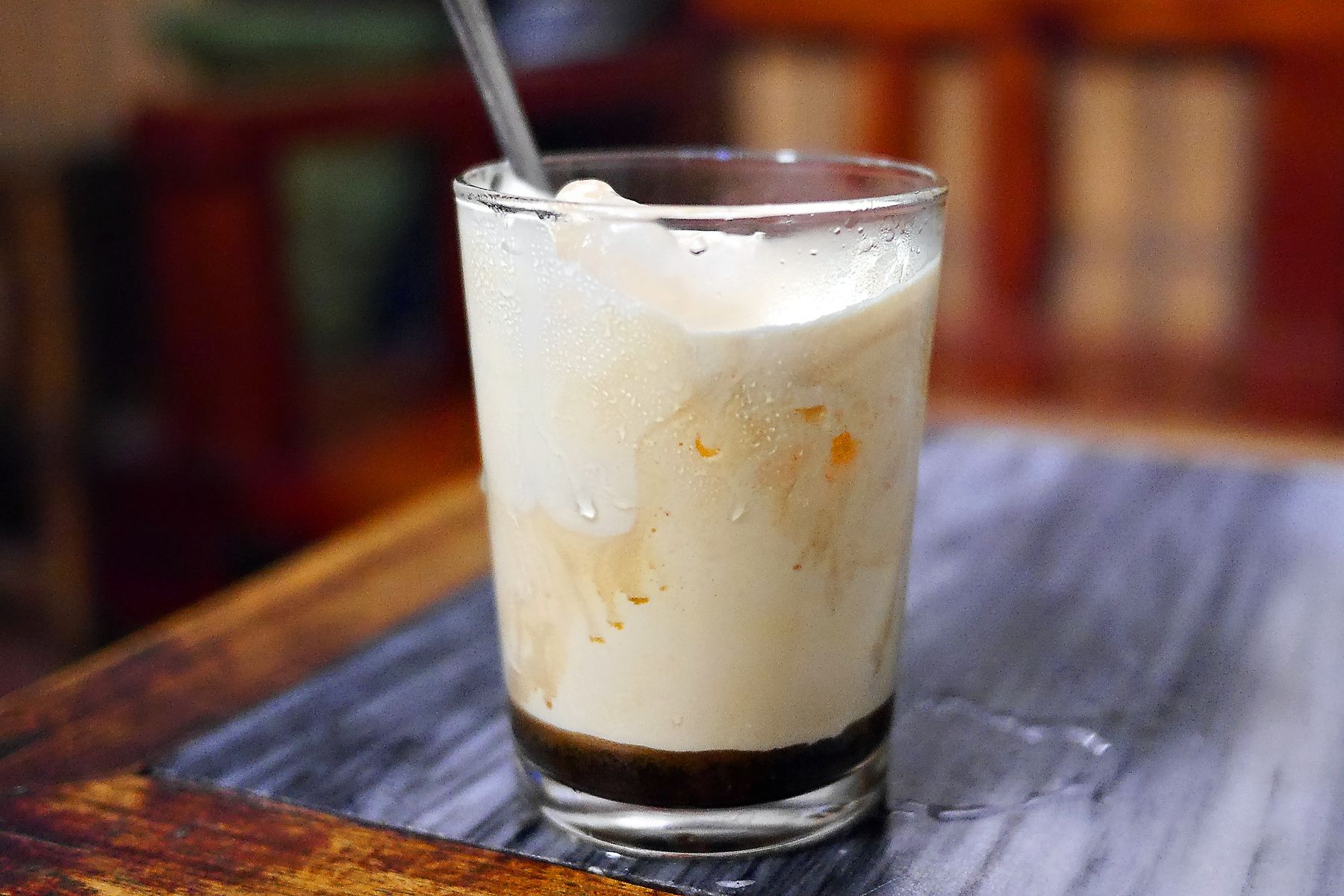
Hanoi's best-known contribution is egg coffee, cà phê trứng, created in the city in the 1940s. Egg yolk is whipped with sugar and condensed milk into a thick, pale cream, then spooned over a small cup of strong coffee. It tastes like a coffee custard. It is often served with the cup standing in a bowl of hot water to keep it warm, and you eat the top with a spoon before drinking the coffee beneath. Many cafes around Hanoi's Old Quarter serve it.
©
CAMERA: travel oriented // CC BY-SA 2.0In the warmer months, many cafes also serve it iced, with the cream spooned over coffee and ice in a glass.
Central Vietnam has its own twist. In Huế, salt coffee, cà phê muối, tops strong coffee with lightly salted cream, which sharpens the sweetness. It has spread to cities across the country.
Wherever you drink, a glass of iced tea, trà đá, often arrives alongside, usually free, to cleanse the palate and cool you down.
Where the beans come from
Vietnam is one of the world's biggest coffee producers, and most of what it grows is robusta, a hardy bean with high caffeine and a strong, earthy, bitter taste that suits the slow drip and the sweet milk. The heartland is the Central Highlands, around Buôn Ma Thuột in Đắk Lắk province, where plantations cover the red basalt hills.
Arabica grows on higher ground, notably in the hills around Đà Lạt, and also in parts of the north. Specialty cafes in the big cities now roast single-origin highland beans and brew them in many styles, alongside the traditional phin.
Buying coffee to take home is easy at markets and shops. Look for whole beans or fresh ground coffee in sealed bags, and pick up a phin while you are there. They are cheap, light and easy to pack.
Brewing at home is simple. Use a coarse-to-medium grind, about two heaped spoonfuls per cup, and a splash of hot water first to let the grounds bloom. Then fill the chamber, put the lid on and wait. If the coffee runs through in under a minute, press the plate down a little more firmly next time; if it barely drips, loosen it. Condensed milk in the bottom of the glass completes the picture.
Cafe manners
- Sit anywhere. On the street, stools face the road so you can watch the city go by.
- Stay as long as you like. Cafes are offices, meeting rooms and living rooms, and lingering is normal.
- Order at the counter or from whoever comes to your table; pay when you leave, unless the counter asks you to pay first.
- Keep small notes. Street cafes rarely take cards.
- If a stall has no menu, point at what others are drinking.
Prices and menus vary widely between a pavement stall and a smart cafe, and change over time.
Cafes come in every size. There are pavement stalls with a thermos, a tray of glasses and a dozen plastic stools; family-run rooms with fans and a television; quiet upstairs spaces with a view over a lake or a square; and modern cafes with laptops, air-conditioning and long menus. Each has its regulars, and each serves the basics.
Drinking it like a local
The best way to learn Vietnamese coffee is simply to drink it often: a hot phin at dawn, an iced milk coffee in the afternoon heat, an egg coffee on a cool Hanoi evening. In Saigon, alley cafes stay open late. Sit down, let the filter drip, and do what everyone else is doing: watch the street and take your time.