
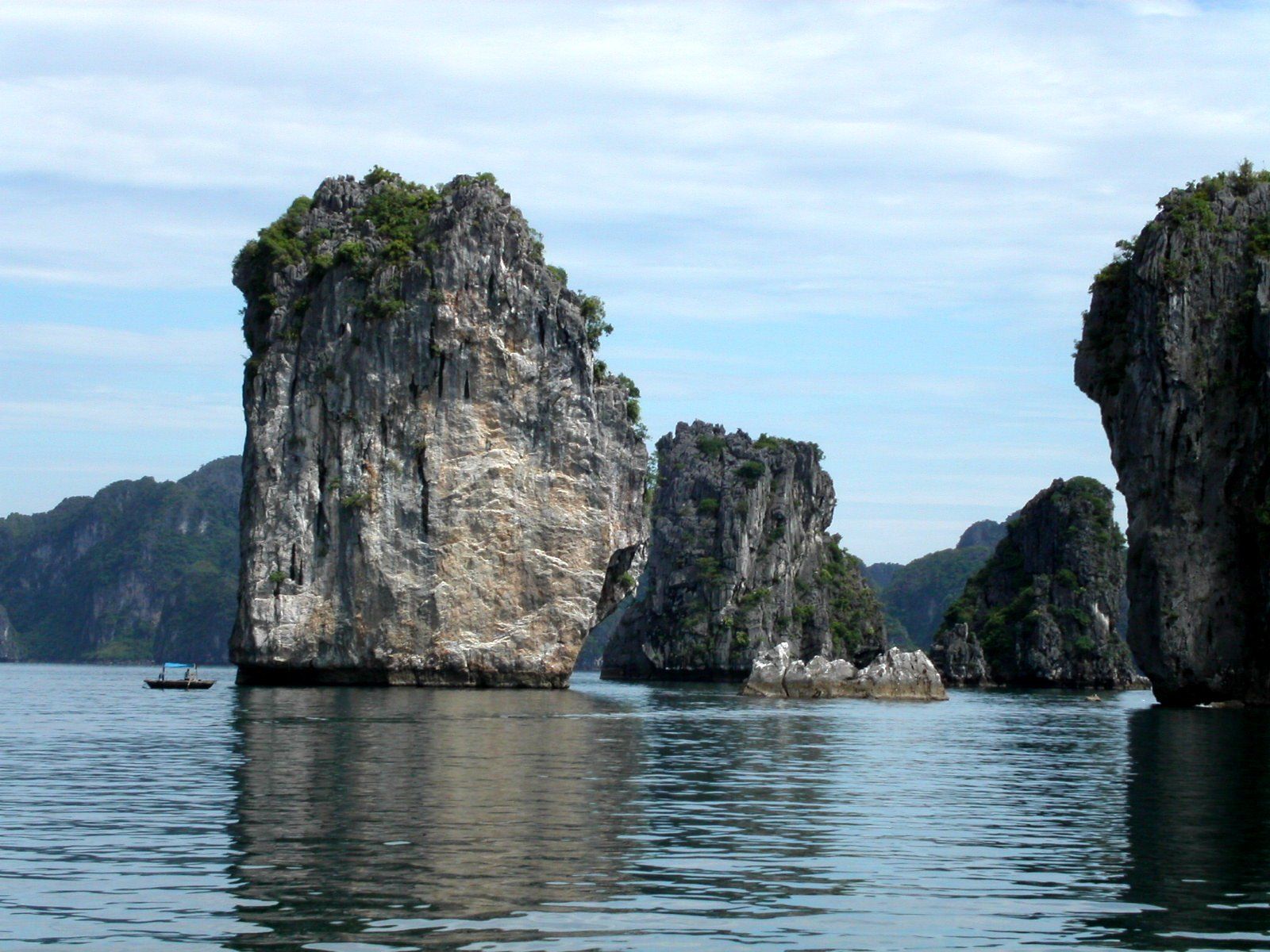
Everyone has seen the pictures of Hạ Long Bay (Ha Long Bay): green-topped limestone towers rising from calm water, junk sails in the foreground. What the pictures rarely show is the number of boats now working the most popular routes. Lan Hạ Bay, which lies just to the south, belongs to the same drowned karst landscape, with several hundred islands, sheltered lagoons and small sandy coves. It sees far less traffic, and with Cát Bà Island as a base you can spend days on the water and on land without feeling you are part of a procession.
Two bays, one seascape
The line between the bays is administrative rather than natural. Hạ Long Bay belongs to Quảng Ninh, while Lan Hạ Bay and Cát Bà Island fall under the city of Hải Phòng. From the water, the karsts simply continue. In 2023 UNESCO extended the World Heritage listing of Hạ Long Bay to include the Cát Bà archipelago, recognising them as a single landscape of limestone towers, caves and lagoons formed over millions of years as the sea rose over an eroded limestone plain.
Many cruises from the Hạ Long side now spend part of their route in Lan Hạ, and boats from Cát Bà enter the edges of Hạ Long. That means the choice is less about which bay and more about where you sleep and how you move: on a large cruise boat, on a smaller day boat, or by kayak from a base on the island.
©
CAMERA: Thomas Hirsch / Ravn // CC BY-SA 3.0Cát Bà Island on land
Cát Bà is the largest island in the archipelago, and much of it is protected as Cát Bà National Park, created in 1986. The park covers forested limestone hills, mangroves, freshwater swamps and part of the surrounding sea. It is the only home of the Cát Bà langur, also called the golden-headed langur, one of the most endangered primates in the world. You are very unlikely to see one, but the forest trails, including the climb to the Ngự Lâm peak viewpoint, are reason enough to go. Trails can be steep and slippery; take water and go with a ranger or guide on the longer routes.
Cát Bà town wraps around a harbour full of fishing boats and is the place to stay. On the hill above it, Cannon Fort keeps old gun emplacements and tunnels, and from the top you can see out over the bay and the town in both directions. Near the park, Hospital Cave was used as a secret military hospital during the war, and is now open to visitors as a reminder of that period. Beaches lie a short walk south of town, best early in the day before they fill.

©
CAMERA: Velvet // CC BY-SA 4.0Kayaking between the karsts
A kayak is the best way to understand this landscape. At water level the towers loom overhead, cave mouths open in the rock, and narrow channels lead into lagoons that are almost completely enclosed by cliffs. Many day trips from Cát Bà include a stop with kayaks, and several of the overnight boats carry them.
A few points before you paddle:
- Kayak only in areas where it is permitted. Rules on where visitors may paddle, and whether a guide must accompany them, have changed over the years.
- Always wear the buoyancy aid you are given, fully fastened.
- Watch the tide. Low arches and cave passages that are open in the morning can close as the water rises.
- Stay clear of fish farms and floating homes, which are working spaces and private property.
- Avoid the middle of the day in summer, when the sun on the water is fierce.
On most routes you will pass floating fishing settlements: clusters of wooden houses on rafts and drums, with fish and shellfish farmed in pens beneath them. Families have lived on the water in these bays for generations, although many have been moved ashore in recent decades as rules on the bays tightened. Some boats stop so visitors can see how the pens work or eat seafood raised there. If you visit, remember that people live here; ask before photographing, keep voices down and leave nothing behind. A slow paddle past is often more rewarding than a stop, and it lets you take in the scale of the cliffs that shelter the settlements from the open sea.
At water level the towers loom overhead, cave mouths open in the rock, and narrow channels lead into lagoons that are almost completely enclosed by cliffs.
 Coming up after thisHuế, the imperial city and the emperors' tombs
Choosing a boat, and boat safety
This is the part to take seriously. Tourist boats in the Hạ Long and Lan Hạ area have been involved in fatal accidents over the years, including capsizes in sudden summer storms. Most trips pass without incident, but the conditions that cause trouble are predictable, and you can reduce your risk with a few simple checks.
- Check the weather yourself. Storm and typhoon season in the north runs roughly from June to October. Sudden squalls can blow up on otherwise fine summer afternoons.
- Respect cancellations. Port authorities suspend sailings when storms are forecast. A cancelled trip is the system working; do not look for a boat that will go anyway.
- Look at the life jackets. There should be one for every passenger, in reach, in decent condition, and in children's sizes if needed. Ask where they are as soon as you board.
- Ask about licensing. Boats should be registered and licensed for the type of trip and the number of passengers, including overnight stays. A reputable operator will answer this without hesitation.
- Do not overload small boats. If a launch or day boat looks crowded, wait for the next one.
- Swim only where the crew says it is safe, and never after drinking.
Overnight cruises are popular, and sleeping on the bay is a fine way to see sunrise over the karsts. Compare what is included, how long the boat actually spends in Lan Hạ, and how many passengers it carries.

©
CAMERA: Jakub Hałun // CC BY 4.0Getting there and when to go
Cát Bà is reachable from Hanoi in most of a day by combined bus and ferry tickets, from Hải Phòng by ferry or fast boat, or from the Hạ Long side by car ferry. Schedules and routes change with the season, so check locally the day before. Spring and autumn usually bring the most comfortable weather; summer is hot and busy with domestic holidaymakers, and winter is cool, grey and often misty, which some visitors love for the mood it lends the karsts. Our guide to the weather region by region explains the northern seasons.
If you like the drowned karst here, the same rock on dry land shapes the river valleys of Ninh Bình, where you travel by rowing boat, a couple of hours away. Many people combine both with a few nights in Hanoi's Old Quarter.