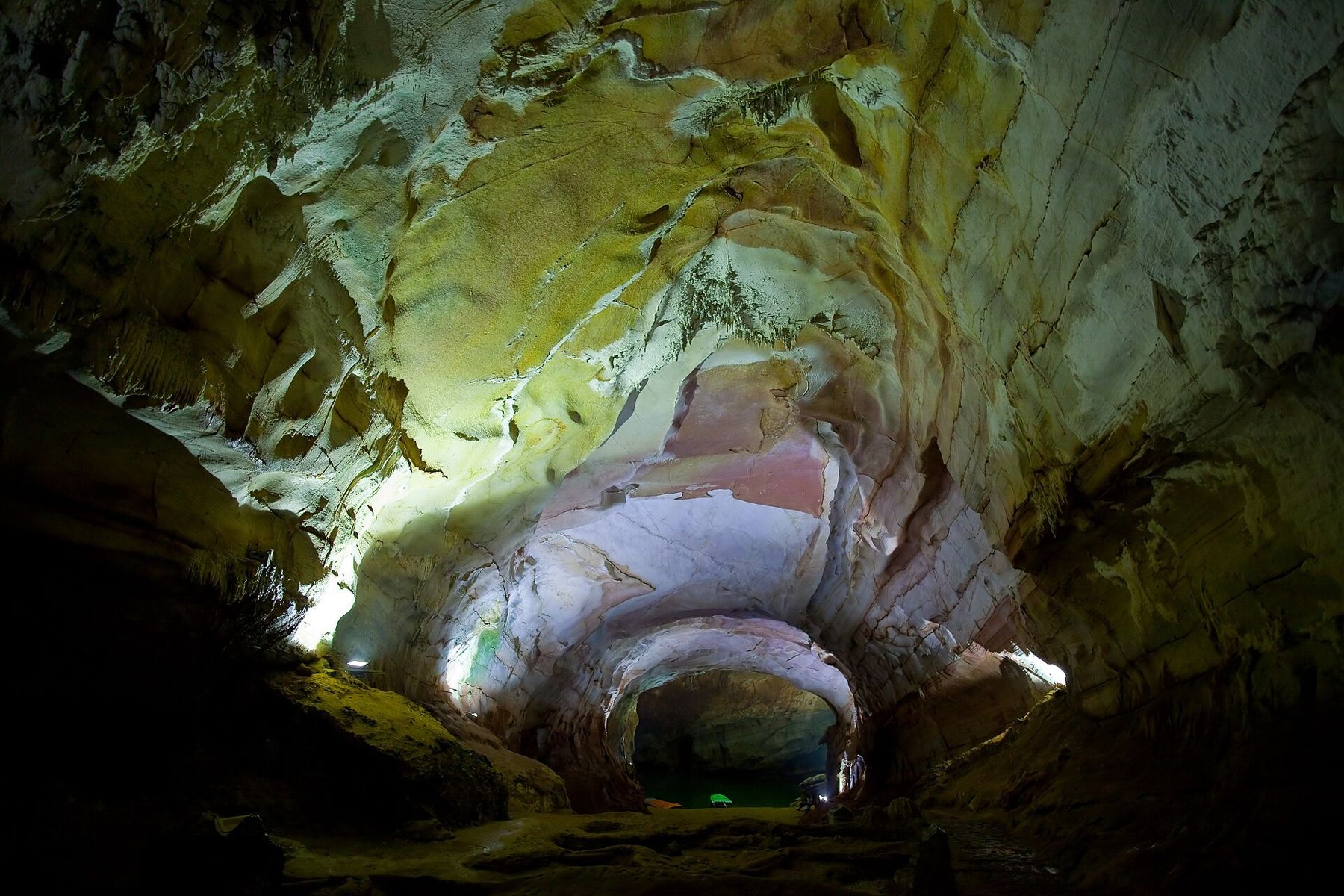
The limestone of Phong Nha-Kẻ Bàng National Park is very old, and rivers have been dissolving it for a very long time. The result is a mountain range riddled with caves, from easy show caves with lights and walkways to vast underground systems that were only explored in the last few decades. UNESCO listed the park as a World Heritage site in 2003 for its geology, and extended the listing in 2015 to recognise its forests and wildlife. The park runs to the border with Laos, and the small town of Phong Nha, on the Son river at its edge, is the base for almost everyone who comes.
Phong Nha Cave by boat
The cave that gave the park its name is reached by water. Boats leave from the wharf in Phong Nha town and travel up the Son river, past fields and water buffalo, to the point where the river flows out of the mountain. There the engine is cut, and the boat is paddled into the cave itself, gliding along an underground river between banks of stalactites and stalagmites lit in soft colours.
The full cave system runs for several kilometres, but visitors see only the first part by boat, before stepping ashore to walk back through a dry chamber to the entrance. The whole trip from the wharf and back takes a few hours. Above it, a steep flight of steps leads to Tiên Sơn Cave, a dry cave that many visitors combine with the river trip.
©
CAMERA: Edgardo W. Olivera from Montevideo, Uruguay // CC BY 2.0Thiên Đường Cave
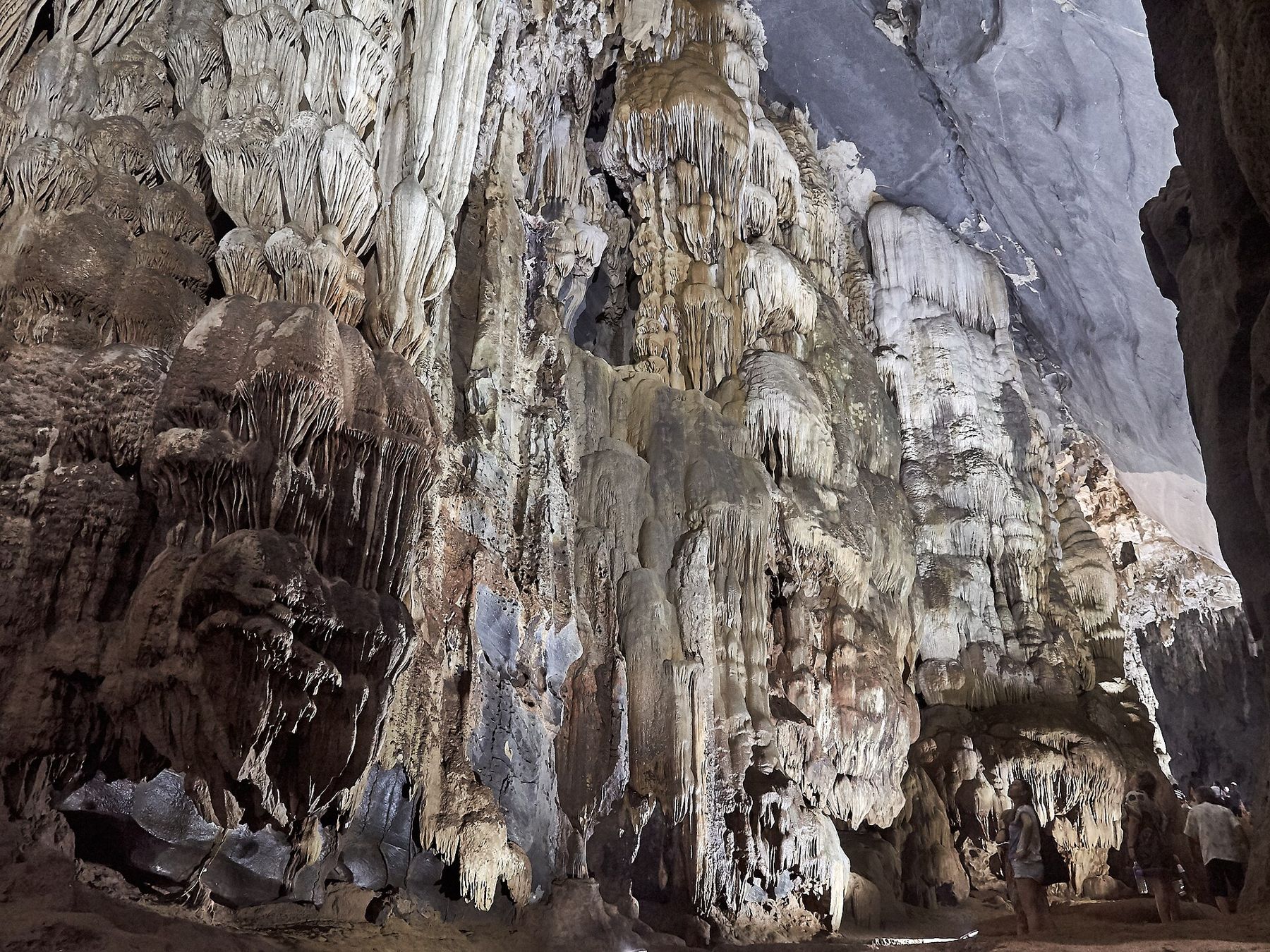
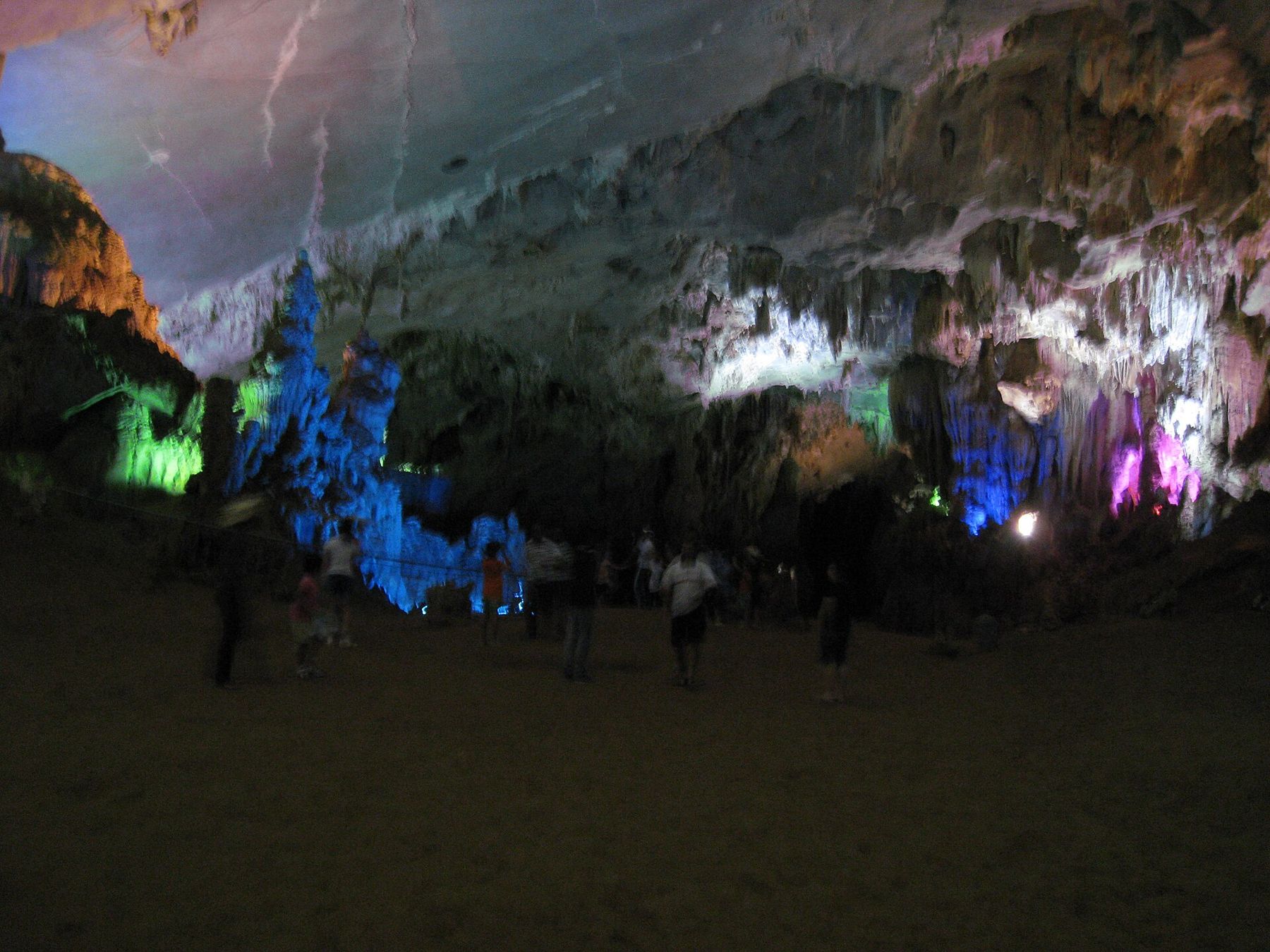
Thiên Đường Cave, Động Thiên Đường in Vietnamese, whose name means something like heavenly cave, was discovered by a local man in 2005 and explored over the following years by British and Vietnamese cavers, who found that it runs for more than thirty kilometres. It opened to visitors in 2010, and it is the park's most impressive show cave.
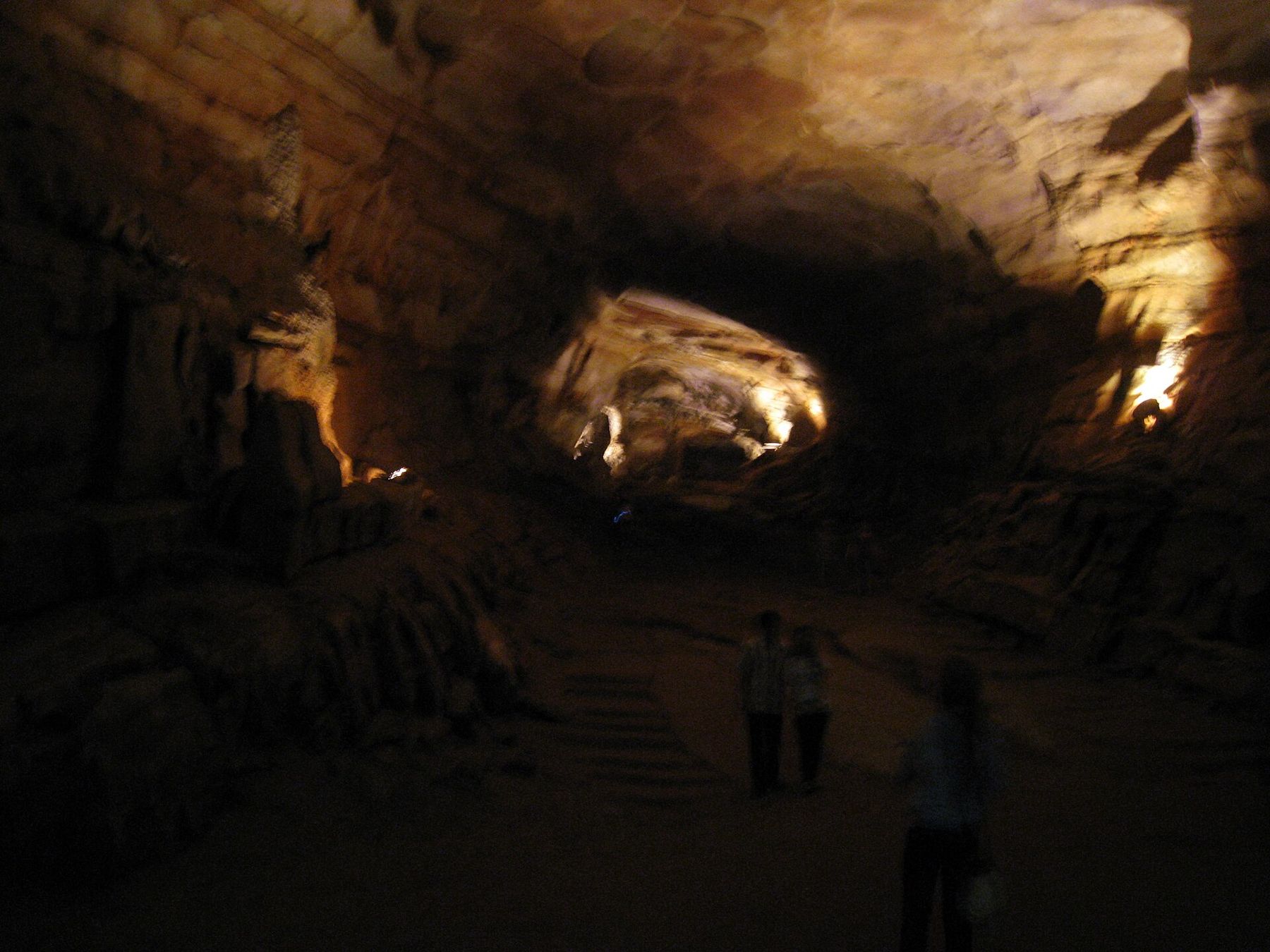
From the car park you climb a long, steep path and a few hundred steps to a small entrance in the hillside, then descend into an enormous chamber. A wooden boardwalk about a kilometre long follows the cave floor past towering stalagmites, flowstone curtains and formations that sparkle under the lights. The scale is hard to take in; the chamber is tall enough that the boardwalk at the far end disappears into shadow. Longer guided walks beyond the boardwalk are sometimes offered, and these require a guide and proper footwear.
The scale is hard to take in; the chamber is tall enough that the boardwalk at the far end disappears into shadow.
Go early or late in the day to avoid the busiest tour groups. The cave stays cool inside, but the climb up is hot in summer, so carry water.
©
CAMERA: Genghiskhan // CC BY-SA 3.0 Coming up after thisOver the Hải Vân Pass, the ridge that splits the weather
Adventure caves and expedition caves
Beyond the show caves lies a different world. The park and the karst around it hold a long list of caves that can only be visited on organised tours with licensed guides and safety equipment. They range from half-day adventures, with swimming, scrambling and mud, to multi-day expeditions that camp underground.
The most famous is Sơn Đoòng, recognised as the largest known cave passage in the world. A local man found its entrance in the early 1990s, and it was surveyed by a British and Vietnamese team in 2009. Its main passage is so large that it has its own clouds and patches of jungle where the roof has collapsed. Access is tightly controlled: only small groups go each year, through a single licensed operator, on a multi-day expedition that needs good fitness, prior training and a significant budget. Nearby Hang Én, another giant cave with a vast entrance, is also visited on licensed overnight trips.
Shorter guided adventures run in other caves around the park, in the forest and on the river, and some include ziplines or swimming in underground pools. Each has its own rules on age, fitness and swimming ability.
©
CAMERA: Genghiskhan // CC BY-SA 3.0Why the guide is not optional
It is tempting to think a cave is just a walk in the dark. It is not. Underground, water levels can rise fast after rain far away, passages branch and look alike, the rock is slippery, and the nearest help may be hours away. In Phong Nha, the wild caves are inside a protected national park, and entry is generally permitted only with licensed guides, who carry ropes, lights, first aid and the permissions the park requires. Never enter an unlit cave on your own or with an unlicensed local offering a cheap trip.
For the show caves, simple rules apply:
- Stay on the paths and boardwalks, and do not touch the formations; skin oils stop them growing and leave marks.
- Do not climb on stalagmites or barriers for photographs.
- Wear shoes with real grip; cave floors and steps are often wet.
- Carry a small torch as a backup, even where caves are lit.
Above ground: the forest
It is easy to forget, after a few days underground, that the park is also one of the largest remaining areas of forest on limestone in the region. The slopes above the caves hold several species of primate, including langurs, along with hornbills, many reptiles and amphibians, and plants and animals that scientists have described only in recent decades. You are unlikely to see much of the shy wildlife on a short visit, but a walk on the marked forest trails near the park's botanic area, which lead through the forest to a waterfall, gives a sense of how dense and steep this country is. Stick to the marked routes, take insect repellent, and allow for the heat and humidity, which make even short climbs hard work.
Seasons, floods and getting there
The central coast gets its heaviest rain from around September to December, and the park's rivers can flood dramatically. In the wet months some caves close, boat trips may be suspended, and the expedition caves shut for the season. Expedition tours generally run from early in the year through the summer. The dry months are also the hottest, so plan outdoor walks for early morning. See our guide to Vietnam's weather region by region for how the central coast differs from the north and south.
The nearest city is Đồng Hới, about an hour's drive away, which has an airport and a station on the north-south railway, so you can reach it on the Reunification Express. The countryside around Phong Nha town is worth a slow day by bicycle, with rice fields, river swimming spots and small villages along quiet roads. This area also lay on the supply routes used during the war, and memorials in the park recall that period. Combine Phong Nha with Huế and its imperial tombs a few hours south.